In this post:
Why don’t things stay organized after you put them away?
If the same things repeatedly end up in the same places, look for the pattern before assuming you or your family simply need better habits. The recurring mess may show you that an item is stored too far from where it’s used, the system takes too many steps, the storage is too full, or the item needs a more practical home. Instead of reorganizing everything, identify the friction and make one small adjustment. Repeated mess isn’t random mess.
Do you have stuff in your house that never stays where you put it?
Maybe it’s the mail that always ends up on some counter somewhere.
Or the shoes that never end up in the home you’ve assigned them.
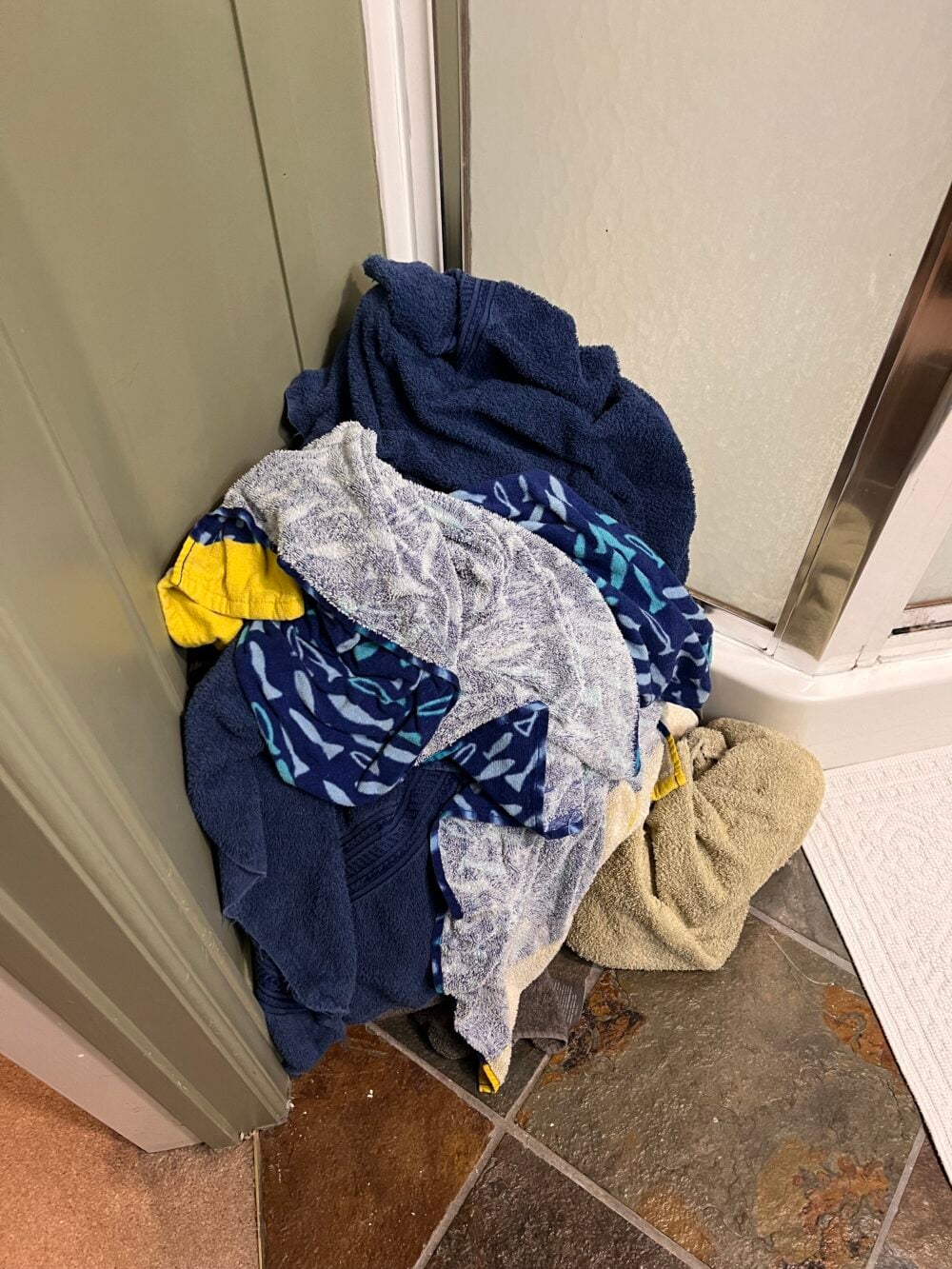
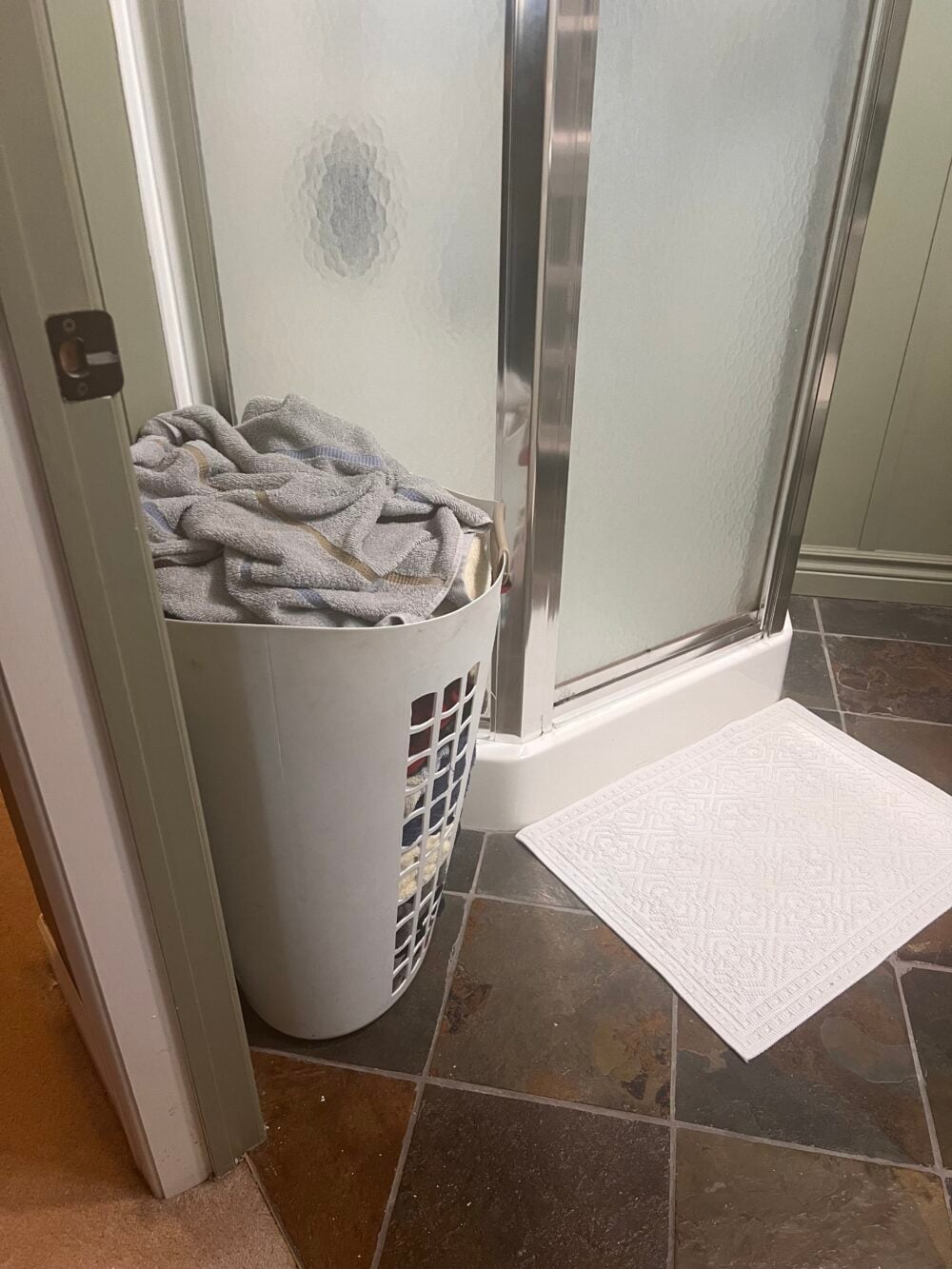
Maybe it’s blankets that never make it back to their basket.
Or the scissors.
You put them in the office. Someone else takes them to the kitchen. You put them back in the office, and somehow they end up back in the kitchen again.
At some point, maybe we stop marching the scissors back to a different room and just accept the fact that the scissors have voted.
Because when the same mess keeps happening in the same place, it’s not necessarily because your family is lazy or bad at putting things away.
Sometimes the mess is telling you something about the system.
Repeated mess isn’t random mess.
Let’s talk about what those recurring messes can tell you about your home and how you can use that information to create organizing systems that actually work.
Prefer to Watch?
Want to listen on the go?
Why Things Don’t Stay Organized
Our first instinct when something ends up where it doesn’t belong is often:
Why can’t anybody put this away?
Sometimes that is the issue.
We’ve talked before about the difference between clutter problems, organization problems and habit problems. If something has plenty of space, a logical home and is easy to put away, but nobody ever puts it back, then sure, maybe you’re dealing with a habit problem.
But before you decide that, ask another question:
Is the system making it harder than it needs to be to put this thing away?
If something gets used six times a day in one room but is stored two rooms away, you’ve created six opportunities every day for it not to make it home.
That’s not necessarily a character flaw.
That’s information.
Look for Patterns in the Mess
One coffee mug left on the counter doesn’t tell you much.
One pair of shoes in the entryway doesn’t tell you much either.
But if the same type of thing keeps ending up in the same place, now you have a pattern.
Maybe:
- Mail always piles up on one particular counter.
- Shoes always collect beside one particular door.
- Clothes always land on the same chair.
- Charging cords constantly migrate to the couch.
- Kids’ school things always end up on the dining table.
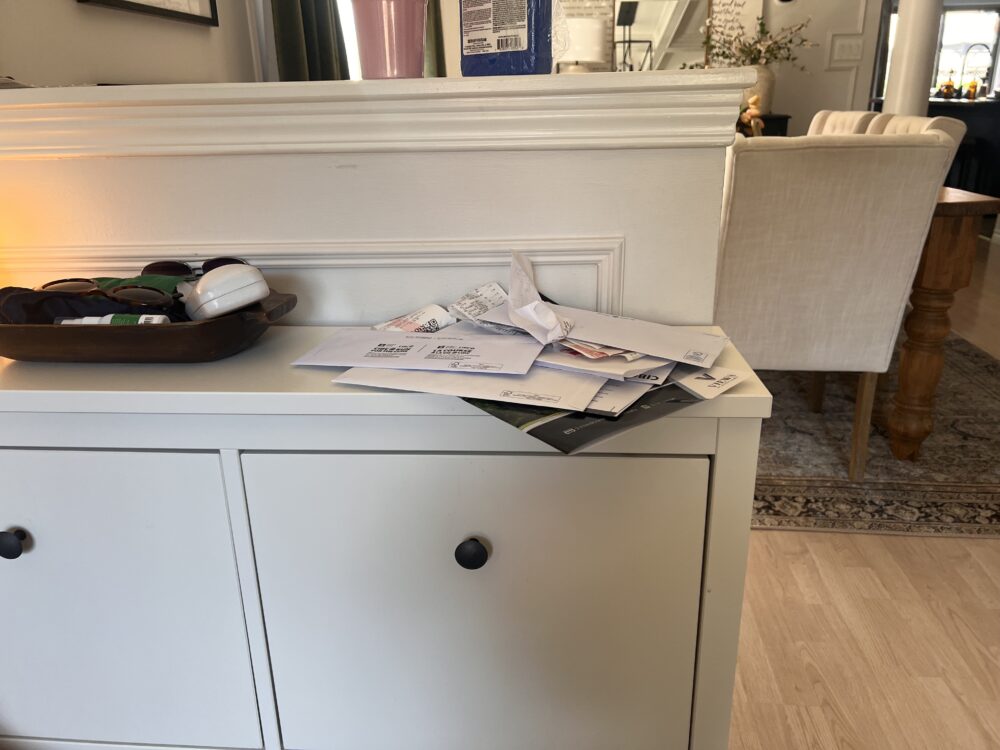
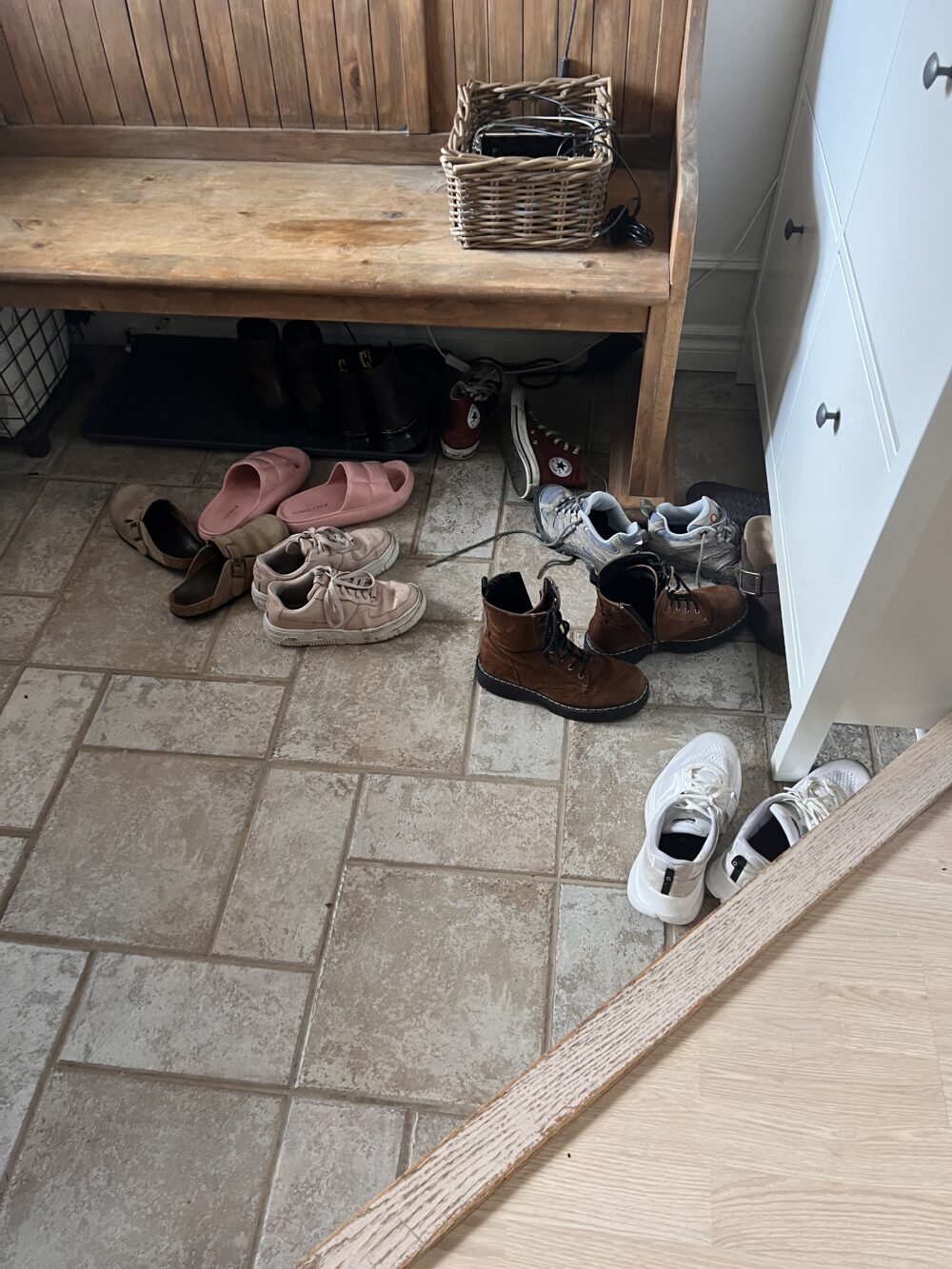
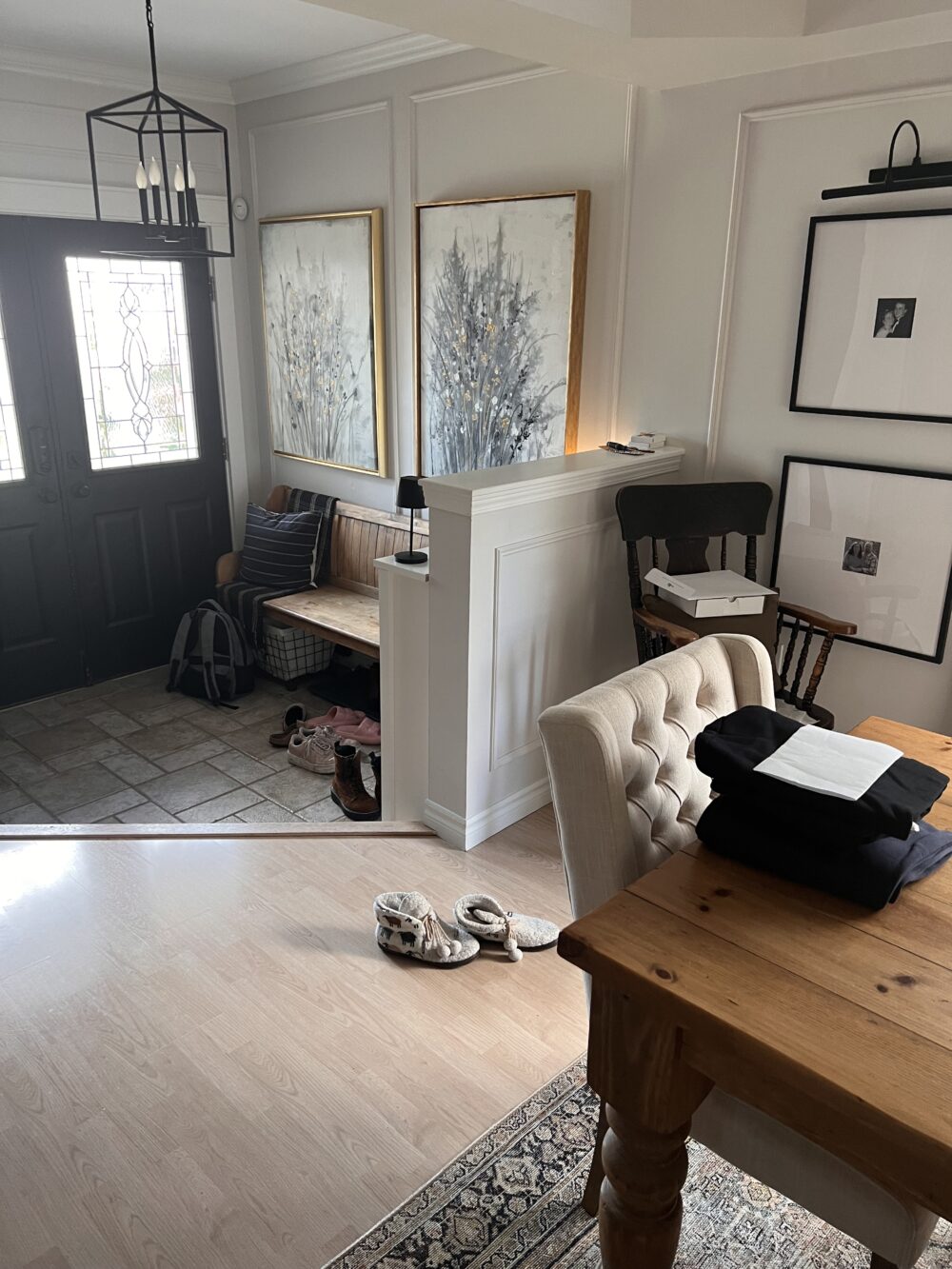
Instead of immediately clearing everything and returning it to where you’ve decided it belongs, pause for a second.
Ask yourself:
Why here?
What’s happening in this location? What activity is taking place here? Who’s using these things? Where are they coming from? Where are they supposed to go afterward?
A recurring mess is often a clue about how your household actually lives.
Sometimes Your Stuff Is Showing You Where It Should Live
This is where House Mapping comes in.
House Mapping is about choosing practical homes for your belongings based on where, when and how they’re actually used.
And sometimes you don’t have to figure that out from scratch.
Your family is already showing you.
Let’s go back to the scissors.
You decided scissors belong in the office because they’re office supplies. Pretty logical.
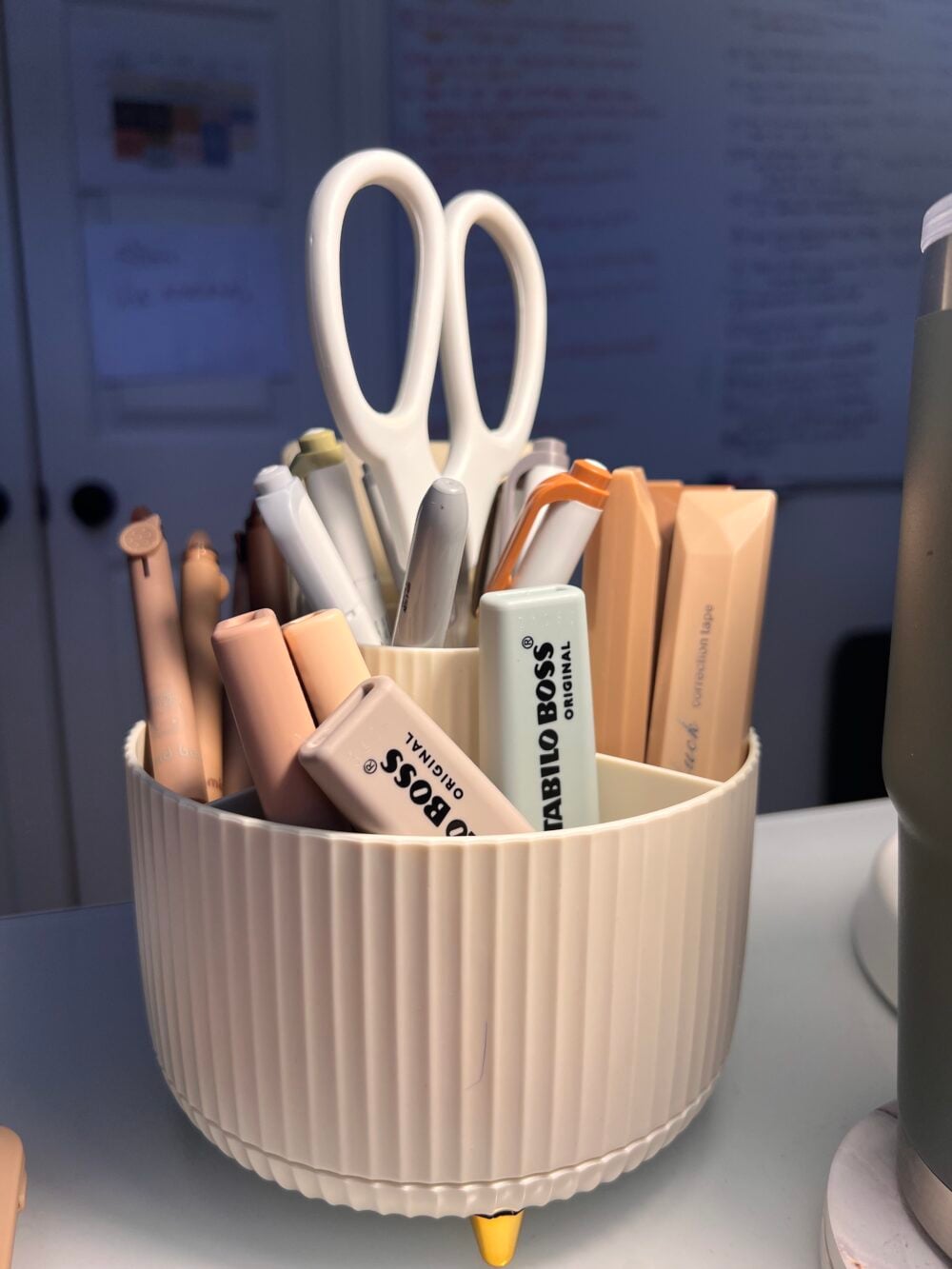
Except everyone repeatedly carries them into the kitchen.
Why?
Maybe packages get opened there.
Maybe tags get cut off there.
Maybe school projects happen at the kitchen table.
Maybe that’s simply where your family needs the scissors.
So perhaps the solution isn’t:
Everybody needs to get better at returning the scissors to the office.
Maybe it’s:
We need scissors in the kitchen.
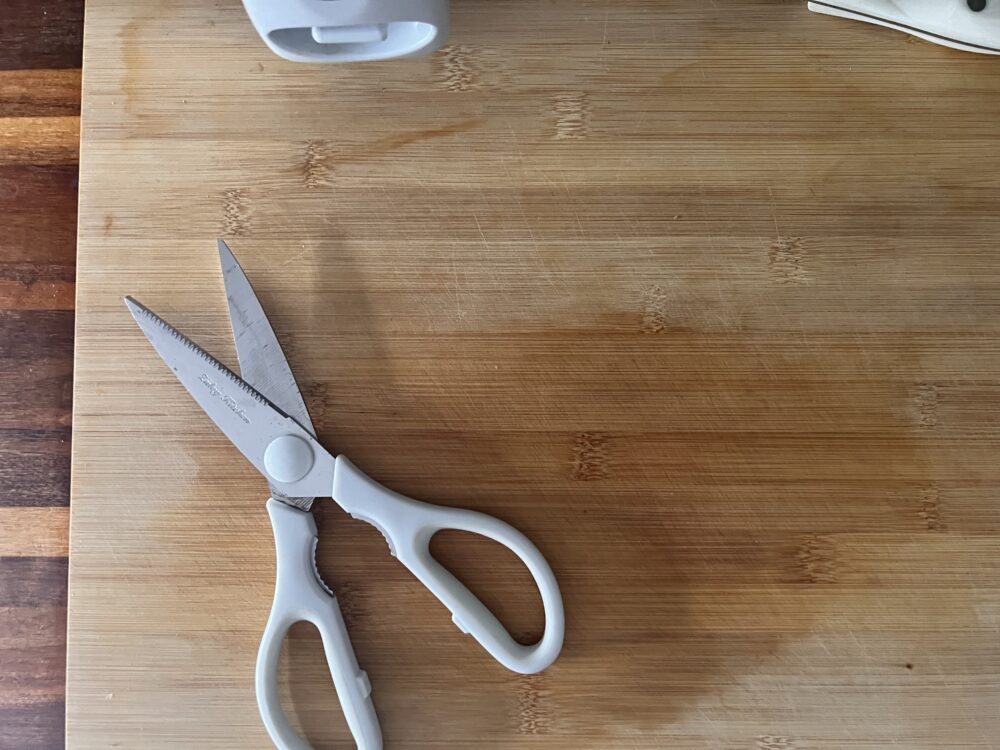
Or maybe you need two pairs of scissors, one in the office and one in the kitchen.
I know. Totally crazy organizing advice, right? Have two of something. 😂
Sometimes the place something continually lands is showing you where its home should be.
A Recurring Pile Is a Clue, Not Automatically the Solution
Now, don’t organize around every pile.
Just because I’m telling you to pay attention to where things naturally land doesn’t mean everything needs to live wherever it gets dropped.
The pile gives us information. It doesn’t automatically give us the solution.
If everybody constantly drops their shoes in the middle of the hallway, we’re not going to suddenly put a shoe rack in the middle of the hallway.
Instead, ask:
What is this pile telling me?
Maybe this is the door everybody actually uses.
Maybe the shoes need storage closer to this door instead of, or in addition to, another door.
Maybe the existing shoe storage is already too full.
Maybe it’s too difficult to use.
Maybe there’s nowhere convenient to sit and remove shoes.
Or maybe everybody owns 17 pairs of shoes and they’re all being stored beside the doorway when some of them either need to be decluttered or live somewhere else.
The repeated mess is a clue.
Diagnose the root of the problem before you try to solve it.
Look for Friction in Your Organizing Systems
Another thing I want you to start looking for is friction.
Friction is anything that makes the desired behavior unnecessarily difficult.
Maybe putting something away requires:
- Going to another room.
- Opening three things, like a closet, a cubby and a box.
- Moving something else first.
- Reaching a difficult shelf.
- Folding something perfectly.
- Remembering a complicated category that doesn’t make sense to the person using it.
- Convincing an already-too-full container to accept just one more thing.
Every extra step makes it slightly less likely that the thing will get put away.
Individually, those little inconveniences don’t seem like much.
But in a busy home, repeated dozens of times a day?
They matter.
The easier something is to put away, the more likely it is to get put away.
That doesn’t mean everything needs to live in an open basket in the middle of the room.
It means your systems should match the amount of effort the people in your household will realistically give them.
Your Home Is Giving You Feedback
When an organizing system isn’t working, we tend to take it personally.
I can’t stay organized.
My family ruins every system I create.
Nothing ever stays tidy around here.
Sound familiar?
But what if, instead, you said:
Interesting. This isn’t working. Why?
That’s very different.
The mess becomes feedback. This is one of the reasons your home can get messy again even after you’ve organized it.
This is why I don’t think organizing should be:
Choose homes → label everything → the end.
You have to live with the system.
Watch what happens.
Notice where things accumulate.
Notice what’s hard to return or put away.
Notice what everybody constantly asks you to find.
Notice which containers are always overflowing or stuffed too full.
Your house will tell you where your systems aren’t working. You just have to pay attention.
Experience Your Organizing Systems Before You Change Them
This is why Experience comes before Tweak in my RESET Method.
After we Set temporary homes for things, we Experience them.
We don’t immediately decide:
Perfect! It’s organized forever!
We live in the space. We use it. We let everybody else in the house use it.
And then we see what happens.
Only after that do we Tweak.
Maybe the basket needs to move.
Maybe the category needs to change.
Maybe something needs to live closer to where it’s used.
Maybe you need a second version of something.
Maybe you need to declutter and make more room in the container.
Or maybe the home is perfectly fine and what you actually need is a simple habit for returning things to it.
That’s why Experience matters.
You can’t know whether an organizing system works until real life happens to it.
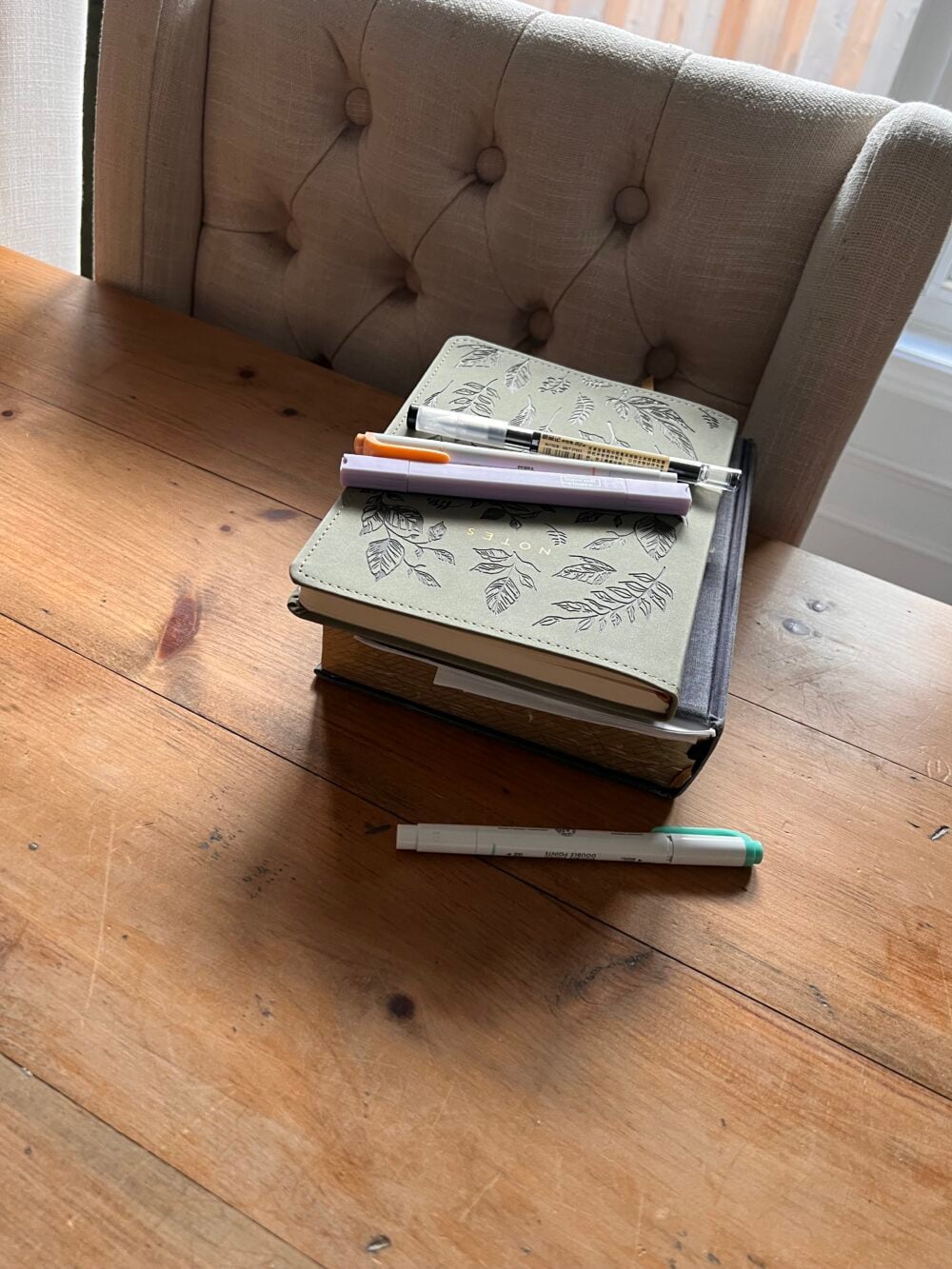
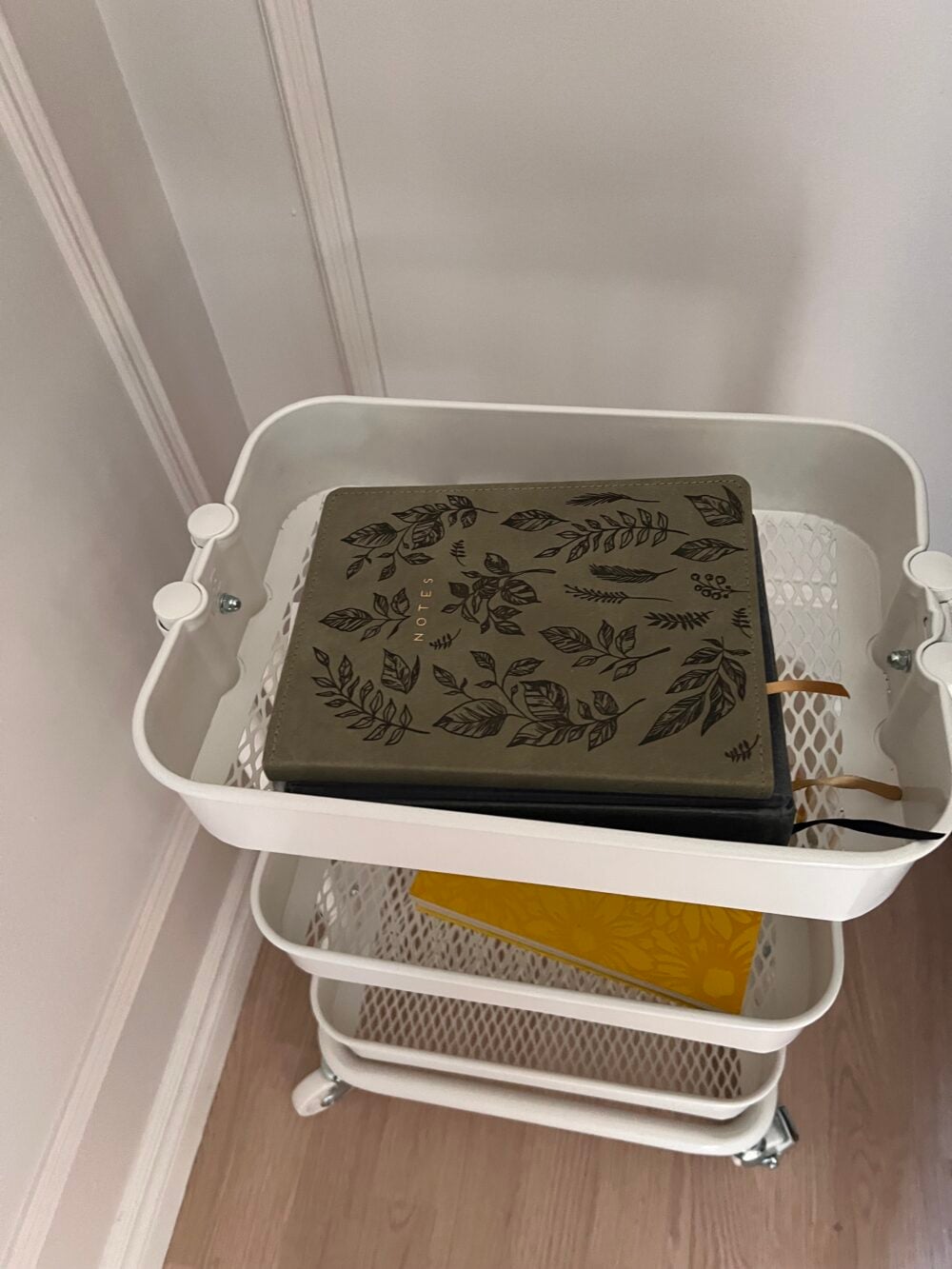
Don’t Reorganize Everything. Tweak What Isn’t Working.
And don’t confuse tweaking with starting over.
If something isn’t working, you don’t have to rip an entire room apart and reorganize it from scratch. In fact, making the problem smaller is usually a much better place to start
You don’t have to declare:
Well, THAT organizing system failed.
Maybe 90 percent of it works beautifully.
There’s just one friction point.
Move the basket.
Add a hook.
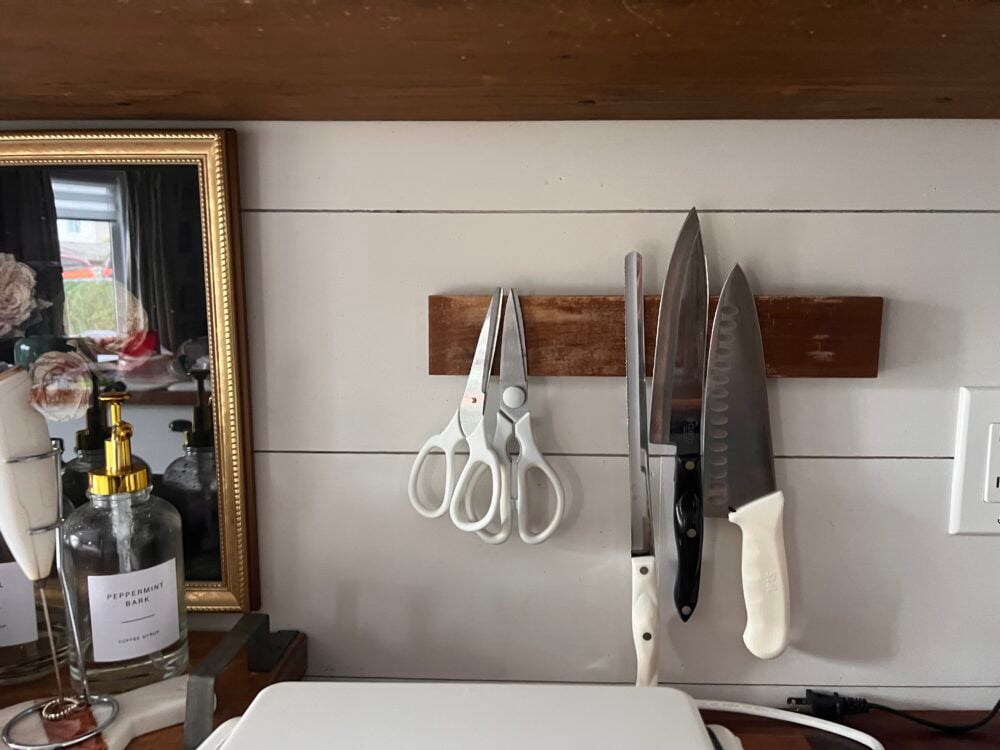
Relocate the scissors.
Reduce what’s in the drawer.
Make the tiny adjustment.
Don’t start over. Tweak what isn’t working.
This is one of the ways you break the messy-house cycle.
Instead of repeatedly creating brand-new systems, you gradually make the systems you already have better suited to your real life.
Try This Recurring-Mess Experiment
Pick one recurring mess in your house this week.
Not your whole house.
We’re not doing that. 😂
Just one.
Then ask yourself:
- What keeps ending up here?
- Who is putting it here?
- What are they doing when it lands here?
- Where is it currently supposed to live?
- What makes returning it there harder than leaving it here?
- What tiny change could make the desired behavior easier?
Maybe you move something.
Maybe you add storage nearby.
Maybe you remove something.
Maybe you simplify the system.
Or maybe you discover the system is actually fine and what you need is a habit or routine.
You’re not trying to create the perfect organizing system.
You’re running a little experiment.
Repeated Mess Isn’t Random Mess
The next time you see the same pile, before you sigh and put everything back where it’s “supposed” to go, pause.
Get curious.
Your home may be showing you:
- Where something actually gets used.
- Where storage is missing.
- Where there’s too much stuff.
- Where a system has too many steps.
- Where a habit needs to be built.
The mess isn’t always the problem. Sometimes the mess is the evidence that helps you find the problem.
Not sure which kind of problem you’re dealing with? Take the free Messy Home Diagnostic to find out whether clutter, organization or habits are the biggest thing keeping your home stuck in the messy-house cycle.
If you’re tired of organizing your home only to have it fall apart again, this is exactly why I created the Home Made Lovely RESET Club.
Inside the Club, I teach you the RESET Method so you don’t just declutter and organize once and hope it sticks.
You Remove, Edit, Set, Experience and Tweak.
You get to live with your systems, notice what’s working and what isn’t, and make adjustments until your home becomes easier to live in and easier to keep up with.
So this week, find one mess that keeps coming back.
Don’t immediately fix it.
Study it.
Ask what it’s telling you.
Maybe your family needs a better habit.
Maybe your storage needs to move.
Maybe there’s simply too much stuff.
Or maybe…
the scissors have voted. ✂️😂
Whatever you discover, remember:
Your house doesn’t have to work perfectly. It needs to work for the people who actually live there.
And when something doesn’t work?
Don’t start over. Tweak it.

Want to see more content like this in your Google searches?
This button tells Google that Home Made Lovely is a source you like, so it can show you more of it.