In this post:
Do you have a clutter problem, an organization problem or a habits problem?
A messy space doesn’t always need more organizing. Sometimes it needs less stuff, a more logical place for things to go, or a simple habit for putting them back. In this post, you’ll learn three questions to ask about one area of your home so you can identify what’s causing the mess and choose a solution that actually helps.
Imagine three different kitchens that look equally messy.
All three have counters covered with dishes, small appliances, papers, things that don’t seem to belong anywhere.
But here’s the thing:
- In the first kitchen, the drawers are all crammed so full and the cupboards are stuffed that there’s nowhere to put anything.
- In the second kitchen, there’s plenty of storage, but no one knows where anything belongs.
- And in the third, everything has a perfectly good home, it just hasn’t been put away.
Same visible mess, three different problems.
And if you try to solve all three by buying more organizing bins, containers, et cetera, you’re going to be disappointed.
Rather watch the video?
Want to listen on the go?
The same mess can have completely different causes.
Today we’re going to talk about whether you have a clutter problem, an organization problem, or a habits problem. So you can stop trying solutions that don’t actually solve what’s happening in your home.
Why Identifying the Problem Matters
When our homes feel messy, we tend to jump right to a possible solution.
- The counter is messy → buy organizers
- The closet is overflowing → buy more bins or baskets or whatever
- The living room is messy → create a better cleaning schedule
- The kids leave stuff everywhere → give them more rules to follow
Those solutions only help if they address what’s actually causing the mess.
You could spend an entire weekend organizing a closet that simply has too much stuff in it.
Or you could spend weeks trying to establish better habits when nothing actually has a home it belongs in.
Don’t choose a solution until you’ve identified the actual underlying cause or problem.
Before you decide what to do – I’ve said this before – get curious about why that mess is happening.
And remember, your whole house might not necessarily have the same problem. Your entryway may have a clutter problem while your kitchen has an organization problem. Okay, so problem number one is too much clutter.
Problem #1: Too Much Clutter
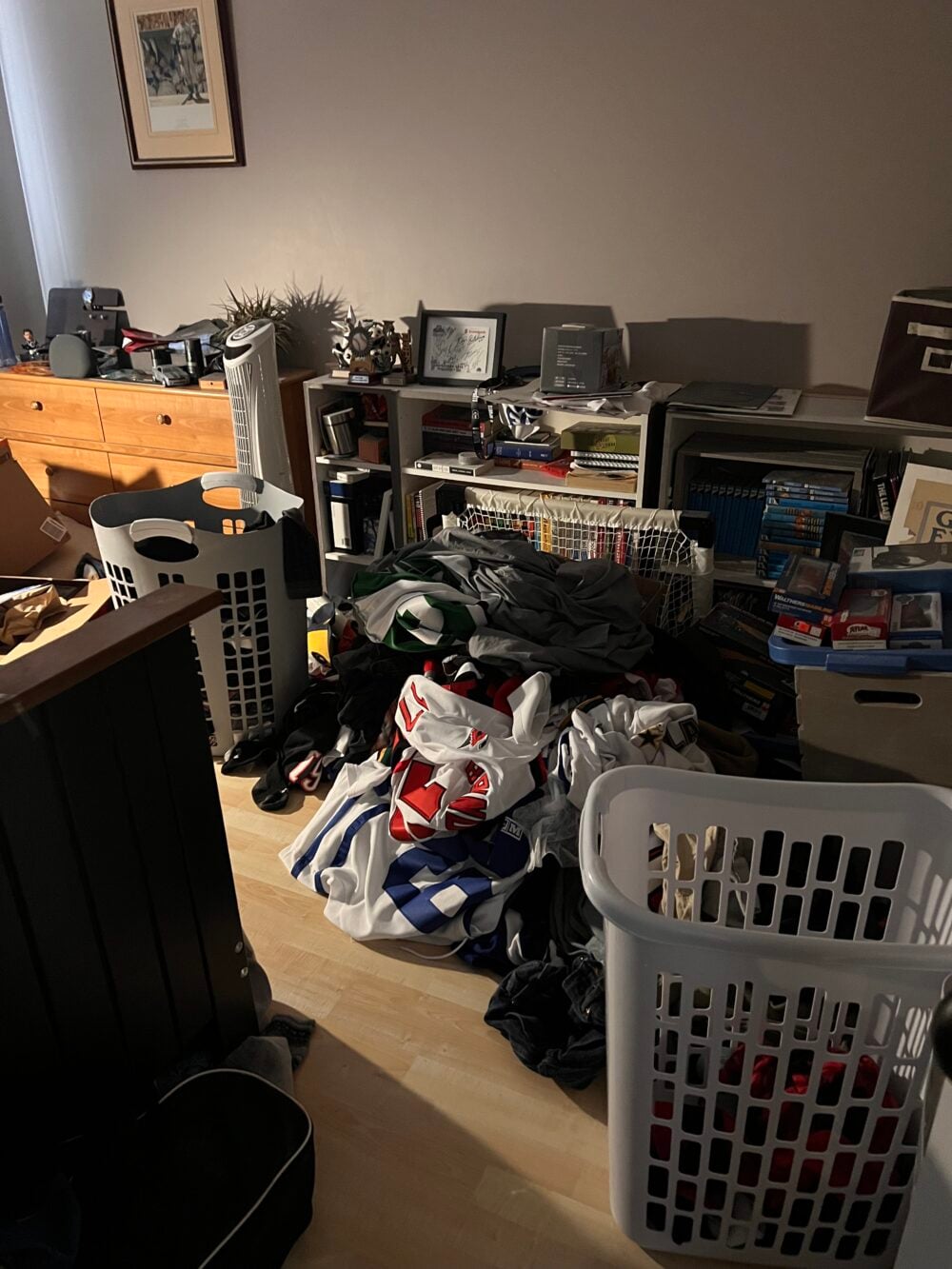
This gets talked about all the time, declutter, declutter, declutter, minimize, know, become a minimalist, those sort of things. And while if too much stuff is your problem, then yes, decluttering is a solution.
Clutter problems happen when you’re trying to keep more stuff than your space can hold. This applies to your whole home, but it also applies to each individual room and drawer and storage space.
- Maybe your dressers are so full that you can’t even close the drawers.
- Maybe you have to move three things to put something else back.
- Maybe your cabinets are packed so full that the things that you use every day get left on the counter randomly, not purposefully.
- Or maybe you’re constantly rearranging things to try to get everything to fit.
You might technically be able to squeeze everything into the space, but that doesn’t mean the space is functioning well.
You can add more bins and dividers and organizers, but if you’re keeping more than the space can comfortably support, organizing alone will not fix that.
The first question to ask is,
Is there comfortably enough room for the things I’m trying to keep here?
If the answer is no, you may need to make some decisions about what stays before you organize anymore.
And I’m not talking about decluttering your entire house before you can do any organizing at all. I’m talking about decluttering the space you’re working on before you organize.
Problem #2: Lack of Organization
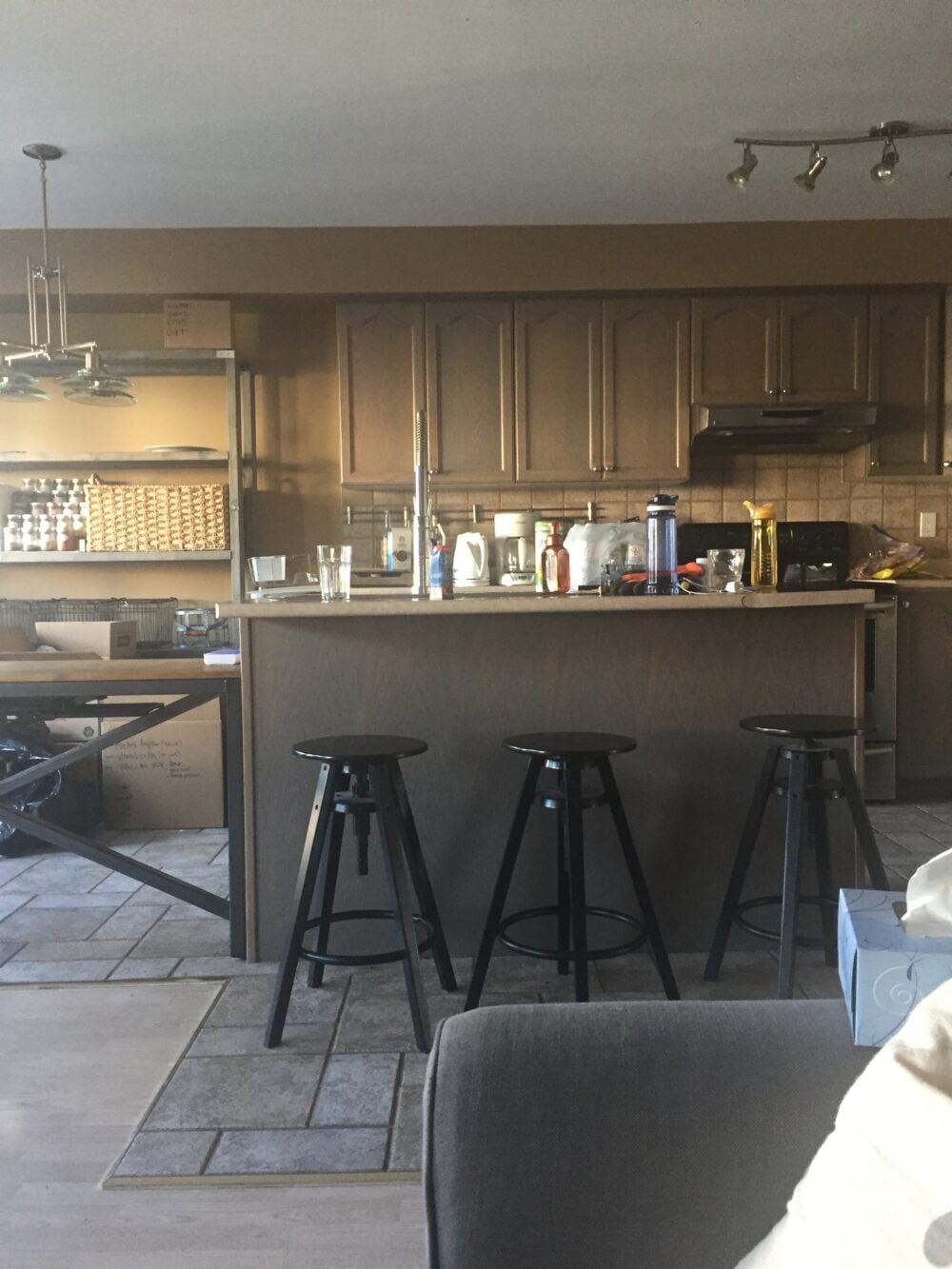
Let’s just say you’ve got plenty of room in the kitchen cabinets.
You’ve decluttered or you never had that much stuff to begin with.
- But the mail lives on the counter because you haven’t decided where it should go when it comes into your house.
- The scissors move between three different drawers or even rooms, like the office and the kitchen, like we talked about in another episode.
- The batteries are in a random bag somewhere.
- And every time you need something, you have to search for it.
You don’t necessarily have too much stuff. The stuff that you are keeping though doesn’t have logical homes or logical places to be.
Or maybe technically you’ve organized and all your things have homes, but they’re not logical to where you actually use those things, to where your family actually uses those things in your house.
Everything doesn’t just need a home, it needs the right home.
An organization problem might look like:
- Things regularly ending up in random places.
- You have storage space, but you aren’t particularly sure, or your family’s not particularly sure, where items belong.
- People can’t find things or know where to put them back.
- Putting something away might require way too many steps for how you actually use that thing or the space that it’s stored in.
- And the designated home is nowhere near where the thing actually gets used.
The question to ask then is, does everything have a logical home? And if it doesn’t, that’s where organization comes in.
Not just to make everything look pretty in matching containers, but choosing homes that make sense for the people that live in your home and actually use those things.
We’ll get to that more in the next article because choosing the right homes for your belongings is actually a topic all on its own, but just know that you need to choose the right spot to keep things, the one that makes the most sense.
Problem #3: A Lack of Home Habits
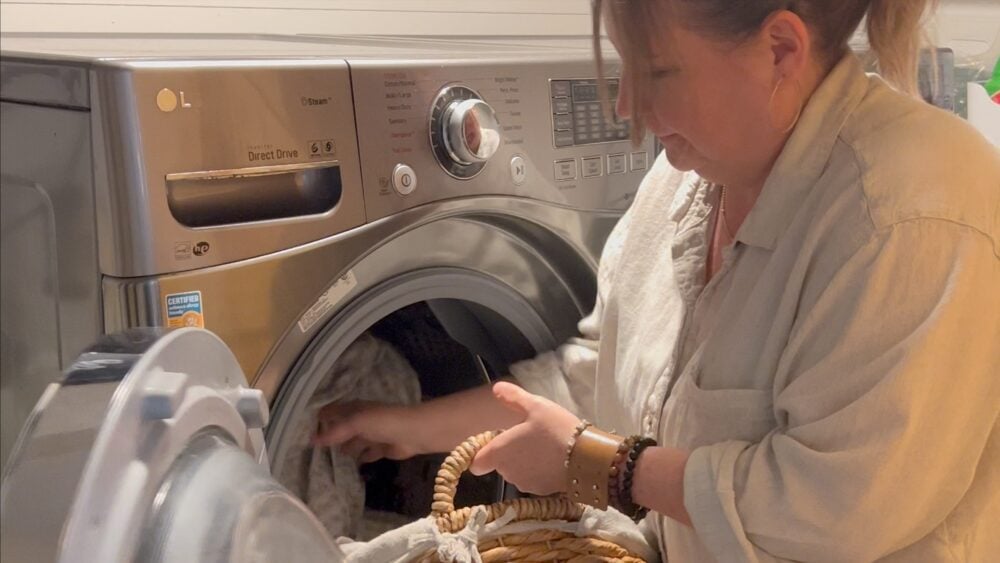
Problem three is a home that lacks habits, or more accurately, people that lack habits.
Now imagine that your kitchen has enough storage.
Everything has an actual logical home where it goes.
Putting things away is actually easy because you’ve designed your organization that way and you don’t have too much stuff.
But there are still dishes on the counter, shoes in the entryway, and yesterday’s mail sitting on the table.
Sometimes the problem isn’t the amount of stuff or the way you’ve organized it. It’s that everyday things aren’t getting returned to their homes.
Because here’s something that I’ve been working hard on remembering and I want you to remember: Homes are actually supposed to get messy.
When you live in a home and you share it with other people, a spouse, kids, grandkids, whatever, your house is gonna get a little bit messy.
I’m not talking about the crazy over the top mess of nothing’s been looked after for a while. I’m talking about just the everyday messes.
- Dishes get pulled out.
- You use the couch so the pillows get put all askew.
- The remotes get taken out of wherever you store them.
Things like that. Everyday messes. You live there. You cook there. You eat there. You get dressed. You bring things into the house. You use things throughout the day.
The goal isn’t to prevent every mess from happening. It’s to have a home that’s easy to return to its calm, happy baseline…and that requires some habits and rhythms.
- Maybe that’s putting things back after you use them, like right away after you use them.
- Maybe it’s dealing with the mail instead of letting it accumulate, returning the kitchen to a usable state after dinner or after lunch or whatever.
- Maybe it’s taking a few minutes to put things away before bed. Hint, that’s a really big deal, honestly.
But there’s an important distinction here. You can’t habit your way out of a clutter or organization problem.
If your drawers are overflowing, a new tidying routine won’t magically create more space.
And if nobody knows where the mail belongs, reminding everyone to put it away isn’t gonna help anything.
A habit helps you maintain a system or organization that works already. It can’t compensate forever for a system that doesn’t work.
So the question to ask here is, if everything has enough space and a good home, is it simply not getting returned there regularly? If so, you may need a better routine, a rhythm for putting things away.
What if You Have All Three Problems?
Okay, now what if you have all three problems? Because to be honest, you actually might.
- Maybe your entryway has too many shoes for the available storage,
- No logical place for backpacks and bags, and
- A perfectly good spot for keys, but nobody ever puts them there.
That’s three different problems happening in one space. And this is why I don’t want you to label your entire home as having a “clutter problem” or an “organization problem” or a “habit problem” and assume that’s the only thing that you need to work on.
Instead, look at one specific area. Identify what’s happening there, then choose a solution that matches the problem.
You might need to declutter some shoes, choose better homes for the bags or put up hooks or whatever to begin with, and establish a simple habit for returning the keys.
Different problems, different solutions.
Your home doesn’t need one giant solution. It needs the right solutions for the specific problems you’re experiencing in each space.
Three Questions to Ask Yourself
Okay, three questions to ask yourself to try and sort of figure this out what is causing the messes at your house.
The next time you’re looking at a messy area and wondering what to do, ask yourself these three questions.
- Is there comfortably enough room for the things I’m trying to keep here. If not, you may have a clutter problem.
- Does everything have a logical, easy-to-use home to return it to when you’re done using it? If not, you may have an organization problem.
- If everything has enough space and a good logical home, is it simply not getting returned there regularly? If so, you may have a habit problem.
You don’t need to diagnose every room in your house today. Choose one area that’s bothering you ask those three questions about that one area.
Use the answers to find the solution that that area actually needs.
Now What?
If you’re reading this and thinking, okay, Shannon, but I genuinely don’t know which of these three problems is causing the biggest mess in my house. I’ve got something that can help.
My free messy home diagnostic quiz helps you figure out whether the biggest issue you’re facing right now is too much clutter, a lack of organization, or the habits that keep your home running are missing.
It’s a great place to start if you’re tired of trying different solutions and still feeling like your home isn’t getting any easier to manage.
Your messy house isn’t telling you you need to work harder. It might be telling you that you’re trying to solve the wrong problem.
Before you buy another organizing bin or basket, start another decluttering project or make yet another cleaning schedule, take a look at what’s actually happening in the area you’re trying to fix.
Don’t choose a solution until you’ve identified the problem or the root cause of the mess.
Because when you know what you’re trying to solve, you can make changes in your home that make it actually easier to live in.

Want to see more content like this in your Google searches?
This button tells Google that Home Made Lovely is a source you like, so it can show you more of it.