In this post:
How do you decide where things should live in your home?
The best place to keep something is where it makes sense for how you actually use it, not simply where it fits or where you think it should go. Consider where and how often you use it, who needs access to it, where it naturally lands, and the storage you actually have. House Mapping uses these clues to help you choose practical homes that make your house easier to live in.
Have you ever been organizing and then suddenly found yourself standing there thinking…
Where am I supposed to put this?
Because “everything needs a home”, sounds like great organizing advice…until you have to decide where everything goes.
And sometimes we make the decision based on where something should or ought to live.
Kitchen things in the kitchen.
Office supplies go in the office.
Linens go in the linen closet.
Except your house doesn’t actually function according to categories. And some older houses definitely don’t function the way that they’re laid out.
Want to Watch the Video?
Prefer to Listen on the Go?
You use your house according to how you live your life.
And that means the best place for something to live isn’t necessarily where it looks good on paper.
It’s the place that makes the most sense where you and your family use it.
Today I want to show you how to think about where things should live within your home and introduce something called house mapping.
The Logical Home Isn’t Always the Right Home
I think this is where a lot of organizing systems go wrong. We organize according to what makes sense conceptually or like how we think something should be.
All the batteries go together
All the scissors go together
All the cleaning supplies go together
All the office supplies go together.
And sometimes that’s exactly right.
But sometimes the most organized location creates more work every single time you need that thing.
A home can be logical, but still really inconvenient.
I’ve used this example before. Let’s say you keep your scissors in the office because that seems like the logical place to use them…xcept someone’s always looking for scissors in the kitchen.
And one day somebody grabs the scissors from the office and takes them to the kitchen and then leaves them there.
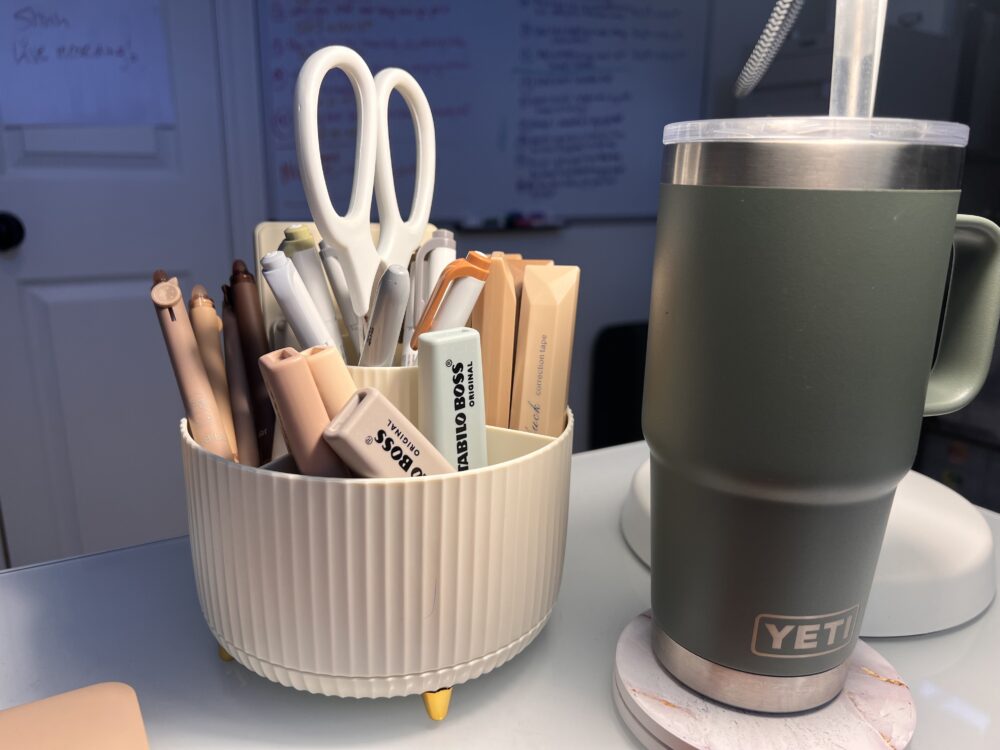
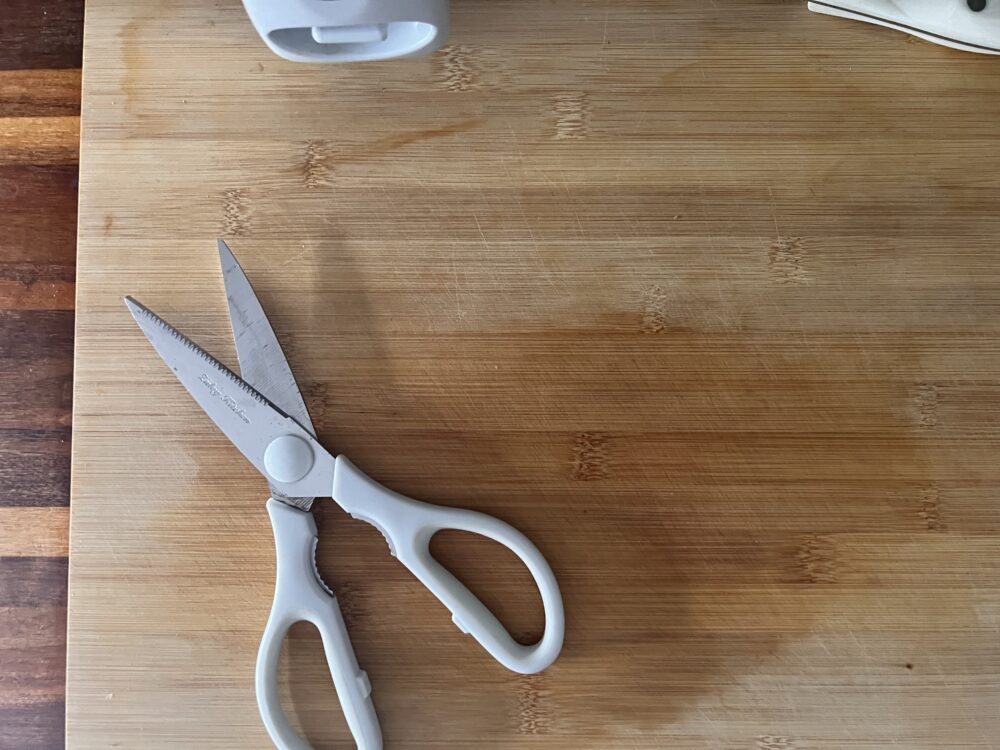
Technically, the scissors have a home, but the scissors disagree.
That’s information.
Think About the Point of Use First
One of the things I consider when I’m deciding where something should live is where do we actually use this?
Not where does Pinterest say this category of things belongs in my house. Not where it would look nicest…Although I am a sucker for pretty organization…Where does the activity with this thing happen?
- If there’s something that you use every day when you make breakfast, maybe that thing should live near where you make breakfast.
- If you deal with your paperwork at your kitchen table, then the system for handling that paperwork should probably live somewhere near the kitchen table.
- If your family takes their shoes off, more often at one door than another, that’s where the shoe solution should be.
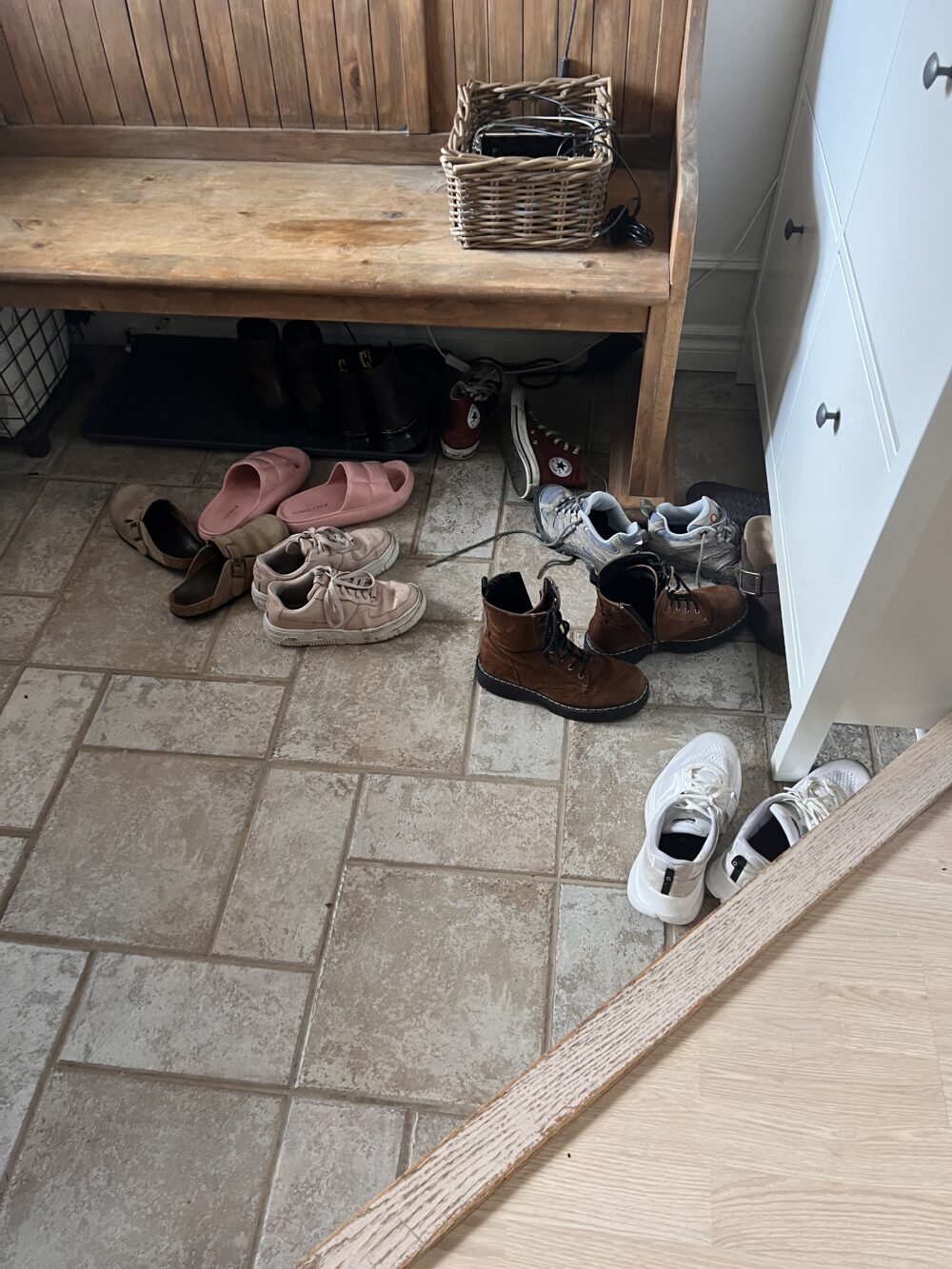
Organize your home around the activity, not just the category of things.
Your home should support what you’re already doing in it.
Fitting Isn’t the Same as Organizing: Dean and the Garage
Okay, story time. My husband, Dean, is a really good packer.
When we are about to go on a trip, he takes all the stuff and he fits it in our vehicle, like so well. It’s like watching a Tetris game in real life. Like he’s so, so, so good at it.
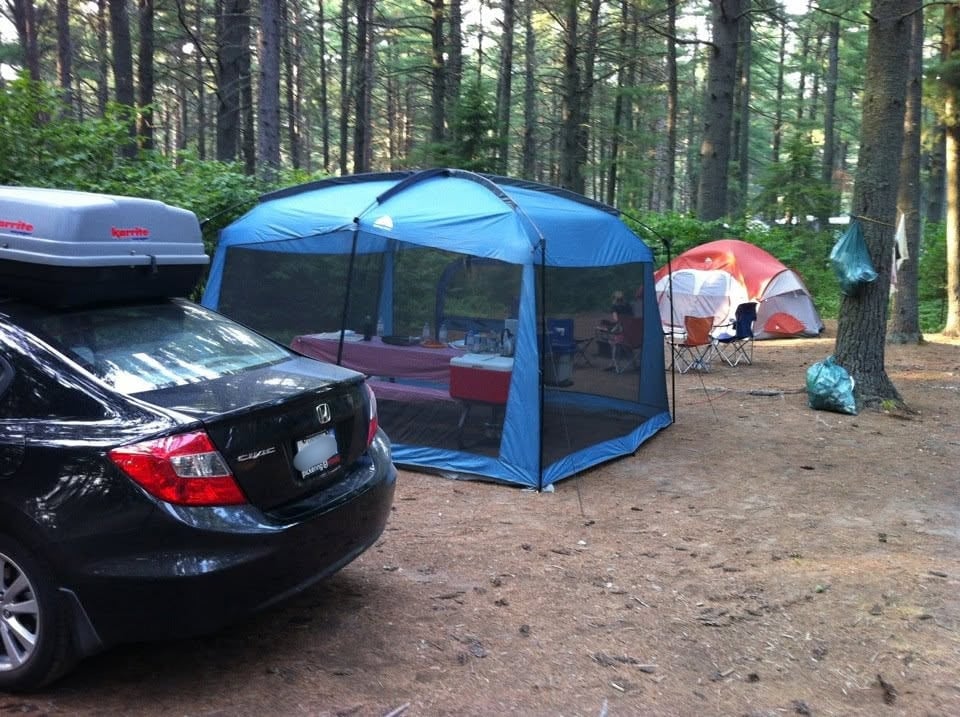
We once camped with three kids in a little Honda Civic and everything fit like for like several days in this little Civic with our three kids. Like he’s really, really good at packing.
About a year or two ago, he wanted to organize his garage.
One Saturday goes by and I’m like, hey, how’d it go? And he’s like, it’s kind of okay. I’m not done yet. The next Saturday comes and he’s still not finished at the end of the day.
He was kind of getting frustrated that he couldn’t get it organized in the way that he wanted. And he finally decides that he’s going to ask for my input. And so I went out there with him and I looked around and I realized that he was basically organizing his garage as if he would pack a vehicle or something. He was putting things where they fit, not where he would logically use them or where any of us would logically look for them.
You know, so there was like gardening stuff mixed with car stuff and his tools were sort of in a bucket on the shelves instead of in the drawers or the cabinet near where he would use them.
He was packing the garage. He wasn’t organizing the garage.
And that’s sort of the idea behind house mapping.
We’re not asking:
“Where can I fit this?”
We’re asking:
“Where does this make the most sense based on who and where it is used in our home?”
The goal isn’t simply to get everything up off the floor and onto a shelf.
The goal is to make the space easier to use.
Think About How Often Your Use It
The next thing to consider is how often you use something.
The stuff you use every day should generally be easier to access than the stuff you pull out twice a year.
It sounds obvious, and yet somehow we all have that cupboard or that closet where the thing that we use every morning is behind the thing that we, you know, last used at Christmas time or something like that.
You need to think:
- Daily → easiest access
- Weekly → accessible
- Occasionally → less convenient storage is probably fine
The turkey platter doesn’t need prime kitchen real estate.
I realized this when I was sorting our kitchen about a year ago…I needed to make more space. There are a lot of us here. Our grown kids live here. And so I really needed to think about what we weren’t using on a regular basis.
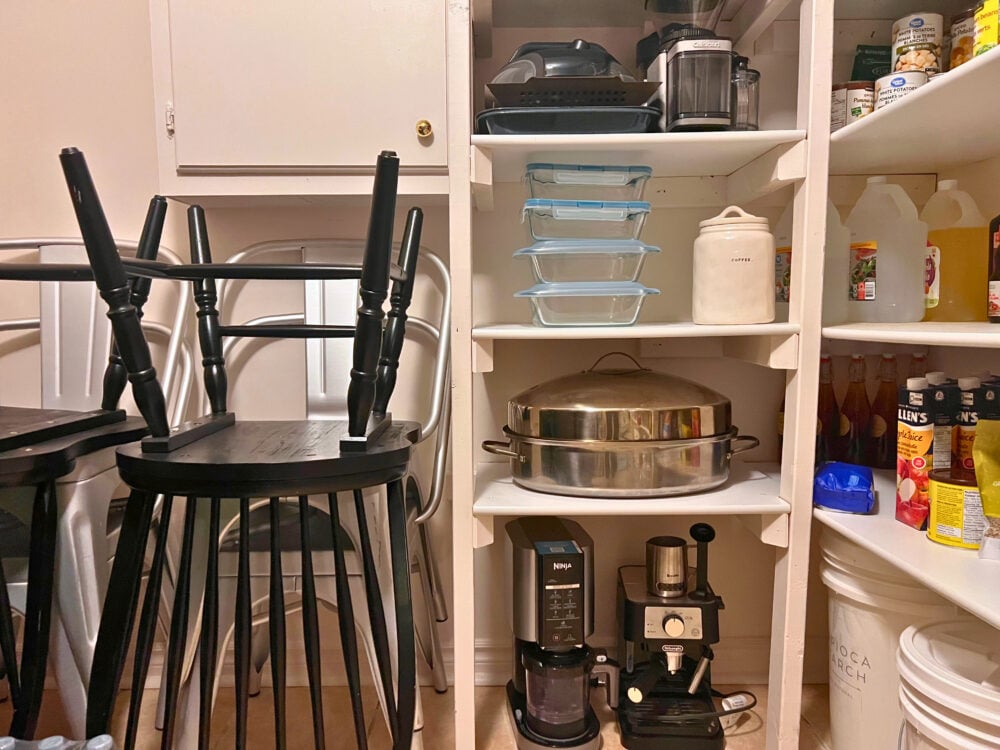
So our big roasting pan…
Well, first of all, Dean and I are plant-based and we don’t cook a giant turkey that often. So the huge roasting pan and lid didn’t need to be taking up real estate in our kitchen cupboards.
The same thing with these glass baking dishes that have plastic lids that go on top so that when you bake something, you can then put it in the freezer or the fridge really easily. I don’t use those all the time, because there’s like two sets of like three of them. And I only use those when I’m doing bulk cooking, which isn’t all the time.
And so we really needed to look at the space and decide what was getting used regularly and what could go live somewhere else. In our case, that’s our basement pantry. We have shelves in our basement near our extra freezer, and that’s where that stuff lives.
It’s still totally accessible when we need it, but absolutely not taking up valuable space in our kitchen.
Basically, we’re trying to remove unnecessary friction in your day-to-day and weekly life.
Who Actually Uses It?
This gets overlooked all the time.
It’s not enough to ask logically where you would put something.
You need to ask:
Who uses it?
Because if you’re organizing a shared home, like I am, the system has to work for more than one person.
Maybe you can easily reach the top shelf, but someone else can’t.
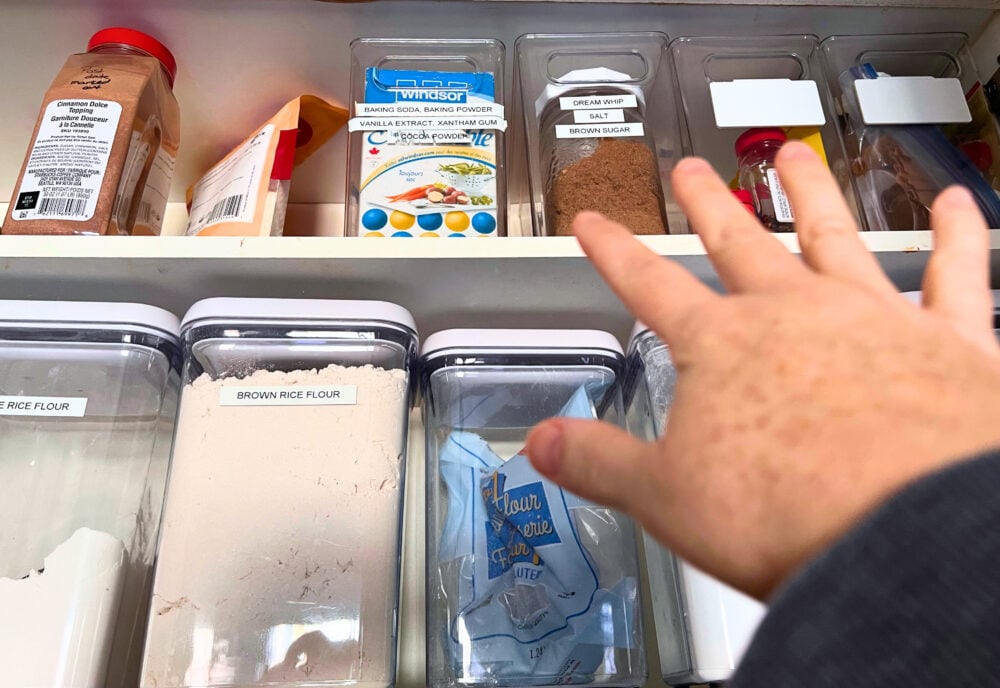
I’m actually barely over five feet and so I cannot reach the top cupboard shelves. And so the only things that live up in those is baking stuff because I rarely bake. Honestly, I cook a lot, but I rarely bake. So that stuff lives up higher where the taller people in my house can reach it.
Maybe you know which pretty little opaque container has the phone chargers in it, but nobody else has a clue.
Or maybe you’re expecting other people in your house to put something away, but putting it away requires opening a door, moving something else, lifting a lid, and fitting it perfectly into a container. And then we wonder why it’s always sitting out on the counter.
If you want people to put things away, make the putting away easier.
That doesn’t mean that every organizing decision has to accommodate everyone’s preference, but shared systems need to make sense to the people who actually use them.
Pay Attention to Where Things Naturally Land
Okay, this is one of my favorites in house mapping and organization.
Let’s say the mail is always sitting on the same section of your counter.
Your first reaction might be:
Why does everyone keep leaving the mail here?
Instead, get curious.
Why does the mail keep landing there?
- Maybe it’s the first surface you pass when you come through the door.
- Maybe that’s where you naturally stand and sort it, or your husband does, or someone else does.
- Maybe your current mail system is three rooms away and it’s just too much effort to go and put it over there.
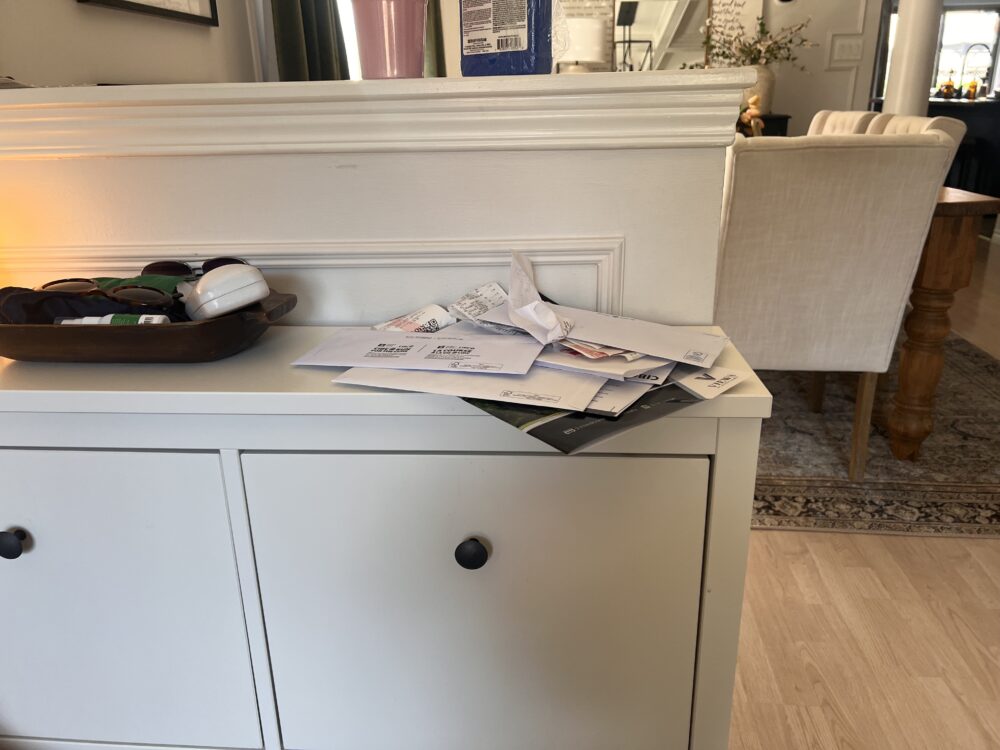
The fact that there’s a pile there doesn’t automatically tell you what the solution should be, but it does give you information.
Repeated mess isn’t random mass.
There’s a pattern there.
When something repeatedly lands in the same place, get curious before you get frustrated.
Work With the Storage You Actually Have
Okay, obviously there’s another practical piece with this and that’s that you have to work with the storage that your home already has, actually has.
You might decide that something should really live beside the stove. Great!
But if there’s no drawer, cabinet, or shelf there, we have to solve it for reality.
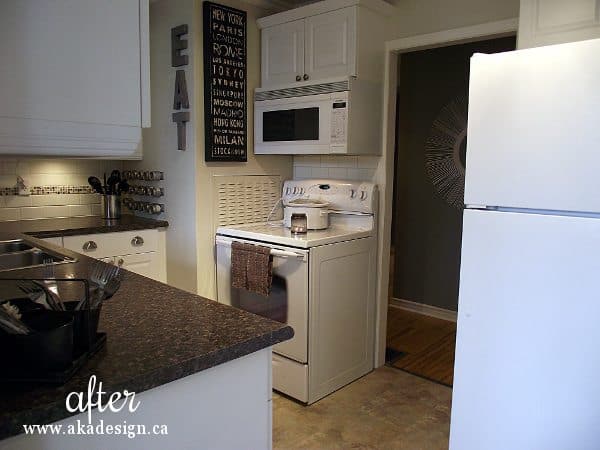
Maybe it lives in the closest available cabinet.
Maybe something you use less frequently gets moved so this item can have a better location.
Maybe you need a different storage solution.
The goal isn’t to force your home into some sort of imaginary setup.
Ask:
What’s the best available home for this thing in this actual house?
Not your dream house, not your Pinterest house. The house you live in?
This is House Mapping
House Mapping is the process of choosing practical homes for your belongings based on where, when, and how they’re actually used in your home.
You’re paying attention to things like:
- Where something gets used
- How often you use it
- Who needs to use it
- Where it naturally tends to land
- How easy it is to access
- How easy it is to put away
- The storage you actually have available.
Instead of asking:
Where should this thing go?
House Mapping asks:
Where does this thing make the most sense in our home?
And sometimes that home will be permanent.
Sometimes it might only be temporary.
The goal isn’t necessarily to find the perfect forever spot.
It’s to find the spot that makes your home easier to use right now.
You Don’t Have to Get It Right the First Time
This is really important.
Your first solution doesn’t have to be permanent.
You don’t actually know whether a home works until you live with it.
You don’t know whether your organization works until you live with it.
This is part of why my RESET Method doesn’t end when you’ve decided where everything belongs.
We set homes.
We experience the space, use it, live with it, see what happens.
Then we tweak whatever isn’t working.
Maybe you thought the scissors lived in one drawer, but everybody keeps leaving them somewhere else.
Maybe you thought the basket by the door was perfect, but nobody uses it.
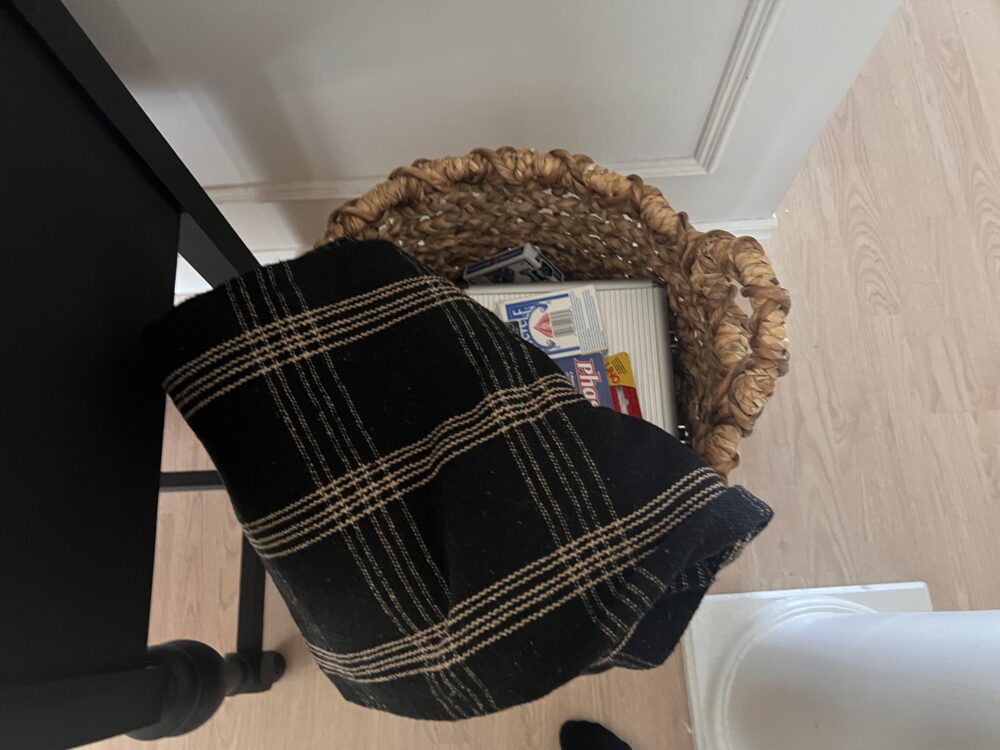
That’s not failure, that’s information.
You’re learning how your home actually functions and then you can adjust it.
That’s how you create organization that works in real life instead of organization that looks great for maybe a couple hours after you finish it.
Five Questions to Ask Before You Give Something a Home
The next time you’re standing there holding something and thinking, where the heck am I supposed to put this?
Ask yourself:
- Where do we actually use this?
- How often do we use this?
- Who needs to access it and put it away?
- Where does it naturally tend to land?
- And what’s the easiest logical home available in the storage space that we actually have?
Then try it.
You’re not signing a lifetime contract with drawer number three. 😉
Let real life tell you whether you’ve got it right.
What’s Next for You?
If this way of thinking makes sense to you, this is exactly the kind of work we do inside the Home RESET Club.
Instead of trying to organize your entire house all at once, or following some arbitrary rules, I walk you through resetting your home one manageable area at a time.
You’ll learn the full RESET Method, use tools like house mapping to create homes that make sense for the way you actually live in your house, and then experience and tweak those systems instead of assuming you’d failed and giving up and starting over when something doesn’t work perfectly the first time.
Remember:
Everything does need a home…but it needs the right home.
And that’s definitely not determined by where it looked cutest in someone else’s pantry.
The right home is the place that makes your home easier to live in.
So don’t just organize your stuff. Pay attention to your life.
Your home should be organized around the way you live, not the other way around.

Want to see more content like this in your Google searches?
This button tells Google that Home Made Lovely is a source you like, so it can show you more of it.