In this post:
What is the One Room, One Hour decluttering method?
The One Room, One Hour decluttering method gives you one hour to work through a single room, typically removing obvious clutter first, decluttering what remains and organizing what you’re keeping. Limiting the project to one room and one hour can reduce overwhelm, but if an entire room still feels too big, breaking it into smaller micro-zones can make it even easier to begin.
There’s a decluttering method making the rounds right now called One Room, One Hour.
And when I first read about it, I thought:
Okay. I actually like where this is going.
Instead of deciding you’re going to declutter your entire house this weekend, you choose one room.
You give yourself one hour.
And when the hour is over, you stop.
Already, we’re making the problem smaller.
But I think we can make it smaller still.
Because if you’re already overwhelmed by your home, one entire room can still feel like an enormous project.
What Is the One Room, One Hour Decluttering Method?
The One Room, One Hour decluttering method is pretty much exactly what the name suggests.
You choose one room and work on it for one hour.
The method that’s been making the rounds recently divides that hour into four 15-minute sections.
First, remove obvious trash and rubbish.
Next, collect anything that doesn’t belong in the room.
Then decide what you’re keeping and what you’re ready to let go of.
Finally, use the remaining time to organize what’s left.
And when the one-hour timer goes off?
You stop.
Even if the room isn’t perfect.
There are several things about this approach that I really like.
What One Room, One Hour Gets Right
First:
You don’t need to declutter your entire house at once.
Yes. A thousand times yes.
One of the fastest ways to become completely overwhelmed by your home is to look around and think:
I have to fix ALL OF THIS.
Your brain isn’t seeing one task anymore.
It’s seeing the kitchen cupboards, the dining room table, the bedroom closet, the bathroom drawers, the basement, the garage and that one terrifying storage room you’ve been avoiding since 2019.
No wonder you don’t know where to start.
The One Room, One Hour method creates a boundary.
This room. This hour.
That’s much easier for your brain to understand.
I also like that the method begins with obvious trash and things that don’t belong in the room before asking you to make harder decluttering decisions.
And I especially like that organizing comes last.
Trying to beautifully organize things you don’t actually need is one of the easiest ways to waste a Saturday.
So there’s a lot here that makes sense.
But What If One Room Is Still Too Much?
This is where I’d change the method.
If your home isn’t particularly cluttered and you just need a little seasonal refresh, one room for one hour may be completely manageable.
Go for it.
But if you’re already overwhelmed?
An entire room can contain dozens of separate decisions and projects.
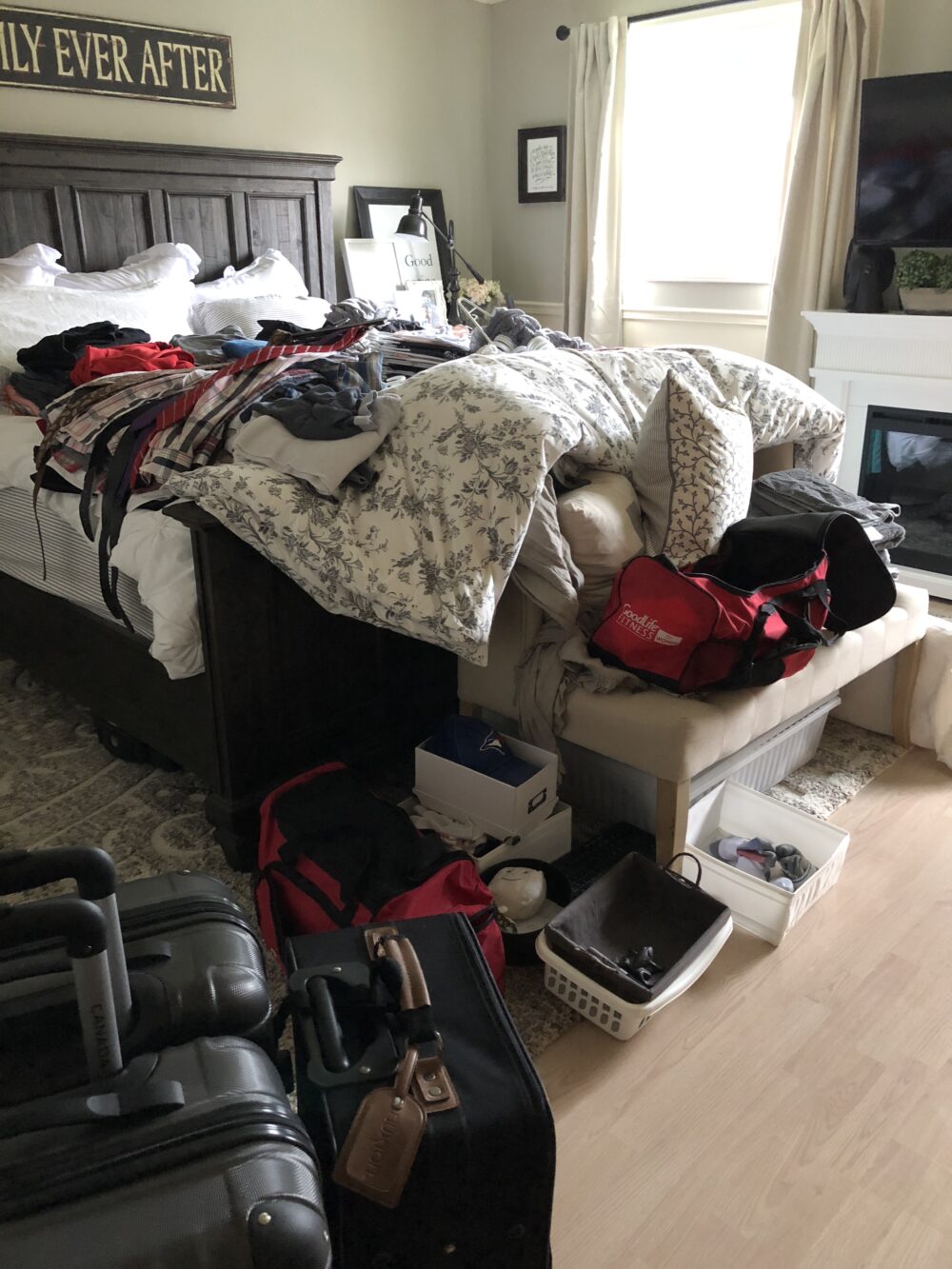
Take a bedroom.
There’s the nightstand.
The top of the dresser.
The dresser drawers.
The chair covered in clothes.
The floor.
The closet.
The shelf in the closet.
The shoes.
The stuff under the bed.
The pile of miscellaneous things that somehow belongs to nobody.
“Declutter the bedroom” sounds like one task.
It isn’t.
It’s a whole collection of tasks wearing a trench coat (which makes me think of Muppet Man. #iykyk). 😂
That’s why I teach people to make the problem smaller.
Try One Micro-Zone Instead
Instead of:
I’m going to declutter my bedroom.
Try:
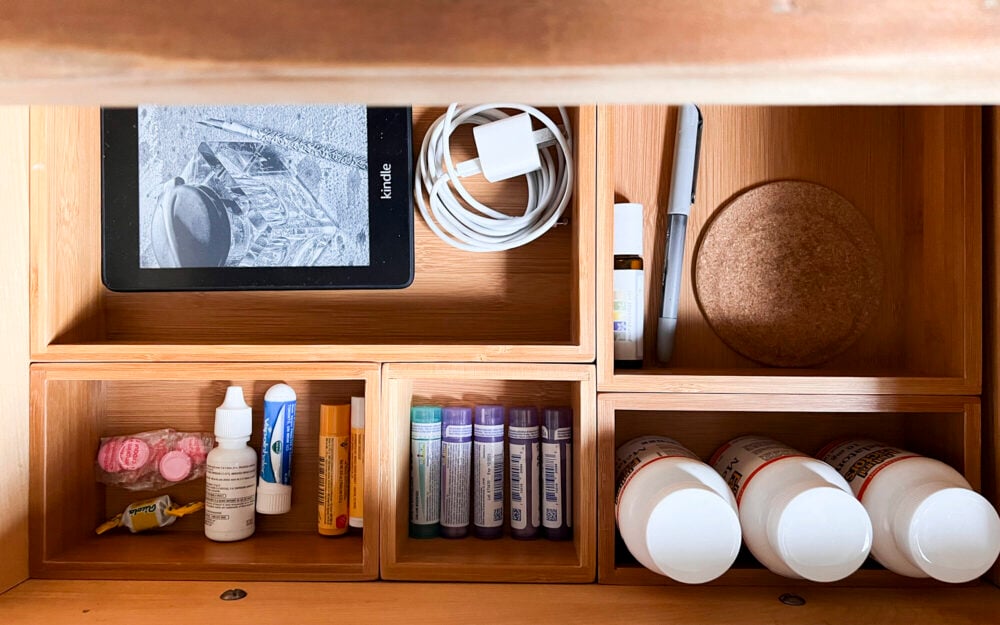
I’m going to edit the top drawer of my nightstand.
Instead of:
I’m organizing the kitchen.
Try:
I’m going to deal with this one counter.
Instead of:
I’m finally tackling the bathroom.
Try:
I’m going through this one drawer.
That’s a micro-zone.
One drawer.
One shelf.
One surface.
One little section of floor.
Small enough that you can actually see where the task begins and ends.
Because sometimes the hardest part of decluttering isn’t the work itself.
It’s getting started.
You Don’t Need an Hour to Make Your Home Better
There’s another reason I like making the project smaller than a room.
An hour isn’t always easy to find.
Especially if you’re already busy, tired or overwhelmed.
You might look at your day and think:
I don’t have an hour today. I’ll do it Saturday.
Then Saturday arrives and something comes up.
So you move it to next weekend.
And suddenly that one-hour decluttering project has been waiting six weeks for the perfect opening in your calendar.
But ten minutes?
You might have ten minutes.
You can clear one surface while dinner cooks.
You can edit one drawer before you get ready for bed.
You can deal with one shelf while you’re waiting for someone else to get ready.
Tiny pockets of time aren’t useless.
Small amounts of progress still count.

Start With the Obvious
One thing the One Room, One Hour method gets very right is starting with the easiest decisions.
I do the same thing in the first step of my RESET Method:
Remove the obvious.
Before you start agonizing over sentimental things or trying to decide how many serving bowls a person reasonably needs, deal with the easy stuff.
Trash.
Recycling.
Broken things.
Things that clearly belong somewhere else.
You don’t need to use your best decision-making energy on an empty Amazon box.
Getting the obvious things out of the way gives you a quick win and makes it easier to see what you’re actually working with.
Then Edit One Small Area at a Time
After the obvious things are gone, I wouldn’t try to declutter everything else in the room in the next 15 minutes.
I’d choose a micro-zone.
One drawer.
One shelf.
One surface.
Take a look at what’s there.
What do you use?
What do you want?
What’s no longer serving you?
What are you keeping simply because you haven’t made a decision about it yet?
Work through that little area.
Then stop.
Or choose another micro-zone if you genuinely have the time and energy.
Don’t Rush the Organizing Part
The One Room, One Hour method leaves the final 15 minutes for organizing.
Again, I agree with the order.
But I don’t necessarily want you to decide exactly where everything should live simply because the clock says you have 15 minutes left.
Sometimes the first organizing solution you try won’t be the right one.
That’s okay.
In my RESET Method, after you Edit, you Set temporary homes.
Then you Experience the space.
Live with it.
See whether you naturally put things back there.
Notice whether the location makes sense for the way you actually use the room.
Then Tweak what’s not working.
I don’t want you creating a perfectly organized room at 2:57 because your timer ends at 3:00.
I want you creating systems that actually work on an ordinary Tuesday three months from now.
Progress Doesn’t Have to Look Dramatic
I think this is where a lot of decluttering advice accidentally makes things harder.
We love a transformation.
A giant before-and-after.
A completely emptied closet.
A room that looks totally different at the end of the afternoon.
And those things can be incredibly satisfying.
But they’re not the only kind of progress that counts.
Maybe today you dealt with one drawer.
Tomorrow you clear one shelf.
Wednesday you finally deal with that pile on the floor.
None of those accomplishments is particularly dramatic on its own.
But together?
They’re changing the room.
And because you didn’t exhaust yourself doing it, you’re much more likely to keep going.
So, Does One Room, One Hour Work?
It absolutely can.
I like the idea behind the One Room, One Hour decluttering method.
It puts a boundary around the project.
It encourages you to start with obvious clutter.
It puts decluttering before organizing.
And it gives you permission to stop before everything is perfect.
All good things.
But if one room and one hour still sound overwhelming?
Make the problem smaller.
Don’t declutter the bedroom.
Declutter one drawer.
Don’t organize the kitchen.
Reset one counter.
Don’t fix the entire living room.
Deal with one shelf.
You don’t have to make the biggest amount of progress you possibly can today.
You just need to make the problem small enough that you’re willing to begin.
And then do the next small thing.
That’s how an overwhelming house eventually becomes a manageable one.
Does Your Whole House Feel Overwhelming?
If you’re looking around your home and don’t even know where to begin, start by figuring out what’s actually making it feel so hard to manage.
Take my free Messy Home Diagnostic to find out whether clutter, organization or home habits are creating your biggest problem right now.
Once you know the problem you’re actually solving, it’s much easier to make it small enough to tackle.

Want to see more content like this in your Google searches?
This button tells Google that Home Made Lovely is a source you like, so it can show you more of it.