In this post:
What is House Hushing?
House Hushing is an approach from Myquillyn Smith, also known as The Nester, that helps you experience your home with less visual noise before making all your decluttering decisions. In her original explanation, Myquillyn describes House Hushing as “backwards decluttering”: temporarily remove the smaller items and decor from one room, live with the quieter space for 24 hours, and then intentionally decide what comes back. I think there’s a lot to like about the idea, especially if we make the project small enough that trying it doesn’t create even more overwhelm.
Have you ever looked around a room in your home and thought:
There’s just…too much happening in here.
Maybe it isn’t technically messy.
Everything might even have a place.
But every surface has something on it. The shelves are full. There are pillows and baskets and books and decor and all the regular stuff of everyday life competing for your attention.
The room feels loud.
That’s the problem behind an approach called House Hushing.
And as someone who believes our homes should support us rather than constantly demand our attention?
I find this one really interesting.
What Is House Hushing?
House Hushing comes from Myquillyn Smith, also known as The Nester.
Myquillyn has been teaching the idea of hushing a house for years.
In one of her earlier explanations, she describes House Hushing very simply as backwards decluttering.
Instead of standing in a room surrounded by your belongings and making decision after decision about what should go, you temporarily remove the smaller items and decor first.
Then you experience the room with less.
Only afterward do you decide what you actually want to bring back.
Myquillyn’s House Hushing work has since grown into a broader approach to creating a home that feels simple, peaceful and personal, including ideas around Backwards Decluttering, Quiet Decorating, Soulful Styling and Living Seasonally.
But that original decluttering technique is a really useful place to start.

How Do You Hush a House?
Myquillyn’s original House Hushing process is surprisingly simple.
Start with one room.
Choose a temporary holding area in another room.
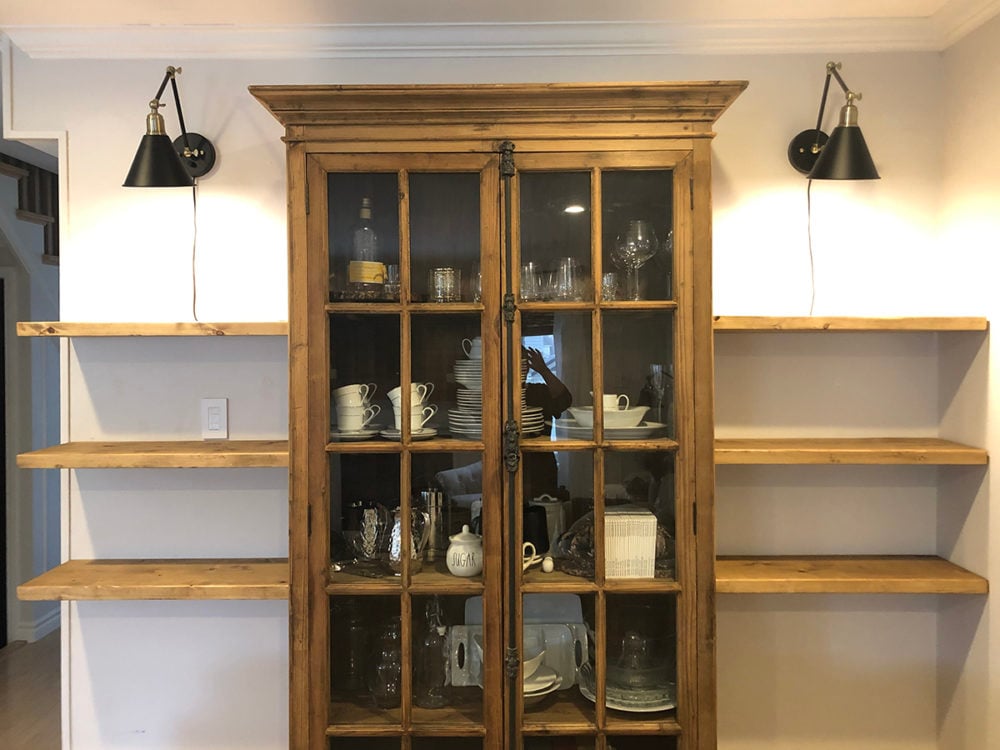
Then remove the smaller things from the room you’re hushing: decor, accessories and all those little objects that have accumulated on the surfaces.
You aren’t deciding whether to donate them.
You aren’t organizing them.
You aren’t standing there debating whether you still love every object.
You’re just moving them temporarily.
Then?
Wait 24 hours.
Live in the quieter room for a day before you start bringing things back.
That’s an important part of the process.
You’re giving yourself a chance to experience the room with less visual noise before making your decisions.
Why House Hushing Can Feel Easier Than Decluttering
I think this is one of the smartest things about House Hushing.
Traditional decluttering often begins with decisions.
Pick something up.
Keep it?
Donate it?
Move it?
Do I still like it?
Could I use it someday?
Did somebody give it to me?
What if I regret getting rid of it?
And repeat that approximately 4,372 times. 😂
If decision-making is the part that makes you shut down, that’s exhausting.
House Hushing changes the order.
First, you get the visual win.
Then you make the decisions.
You get to walk into the room and actually experience:
Oh.
This feels different.
Maybe it feels calmer.
Maybe your favourite things suddenly stand out.
Maybe the room feels bigger.
Maybe it’s easier to use.
Maybe you discover you don’t miss half of what you removed.
That experience gives you new information before you decide what comes back.
Sometimes You Need to Experience Less Before You Know What Feels Like Enough
We get incredibly used to our homes.
After you’ve walked past the same collection of things on the mantel 847 times, you barely see them anymore.
One thing gets added to the kitchen counter.
Then another.
One decorative object becomes five.
A shelf slowly fills.
Another basket appears.
Nothing necessarily feels like a dramatic problem on its own.
But collectively, the room starts asking more of your attention.
Temporarily removing some of that visual noise lets you see the space differently.
And you might discover:
Oh. I like this.
That’s valuable information.
Because now you’re not deciding what belongs in the room based only on habit.
You’re deciding after you’ve actually experienced another possibility.
An Empty Surface Isn’t Unfinished
This may be my favourite takeaway from the whole idea.
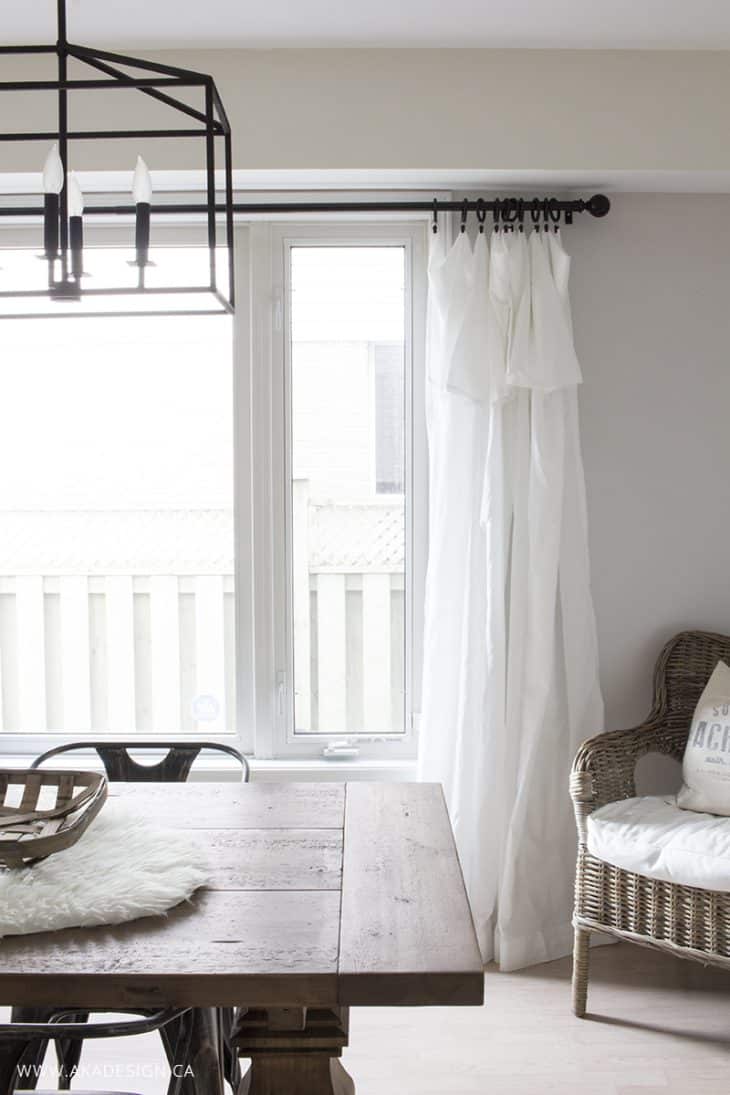
An empty surface isn’t unfinished. Sometimes it’s breathing room.
We have a funny tendency to see available space and immediately think:
What should go there?
An empty corner needs something.
An empty shelf needs decor.
An empty kitchen counter apparently needs seven appliances and a decorative bowl. 😂
But empty space can be functional.
It gives your eyes somewhere to rest.
It makes the things you intentionally display more noticeable.
It makes surfaces easier to clean.
And it leaves room for everyday life to happen.
You don’t have to fill every available inch of your home.
You’re allowed to leave some room.
Where I’d Adapt House Hushing for an Overwhelmed Home
Myquillyn already keeps House Hushing manageable by starting with one room, not the whole house.
And she isn’t telling you to empty the furniture out of the room.
You’re temporarily moving the smaller items and decor.
Still…
If your house already feels overwhelming, even the thought of covering your dining table with everything you just removed from your living room may make you think:
Shannon, I absolutely do not need another pile of stuff to deal with. 😂
Fair.
So I’d make the experiment even smaller.
Try Hushing One Micro-Zone
Instead of an entire room, try one:
- mantel
- kitchen counter
- bathroom counter
- dresser top
- coffee table
- nightstand
- bookshelf
- open shelf
Temporarily remove the things sitting there.
Don’t immediately decide what to donate.
Don’t rush to restyle it.
Just let the space breathe.
Then live with it for a little while.
Notice.
Do you miss anything?
Does the empty space feel strange?
Peaceful?
Too bare?
Exactly right?
What do you actually want to bring back?
That’s useful information.
And because you’re working with one small area, you get the benefit of experiencing the quieter space without creating a project that’s too big to manage.
House Hushing Delays the Decisions. I Usually Make the Decisions Smaller.
This is where I see an interesting difference between House Hushing and the way I teach decluttering.
One reason Myquillyn created House Hushing was to get that visual payoff without having to make all the decluttering decisions first.
House Hushing essentially says:
Temporarily remove → Experience less → Decide what returns.
I usually approach overwhelm a little differently.
With my Home RESET Method, I want to make the problem small enough to solve.
Rather than decluttering an entire room, we Edit micro-zone by micro-zone.
One drawer.
One shelf.
One surface.
One small area.
So instead of postponing a roomful of decisions, we’re reducing the number of decisions we’re asking you to make at one time.
Neither approach requires you to tear your whole house apart.
They’re simply two different ways of reducing overwhelm.
And depending on what’s stopping you, one may feel easier than the other.
Where House Hushing and the Home RESET Method Meet
House Hushing is Myquillyn’s approach. It’s not part of my Home RESET Method.
But there’s something underneath it that strongly resonates with what I teach:
Experience matters.
We just use experience at different points in the process.
With House Hushing, you experience the visual benefit of less before making your final decisions about what returns.
With RESET, you:
Remove the obvious.
Edit what you’re keeping.
Set temporary homes.
Then you Experience the space.
You live with your choices.
Do people actually put things back?
Does the location make sense?
Does the room feel easier to use?
Where does clutter start accumulating again?
Then you Tweak what’s not working.
In both cases, there’s an important reminder:
You don’t have to make every decision in theory. Your home can give you information when you actually live in it.
But House Hushing Won’t Fix Every Kind of Mess
This distinction matters.
If your room feels visually noisy because there are too many things sitting out, House Hushing may be incredibly helpful.
If you’ve become blind to all the little things that have accumulated around you, hushing the space may help you see it with fresh eyes.
But what if your dining table is covered with papers because nobody knows where papers belong?
That’s probably an organization problem.
What if shoes pile up beside the door because their assigned home is upstairs in a closet nobody uses?
That’s probably a system problem.
What if your house looks great after you tidy it but everyday mess accumulates faster than you can recover from it?
You may need better home routines.
House Hushing can help you see and experience your space differently.
But that doesn’t necessarily solve whatever caused recurring mess in the first place.
That’s why I always want to know:
What problem are we actually trying to solve?
So, Is House Hushing Worth Trying?
I think it absolutely can be.
Especially if your home doesn’t necessarily feel messy so much as visually noisy.
I really like the idea of experiencing the visual reward of less before making a hundred decisions.
And I like that House Hushing doesn’t require you to immediately decide the fate of everything you remove.
You can simply see how the room feels.
Then decide.
And if hushing an entire room sounds like too much?
Make the problem smaller.
Hush one surface.
One shelf.
One little area.
Experience it.
Then decide what you actually want to bring back.
You may miss some things.
Bring them back.
You may realize something meaningful deserves a more prominent place.
Wonderful.
And you may look at that beautifully empty section of your home and realize:
I don’t need to put anything there at all.
Sometimes the thing your home needs most isn’t another organizing product, another piece of decor or another complicated system.
Sometimes it just needs a little room to breathe.
House Hushing is one of several popular decluttering methods that can be useful for a particular problem. The important part is knowing which problem you’re actually trying to solve.
Not Sure What’s Actually Making Your Home Feel Overwhelming?
Visual clutter is only one reason a home can feel hard to manage.
You might have too much stuff.
You might have an organization problem.
Or your home may simply need better habits and routines to help it recover from everyday life.
Take my free Messy Home Diagnostic to find out whether clutter, organization or home habits are creating the biggest problem in your home right now.
Once you know what problem you’re actually solving, you can choose the right tool to solve it.

Want to see more content like this in your Google searches?
This button tells Google that Home Made Lovely is a source you like, so it can show you more of it.