Choosing the right white paint for cabinets can make or break your kitchen or bathroom makeover. Cabinets take up a lot of visual space, so the color you choose has to complement your walls, trim, and decor while also standing up to daily wear and tear. Over the years, I’ve painted cabinets more than once, and I’ve learned a lot along the way. In this guide, I’ll walk you through everything you need to know to choose the perfect white paint for your cabinets.

If you’re planning to tackle this project yourself, be sure to check out my step-by-step guide on how to paint kitchen cabinets for all the details you’ll need!
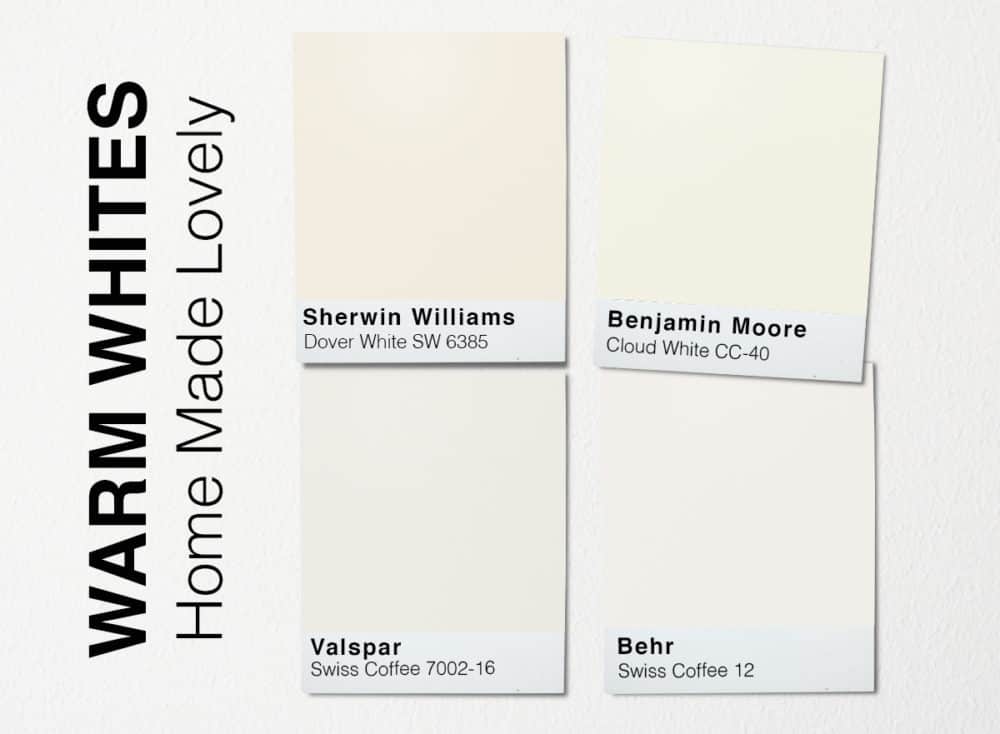
Warm Whites
Warm whites have yellow or red undertones, which give them a cozy, inviting feel. I love these for traditional or farmhouse-style kitchens.
Examples:
- Sherwin Williams Alabaster SW 7008
- Benjamin Moore White Dove OC-17
Cool Whites
Cool whites have blue, green, or gray undertones, creating a crisp, clean look. These work well in modern or contemporary spaces.
Examples:
- Sherwin Williams Pure White SW 7005
- Benjamin Moore Chantilly Lace OC-65

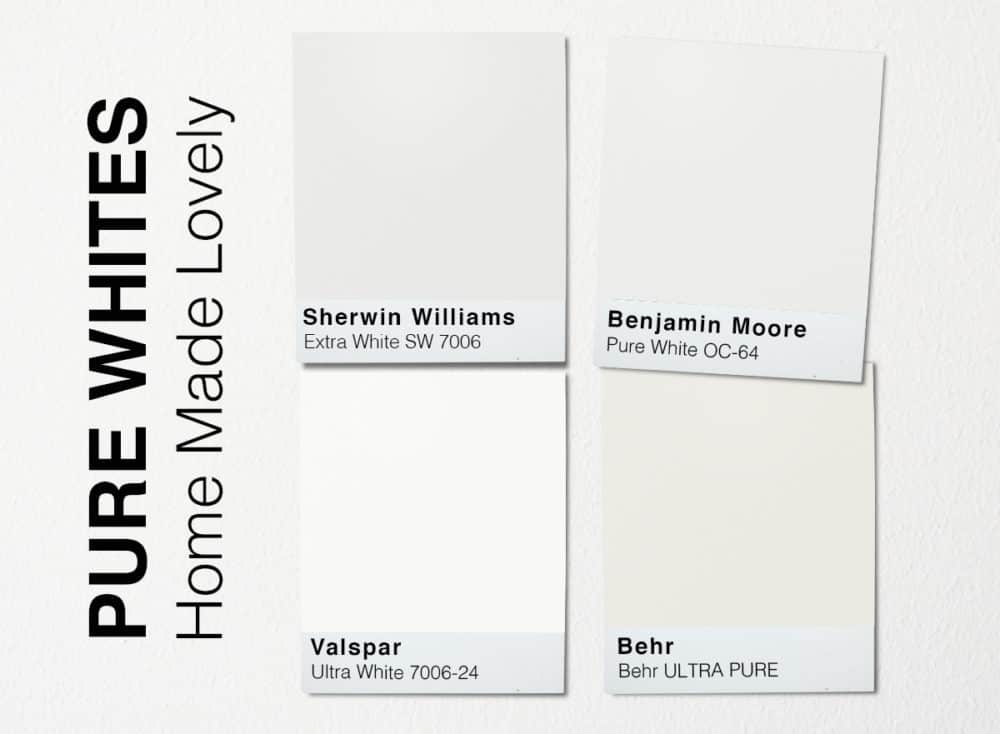
Pure Whites
Pure whites are neutral and bright, with minimal undertones. I like to use these for trim and cabinets in minimalist or industrial-style spaces.
Examples:
- Sherwin Williams Extra White SW 7006
- Benjamin Moore Simply White OC-117
Step 2: Consider the Sheen
The sheen of your cabinet paint affects both the look and durability of the finish. Here’s what I’ve found works best:
- Semi-Gloss:
My go-to for cabinets. It’s durable, easy to clean, and has just enough shine to make the color pop. - Gloss:
If you’re looking for a high-shine finish, gloss paint is a great option. It’s incredibly durable but tends to highlight imperfections, so prep work is key.
Step 3: Think About Lighting and Surrounding Colors
Lighting plays a big role in how your cabinet color looks. Here’s how I approach it:
- South-facing rooms: These tend to have warm, golden light, so I might choose a cooler white to balance the warmth.
- North-facing rooms: These have cooler, blue-toned light, so a warm white can help add coziness.
- Coordinate with walls and trim: I always test cabinet paint next to my wall and trim colors to make sure they work together.
Step 4: Test Paint Samples
Testing paint is the most important step in this process. Here’s how I do it:
- Paint sample boards: I paint large boards with my chosen whites and place them next to the cabinets.
- Check at different times of day: I look at the samples in natural daylight, under kitchen lighting, and at night.
- Compare against walls and trim: Seeing how the cabinet color interacts with surrounding elements helps me make the best choice.
Why Choosing the Right White Paint for Cabinets Matters
Cabinets take up a lot of visual space, so the white you choose will set the tone for the entire room. The wrong white can clash with your walls or decor—or worse, highlight every smudge and fingerprint. The right white, on the other hand, creates a cohesive, polished look that ties everything together beautifully.

FAQs
Yes! I’ve done this before, and it creates a cohesive look. Just make sure to use different sheens, like semi-gloss for cabinets and eggshell or satin for walls.
I recommend using a high-quality paint designed for cabinetry, like Benjamin Moore Advance or Sherwin Williams Emerald Urethane. These paints are formulated to handle wear and tear.
I wipe mine down regularly with a damp microfiber cloth. For tougher stains or grease, a mild dish soap solution works wonders.
Choosing the right white paint for cabinets doesn’t have to be stressful. By considering undertones, lighting, and sheen—and always testing your options—you’ll be well on your way to creating a space that feels fresh, polished, and uniquely yours.
Are you planning to paint your cabinets white? I’d love to hear about your project or help answer any questions—drop a comment below!

Want to see more content like this in your Google searches?
This button tells Google that Home Made Lovely is a source you like, so it can show you more of it.