
Keeping a family organized can feel like juggling a dozen balls at once, right? Between appointments, school schedules, and everyday chaos, having a central hub makes all the difference. For me, our command center by the side door is that hub—a high-traffic area where we keep everything from keys to dog supplies organized.
If tackling clutter is on your to-do list, you’ll also love my post on Get Rid of Paper Clutter Once and For All. It’s packed with practical strategies to help you eliminate paper piles for good. From organizing mail and important documents to creating a filing system that works, it’s a must-read for anyone feeling overwhelmed by paper clutter! Now onto the family command center guide!
How to Create Your Own Family Command Center
Creating a family command center doesn’t have to be complicated, but a little planning can go a long way. Here’s a detailed guide to help you set up an organized and stylish space that works for your family:
1. Choose the Right Location
- Look for a spot in your home that sees a lot of daily traffic. Common areas include the kitchen, entryway, mudroom, or even a hallway.
- Make sure the location has enough wall or counter space for your needs and is easy for everyone in the family to access.
2. Define Your Needs
- Take a few minutes to brainstorm what your family struggles with most. Do you often misplace keys? Forget about appointments? Need a central spot for your grocery list?
- Write down a list of everything you want the command center to handle. Common needs include:
- Keeping track of schedules with a calendar.
- Storing mail and important papers.
- Displaying to-do lists or chore charts.
- Organizing keys, pens, and small essentials.
- Managing school or work papers.
3. Gather Supplies
- Wall organizers: Baskets, file holders, or magazine racks for mail and papers.
- Hooks: For keys, backpacks, jackets, or dog leashes.
- Calendars and planners: Choose a wall calendar, a dry-erase board, or a magnetic calendar for tracking family events.
- Chore/to-do lists: Dry-erase boards, chalkboards, or even framed glass for writing reusable to-do lists.
- Office supplies: Pens, markers, notepads, and sticky notes to keep everything handy.
- Decorative touches: Family photos, inspirational quotes, or small decorative items to make the space feel personal.
4. Plan the Layout
- Sketch it out: Before installing anything, draw a rough layout on paper or use a design app to plan where each item will go.
- Use Kraft paper: For a foolproof way to arrange items, trace each one onto Kraft paper, cut it out, and tape the cutouts to the wall. Rearrange as needed until you’re happy with the layout.
- Consider heights: Keep frequently used items, like keys or schedules, at an easy-to-reach height for adults and kids alike.

5. Install Your Command Center
- Start by installing larger items like bulletin boards, calendars, or wall racks. Use a level to ensure everything is straight.
- Add hooks, baskets, and smaller elements next. Command strips or removable hooks can work well if you want to avoid drilling holes.
- Label storage areas (e.g., “mail,” “keys,” or “to-do lists”) to help everyone know where things belong.
6. Organize by Zones
- Divide the command center into sections based on purpose. For example:
- Scheduling zone: Calendar, planner, and a spot for reminders.
- Storage zone: Hooks for keys, baskets for mail, or cubbies for each family member’s papers.
- Creative zone: A chalkboard or whiteboard for doodles, notes, or inspirational quotes.
7. Make It Stylish
- Choose a cohesive color palette or theme that complements the surrounding decor.
- Add decorative frames for lists or notes, use coordinating baskets or hooks, and include a pop of personality with items like a marquee letter or a family motto.
- Don’t shy away from mixing functionality with beauty—an organized space should also feel inviting.
8. Test and Adjust
- Live with your command center for a week or two to see what works and what doesn’t.
- If something isn’t being used, rethink its placement or function. It’s okay to tweak the design until it perfectly fits your family’s needs.
9. Maintain the Space
- Assign a weekly “reset” day to declutter and tidy up the command center.
- Teach your family to use the space daily—hang keys on hooks, jot down items on the grocery list, and keep papers in their designated slots.
- Encourage kids to take responsibility for their zones, like updating their own to-do lists or chore charts.

Our Updated Family Command Center
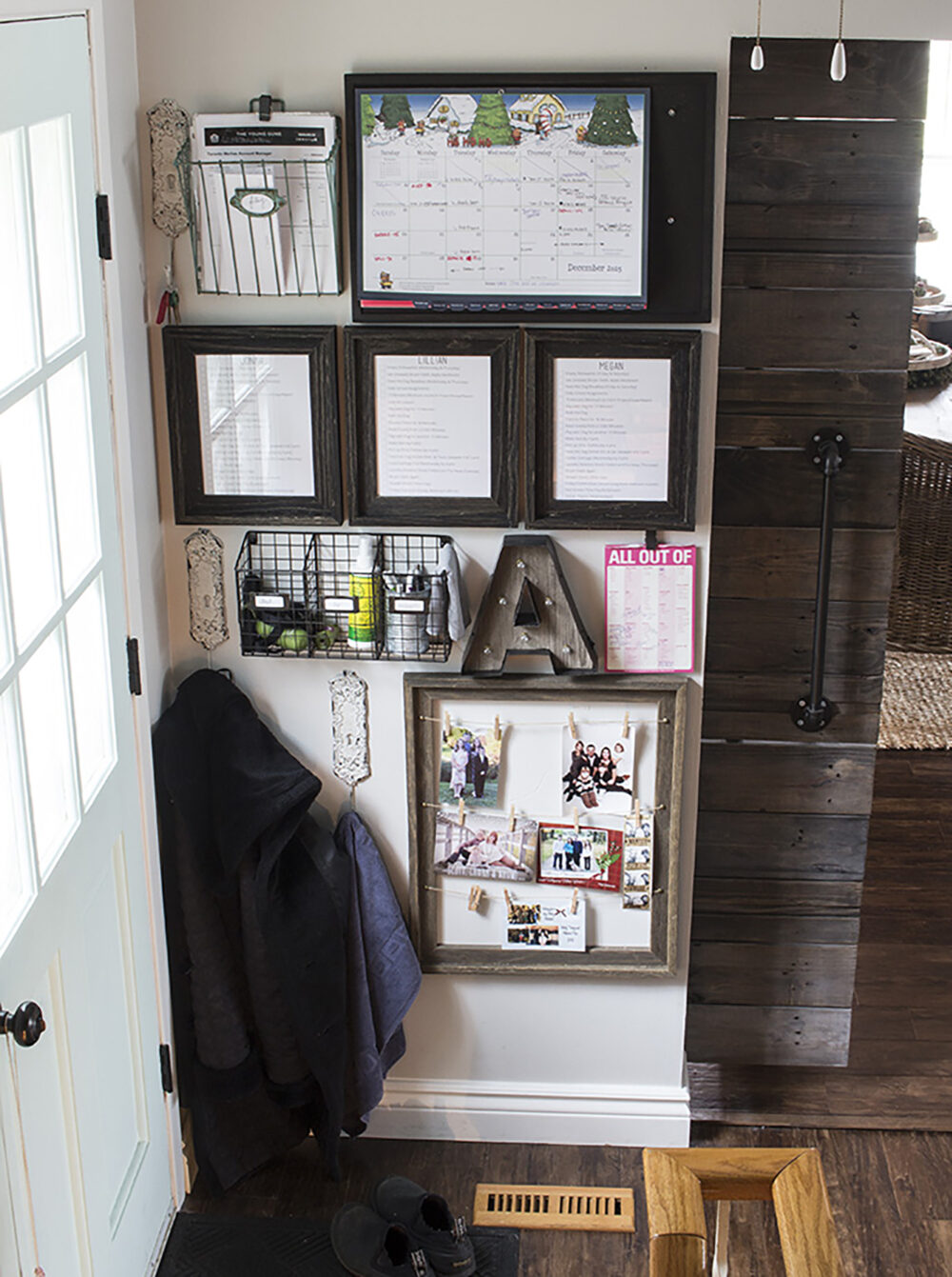
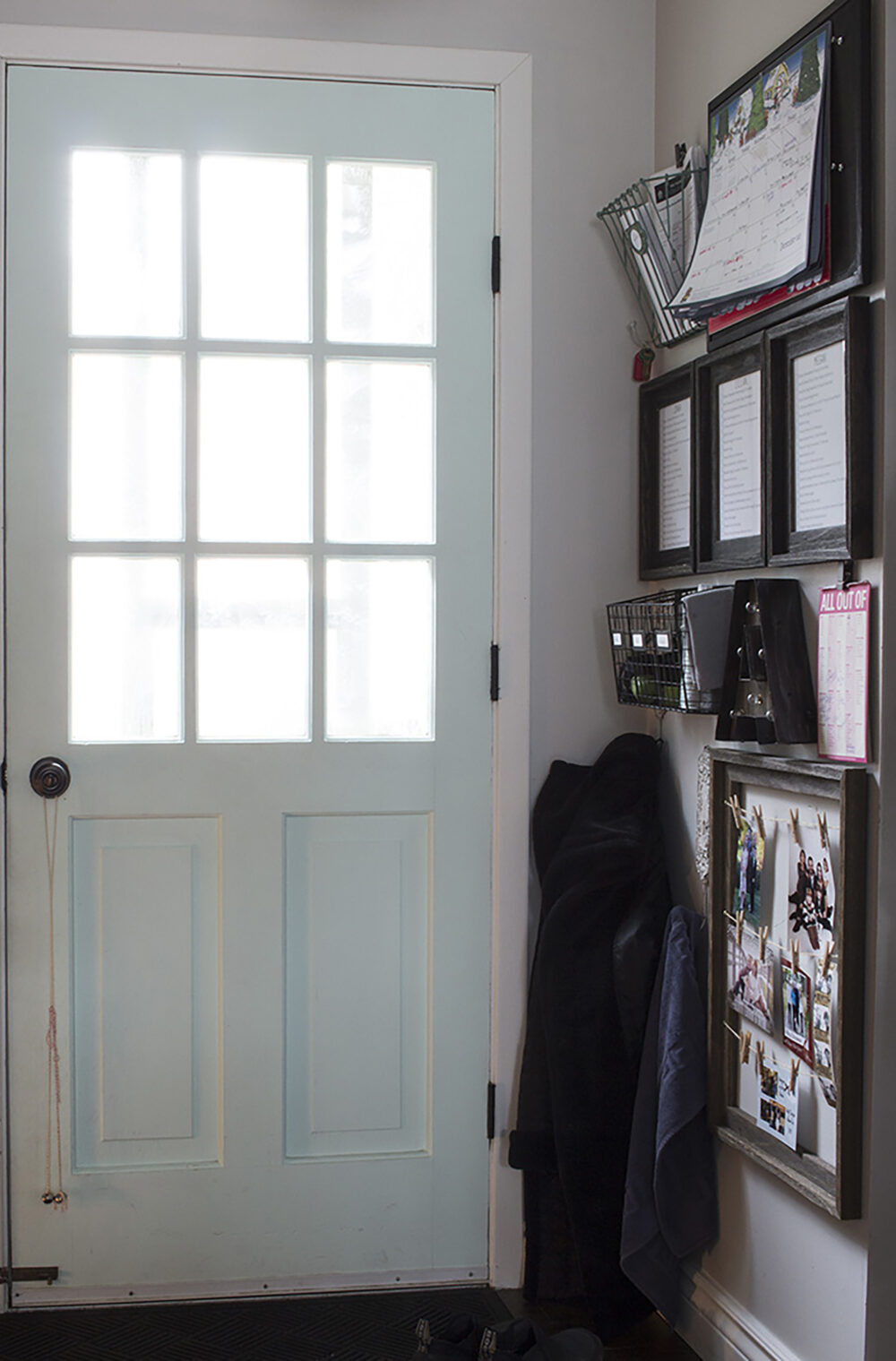
When we moved into this house, I created a family command center near our side door, which connects the kitchen, side yard, and garage. Over time, though, it stopped working as well as it should—becoming more of a dumping ground than an organized space. This year, I gave it a much-needed refresh, making it both functional and beautiful.

Here’s what I used to create our updated family command center:
- Wire hanging basket: Perfect for items that need to be filed.
- Triple hanging basket: Holds dry-erase markers, pens, doggie bags, and the leash.
- Pretty hooks: For spare keys, jackets, and a dog paw towel.
- Bulletin board: Used for the calendar and pinning short-term notices.
- Picture frames as dry-erase boards: Each child has their own frame for to-do lists.
- 3M “clothespin”: Handy for holding a grocery list pad.
- Framed clothespins: Display family photos or cards from loved ones.
- Marquee letter “A”: A decorative, personal touch to make the space fun.
Refreshing this space reminded me that organizing doesn’t have to be boring—it can reflect your personal style while still meeting your family’s needs.
FAQs
A family command center is an organized space designed to keep your household running smoothly. It can include items like calendars, to-do lists, key hooks, and mail baskets.
Focus on vertical storage, like wall-mounted baskets and hooks. Look for multifunctional items, such as a calendar that doubles as a memo board.
Assign a weekly “reset” time to declutter the space. Teach your family to use it daily—like hanging keys on hooks or updating their to-do lists.
Absolutely! Add fun touches like framed family photos, a decorative monogram, or color-coded supplies for each family member.

Create Your Own Family Command Center Tutorial
Create a stylish and functional family command center to organize your home! Get practical tips and creative ideas to refresh your space.
Materials
- Wall Organizers: Wire or hanging baskets for mail and papers.
- Hooks: Decorative or functional hooks for keys, backpacks, or leashes.
- Calendar/Planner: Dry-erase, magnetic, or paper wall calendar.
- Dry-Erase Boards/Frames: For reusable to-do lists or chore charts.
- Bulletin Board: Pinboard for notes, reminders, or photos.
- Office Supplies: Pens, markers, sticky notes, grocery list pads.
- Decorative Touches: Family photos, marquee letters, or motivational quotes.
- Labels: For baskets, hooks, or zones to make the system clear.
Tools
- Measuring tape.
- Level.
- Screwdriver or drill (optional, for permanent installation).
- Command strips or removable hooks (for temporary or renter-friendly setups).
- Scissors.
- Kraft paper (for layout planning).
- Painter's tape (for testing layout).
Instructions
- Choose Your Space
Select a high-traffic area like the kitchen, entryway, or mudroom that’s easily accessible for everyone. - Define Your Needs
Make a list of items to organize, such as keys, mail, calendars, or to-do lists. - Plan the Layout
Use Kraft paper cutouts to map out your design on the wall. Adjust as needed before committing to placement. - Gather and Prepare Supplies
Collect your baskets, hooks, boards, and decorative items. Label items for easier organization. - Install Organizers
Start with large pieces like a bulletin board or calendar, followed by hooks and smaller items. Use a level for straight installation. - Organize and Label Zones
Arrange items into clear zones for scheduling, mail, keys, or family tasks. Add labels to keep everything organized. - Add Personal Touches
Include family photos, a favorite quote, or fun decor to make the space inviting. - Test and Adjust
Live with the command center for a week, then tweak as needed to better suit your family’s needs.
Refreshing our family command center has been such a satisfying project. Now it’s not only functional but also a space that makes me smile every time I walk by. If your family needs a little extra organization, I hope this inspires you to create your own stylish command center that truly works for your life. What’s one area in your home you’d love to organize this year? Let me know in the comments—I’d love to cheer you on!

Want to see more content like this in your Google searches?
This button tells Google that Home Made Lovely is a source you like, so it can show you more of it.

Love it!!
So rustic, so organized. Beautiful, Shannon!
Happy New Year, this is awesome!!!!
Shannon,
This looks great and I hope it works great for you and the family. Good Luck.
Carol P-K
Thank you!
Where did you find the ‘all out of….’ Pad? Love, love it all!
I buy them at Chapters. You may find them on Amazon too though.
Oh how I love drop zones and command centers! Your suggestion of using paper to block out the spaces before making them permanent is great. I did a similar thing when we were renovating our home. My hubby thought I was nuts but I told him that it is so much easier to move some pieces of paper around than to have to fill in holes and remove shelves. Thank goodness, he let me do it my way! LOL
Sinea ♥
It’s such a good trick – and it really saves the walls!!!
Love this!! Going to use some old frames. I’ve had no use for them,until now! Thinking of adding a “honey- do list” as well. Can you tell me where you got the triple wall organizer?
It’s from Michaels! 🙂
Love to know what you have the “To-Do” list!