
Choosing a white paint for your walls can be surprisingly overwhelming. What seems like a simple decision often spirals into frustration when the white I pick turns out too stark, too yellow, or just plain wrong for the space. Sound familiar?

I’ve been there. After many paint projects (and a few mistakes), I’ve learned what works and what doesn’t when it comes to white walls. In this guide, I’ll walk you through the steps I follow to find the perfect white paint for walls. For even more help with white paint, check out my guide on understanding undertones in paint and other colors—it’s a game-changer!
How to Choose the Perfect White Paint for Walls: Step-by-Step
Step 1: Consider the Lighting in Your Room
Lighting is one of the most important factors when choosing white paint for walls. Different lighting conditions can completely change how a white paint looks in a room:
- North-facing rooms: These tend to have cooler, blue-toned natural light. I always choose a warm white to counterbalance this and create a cozy feel.
- South-facing rooms: These are naturally bright and warm. A cool white works well here to balance the light.
- East- and west-facing rooms: These get both warm and cool light at different times of day, so I make sure to test paint samples to see how they look in the space.
Step 2: Identify the Undertones
White paint isn’t just white—it’s full of subtle undertones that can make it feel warm, cool, or neutral. Here’s what I’ve learned:
- Warm whites: Have yellow or red undertones, creating a soft, cozy look.
- Cool whites: Have blue, green, or gray undertones, giving a crisp, modern vibe.
To identify undertones, I compare the paint to a piece of plain white printer paper or hold it against other paint swatches. This trick always reveals any hidden colors.

Step 3: Choose the Right Sheen
The sheen you choose for your white walls can make a big difference in the overall look and durability:
- Flat/matte: Best for low-traffic rooms like bedrooms. It hides imperfections but isn’t as easy to clean.
- Eggshell: A versatile option for living rooms and dining rooms. It’s slightly more durable than flat.
- Satin: Great for high-traffic areas like hallways or kids’ rooms. It offers a soft sheen and is easy to clean.
- Semi-gloss: Ideal for kitchens or bathrooms where walls need to be wiped down often.
Step 4: Test Your Paint Samples
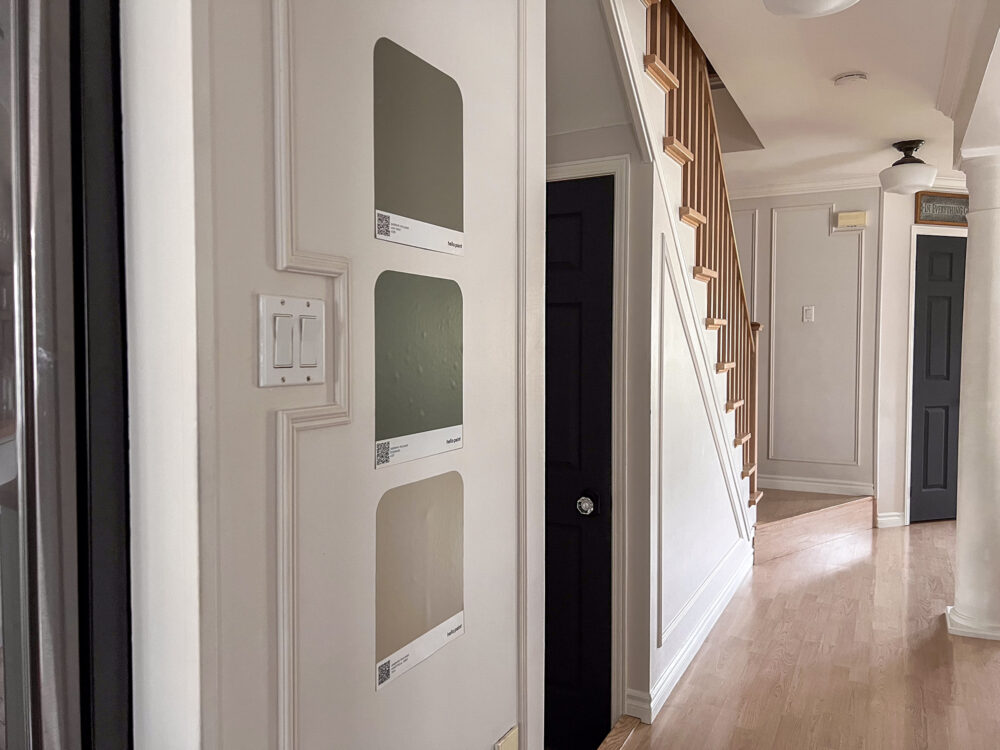
I never skip this step! Testing paint in the actual room is the best way to avoid surprises. Here’s how I do it:
- Get large swatches: Paint sample boards or large sections of the wall with the chosen colors.
- Test in different lighting: I always look at the paint in natural daylight and under the room’s artificial lighting.
- Compare multiple whites: Seeing warm and cool whites side by side helps me decide which works best.
Step 5: Think About the Room’s Purpose and Style
The way a room is used and its overall decor style can also guide the choice:
- Cozy spaces like bedrooms or family rooms often benefit from warm whites.
- Functional spaces like kitchens or offices pair well with cool whites.
- I always consider furniture, flooring, and accessories to make sure the white walls enhance the existing decor.
Why Choosing the Right White Paint Matters
White walls aren’t just a blank canvas—they set the tone for the entire space. The wrong white can make a room feel cold, dingy, or overly clinical, while the right white creates a fresh, inviting backdrop for decor.
By considering factors like lighting, undertones, and sheen, I’ve found it’s possible to make white walls anything but boring.

FAQs
This usually means the undertones weren’t a good match for the lighting or decor. I’ve adjusted this in the past by tweaking the room’s lighting or adding decor that balances the undertone. If it’s still not working, repainting is worth it for peace of mind.
Yes! I’ve done this in the past by using warm whites in cozy spaces and cool whites in brighter, more modern areas. Just make sure they complement the overall color scheme.
I recommend eggshell or satin for high-traffic areas. They’re durable and easy to clean while still looking stylish.
How to Choose the Right White Paint for Your Home – Video
In case you’re more of an auditory learner, I sat down and recorded a chat about choosing the perfect white paint color. Check it out:
Choosing the perfect white paint for walls doesn’t have to be daunting. By understanding lighting, undertones, and sheen—and always testing samples—you’ll set yourself up for success. Whether you’re going for a cozy vibe or a crisp, modern look, the right white walls can transform your space.
Have you found a white paint you love? Or are you struggling to decide? Share your thoughts in the comments—I’d love to help!

Want to see more content like this in your Google searches?
This button tells Google that Home Made Lovely is a source you like, so it can show you more of it.

I am building a lake house and are going to white wash the pine paneling in living areas. The bedrooms will be sheet rock walls. What white color do you think would look best on the paneling and would you use that same color in bedrooms and bath?
Hi there Margarette,
Congrats on your lakehouse! I bet it will be lovely! Have you seen our post about how to create a whole home color palette? It will help you choose all your colors together or at least with all the spaces in mind!
Thank you so much for your video on choosing the right white. I am having a difficult time and I think you have helped a little. I have Benjamin Moore’s Decorator White Kitchen cabinets. My home faces south and is contemporary with an open floor plan. There are lots of windows in the front (south), but I have a very long front porch so I don’t have harsh sun. The livingroom is 15×30 and has a 15′ vaulted ceiling. My kitchen is in the middle of the house and there is a smallish (10×14) sunroom on the north. Both the kitchen and sunroom have 8’+ ceilings. The sunroom has lots of windows. The dining area is on the north of the house off the kitchen and has 10′ sliding doors to our patio. Whew! Too much information? I am at a loss picking the appropriate white for the woodworking trim, doors and the wall. There really is not much wall space….it is mostly open with lots of windows. I am thinking of painting the doors and woodworking trim with semi gloss mixing 1/2 Decorator White and 1/2 Linen. The walls will be painted eggshell Navaho white. What do you think? You sound so informed and capable I would love your opinion!
Hi Judy,
Well, without looking at the spaces, I can’t say for sure. But if you make sure to look at swatches in all the spaces at different times of day and you like them, then you will be good! 🙂 If you don’t love them, try others.
Looking for a white color for laundry room to paint walls, ceiling, trim, cabinets and 9 feet of sliding doors on a closet – with white washer/dryer, fridge. One east facing window and LED shop lights on ceiling. Wanting to blend the washer/dryer, fridge into the walls. Thanks so much. Enjoy you!
Hi Mary. White paint can be very tricky to choose for sure! I’m thinking that either our covers-everything Decorating Uncomplicated course or even the Your Whole Home Color Palette course would be of immense benefit in helping you choose! 🙂
Absolutely complete information
I like the details you explain
The best source very thank you
Suzanne Montréal Canada
I’m very glad you found it helpful!
Flat/matte is usually the sheen of preference and really does look best on walls. Eggshell is not bad as well, but semi gloss on walls would be a terrible mistake, unless of course your going for a different look. Most walls would most likely not even be able to handle that sheen.
That’s right – and exactly as suggested in the post!
Hi
I have just primered a floor to ceiling elongated orange brick fireplace.. it has a black woodstove insert. I want a white paint don’t know color thinking milk color or . It will get smoky high gloss ok?
Thank you!
I don’t think you’re going to want high gloss for that application. White is going to get smokey regardless. Choose something durable and scrubbable. Tell your paint shop specialist what you’re painting and ask them for the right paint.
My trim is Sherwin Williams Dover White and I want to paint all my walls white without repainting the trim. Dover White has yellow undertones so not doing that. Can anyone recommend another white that wouldn’t clash with my trim?
I recently purchased an 1870’s farmhouse, which has been rehabilitated for the most part. After much, MUCH research, I chose Benjamin Moore Chantilly Lace, in Semi-gloss, for all my trim and bead-board ceilings, and Benjamin Moore White Dove, in Satin, for all my walls. I’m in love. I honestly never believed I would go back to white (or cream) walls, but it looks beautiful. I may live here awhile and decide a room needs more color, and that’s okay, but for now I’m very happy with my choices.
Thanks for all the info on white paint. I just tackled painting my kitchen, dining area with Benjamin Moore swiss coffee. It’s a north facing room, with daylight bulbs and wooden trim in a orangish red stain. My walls are shining pink!!🤦♀️ I thought its supposed to have green undertones. What has happened ?? I’m so confused and frustrated because I researched for a long time and had a sample on a large board moving around my home for a couple weeks!! Can you give me any advice of what I did wrong?
Unfortunately, without being there, I can’t. Did the large board not shine pink when you moved it around the space? North-facing rooms are cooler, as are daylight bulbs so those would both counter the green undertones. Sounds like you did the right thing, but I can’t be sure not being there.