Have you ever walked into a room that’s messy and immediately felt a little more tense? A little more overwhelmed? Like you added something to your to-do list just by walking through the door? Your shoulders are up, your neck is suddenly tight and sore.
You’re not imagining it…that’s your brain doing exactly what it’s designed to do.
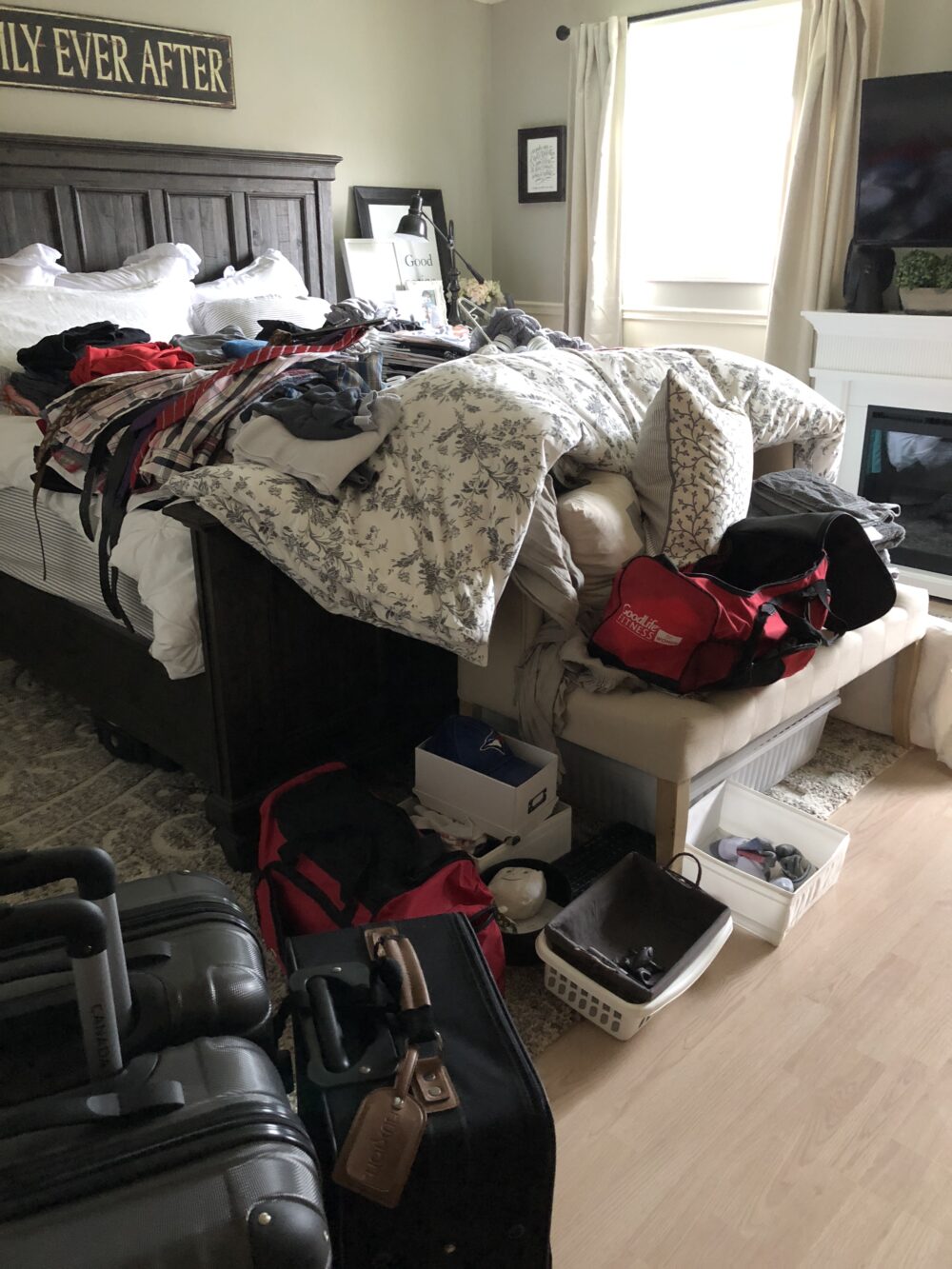
Your Brain Can’t Ignore Clutter (at Least Not for Long)
When your eyes land on a cluttered surface, your brain registers the entire whole of the mess and it tries to sort it out by making each item an unfinished task. A thing that needs to be dealt with. A decision that hasn’t been made yet. It does this automatically, without your permission, hundreds of times a day.
Researchers have found that people in cluttered environments have higher levels of cortisol, the stress hormone, than people in tidy ones. Not occasionally. Consistently.
The clutter isn’t just bothering you.
It’s actually keeping your nervous system in a low-grade state of alert.
And you don’t even have to be looking at it for this to happen. Knowing it’s there is enough.
The Bedroom is Where This Matters More Than You Think
Visual clutter affects every room, but the bedroom is where it does the most damage. Because the bedroom is the one place your brain is supposed to fully let go.
When you’re lying in bed trying to sleep and your eyes drift to the pile on the chair, the stuff on the dresser, the bags on the floor, your brain doesn’t switch off. It keeps scanning. Keeps noting. Keeps quietly adding to the mental load you’re trying to set down for the night. Even when your eyes are closed, your brain is still working and scanning the mess it saw and trying to sort it out.
This is why so many women feel like they sleep but don’t actually rest.
The random piles, laundry chair and catch-all bedroom environment isn’t supporting the rest. It’s working against it.
It’s Not About Being a Tidy Person
Visual clutter usually isn’t a personality flaw or a lack of discipline. It’s a design problem.
- Things pile up in certain spots because those spots don’t have a clear purpose.
- Stuff lands on the bedroom chair because there’s nowhere else for it to go at the end of the day.
- Things collect on the nightstand because no one ever decided what actually belongs there.
- The room fills up not because you’re messy but because the room doesn’t have a system that makes it easy to keep clear.
Once you understand that, the solution becomes a lot less about trying harder and a lot more about designing your space differently.
Where to Start
You don’t need to overhaul your whole home to feel the difference. Starting with your bedroom, the room where your brain most needs a break, can shift how you feel in your home faster than almost anything else.
The Bedroom RESET Workshop on May 26th is a one-hour live session where we work through exactly this. How to clear out what doesn’t belong, set up zones that make sense for your actual life, and create a room that genuinely helps you rest instead of quietly stressing you out.
Your brain is already working hard enough. Your bedroom shouldn’t be adding to that.

Want to see more content like this in your Google searches?
This button tells Google that Home Made Lovely is a source you like, so it can show you more of it.