In this post:
Why does your house keep getting messy?
Not all homes are messy for the same reason. And if you keep cleaning up without knowing why YOUR house gets messy, the mess will keep coming back. But once you know which of the seven reasons is the cause of your house’s mess, you can fix it.
If it feels like you are always cleaning your house only for it to look messy again a day or two later…listen up…your messy house is trying to tell you something.
There are several completely different reasons for a messy house that can all LOOK like the same problem:
- clutter everywhere
- stuff on the counters
- rooms that never stay tidy
- constantly picking things up
- feeling like you’re always starting over
Before you get more stressed out from that list, lean in, mama:
Your mess is information…and instead of just cleaning it up again and again and again and again, we’re gonna try and figure out what it’s trying to tell you.
Here are seven reasons that your house never stays tidy – no matter how much or how hard you try.
Prefer to Watch the Video?
Want to Listen on the Go?
1. You have too much stuff for your space
This is like the super common, almost, low-hanging fruit kind of thing that everyone and their uncle tries to tell you – you just have too much stuff.
That’s why there are all these people saying, be a minimalist, be a minimalist. The less stuff you have, the less stuff you have to manage, which is true. And that MIGHT be your problem, but it also MIGHT NOT be.
If this is your problem, here are some of the symptoms of that:
Your cabinets, drawers, and storage areas are all packed. So things have no choice but to land on counters and every other empty surface because there’s no room to put it anywhere else. It means you’re constantly looking for another bin, another container, another shelf, another storage space.
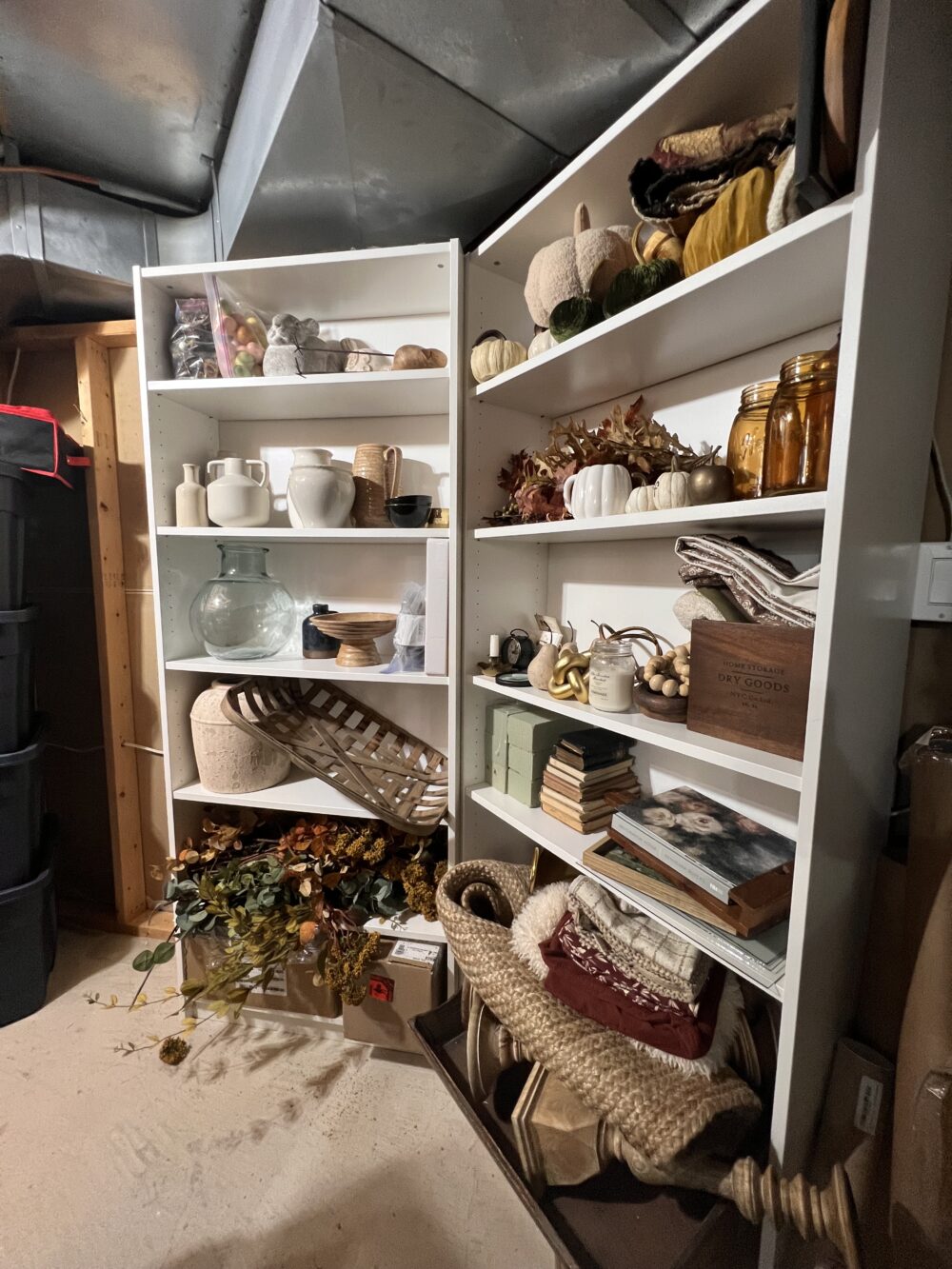
It’s true, sometimes you don’t need more organization. You need less volume, less stuff. That is truly a clutter problem.
We’re gonna talk about this more in another blog post soon because even good organization can’t create more space, can’t give you a bigger house. It can’t make more room for too much stuff. So watch for that coming soon.
2. Your stuff doesn’t have homes
Reason number two is that your stuff has no place to go…which means there’s nowhere to return it to when you’re done with it.
There’s this super awesome quote and I never remember who said it and I feel so bad and my apologies to who said it. But basically it’s like “if you found a fork under the couch, you’d know exactly where to return it to because it has a home.”
Maybe you have a perfectly reasonable amount of stuff, you just don’t know where it goes. It doesn’t have homes. You don’t know where it belongs.
So where does it end up living? The counter, the dining room table, piles on shelves, stairs even, some random basket that you just sort of throw it all into thinking you’ll get to it later, but forget about it.
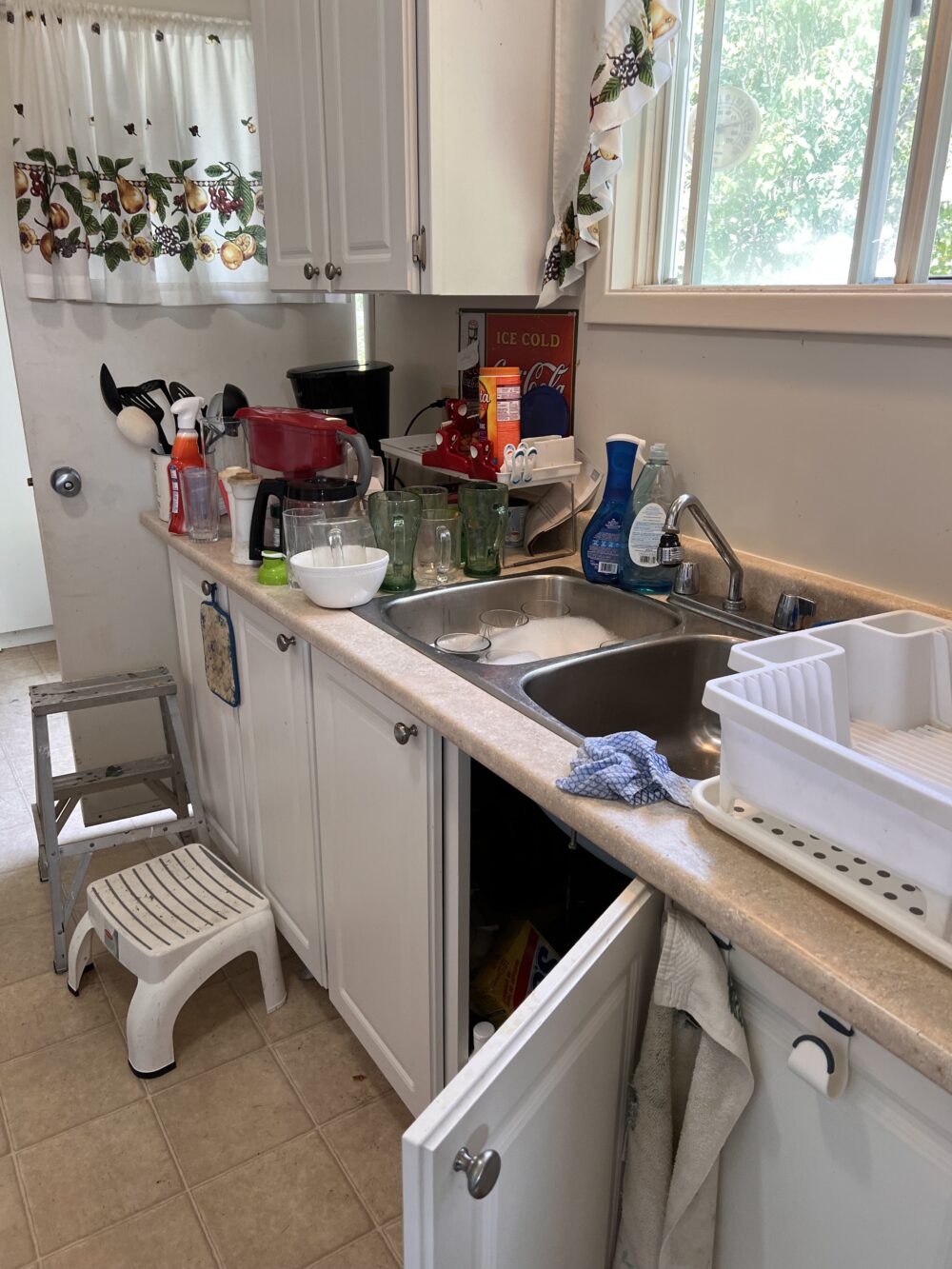
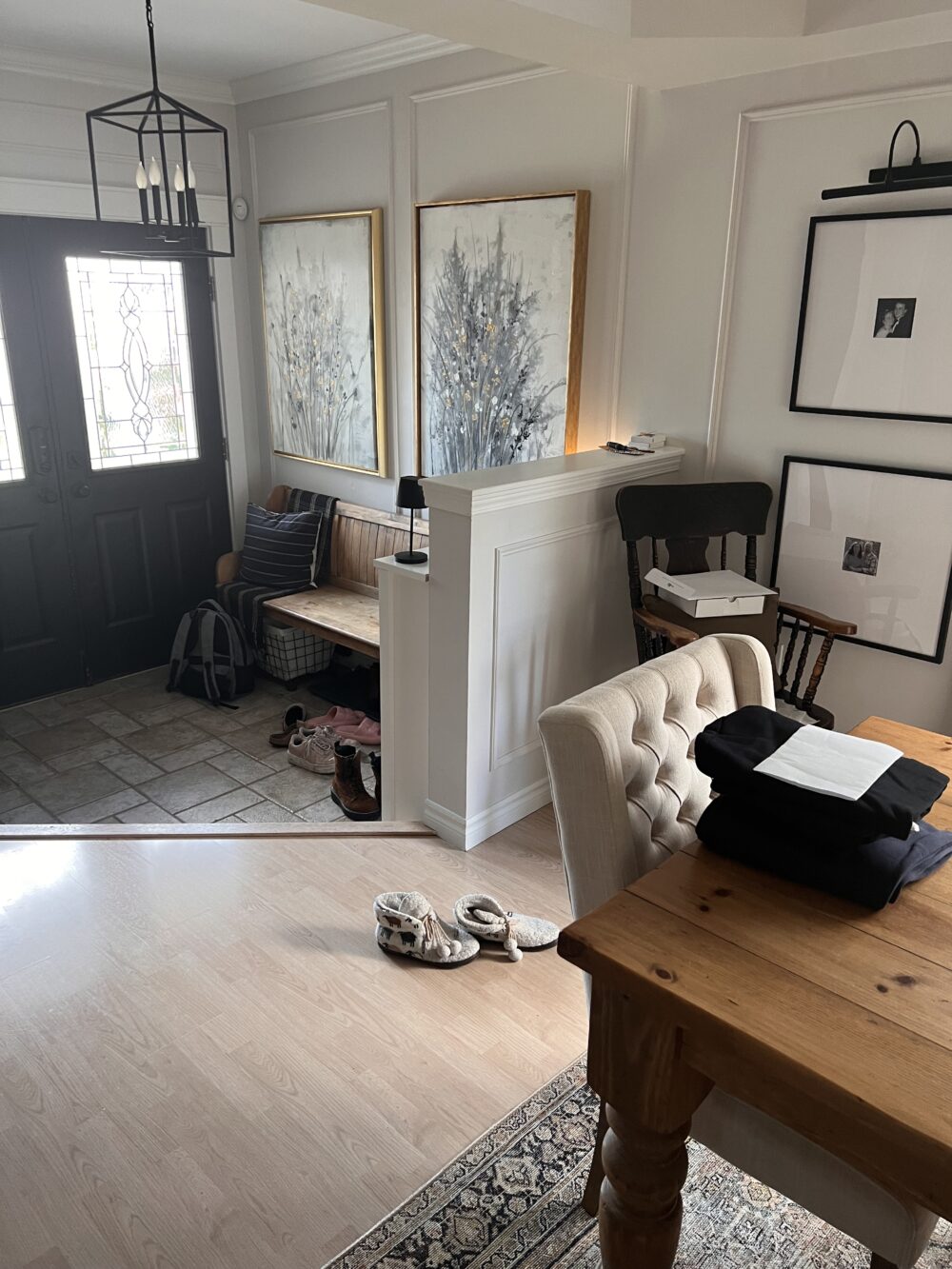
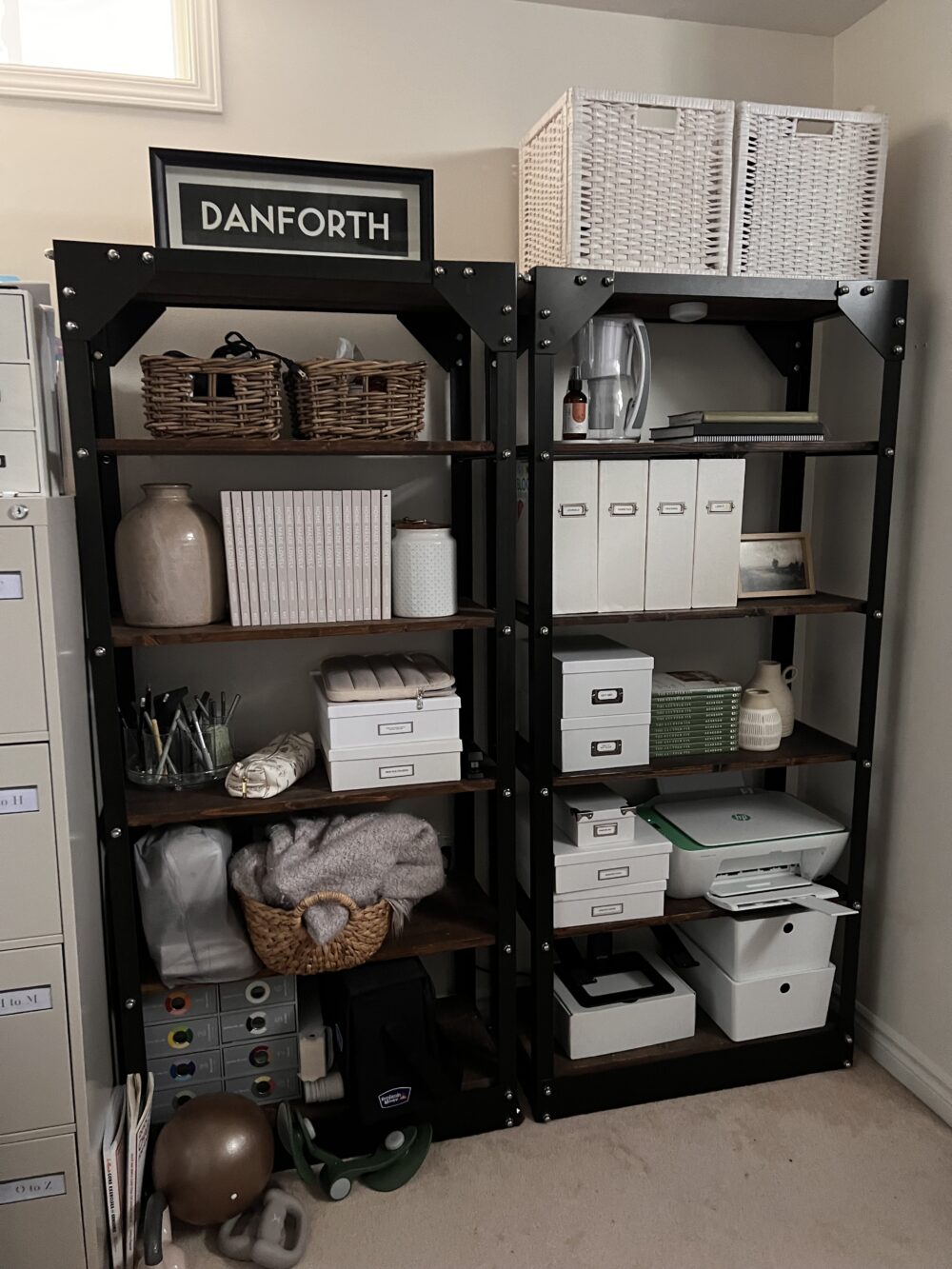
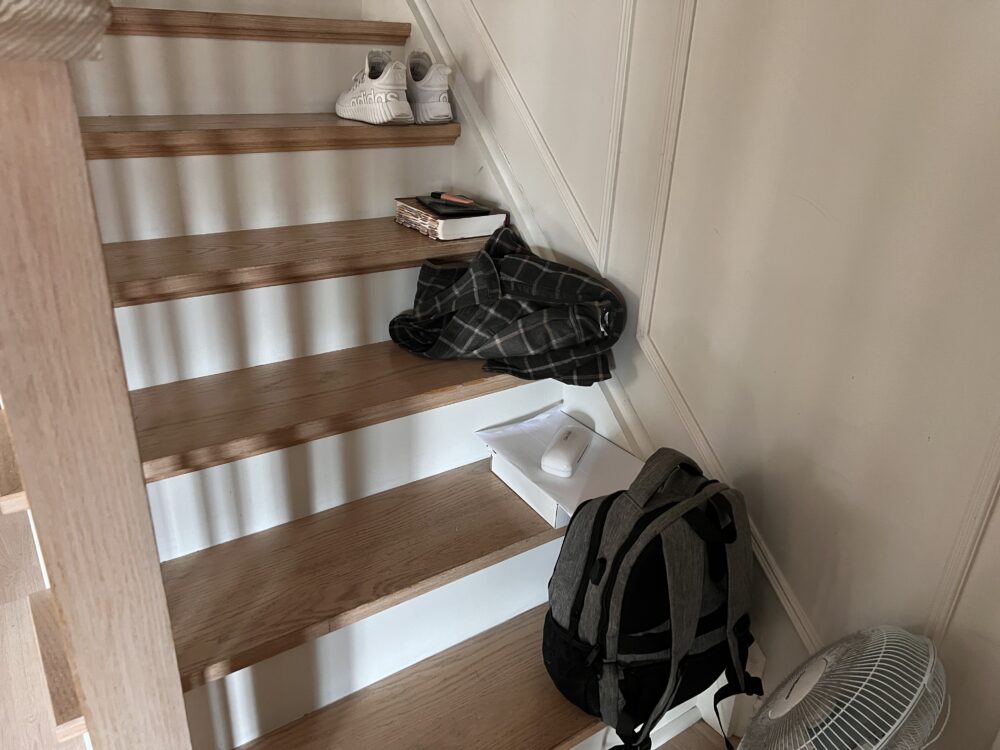
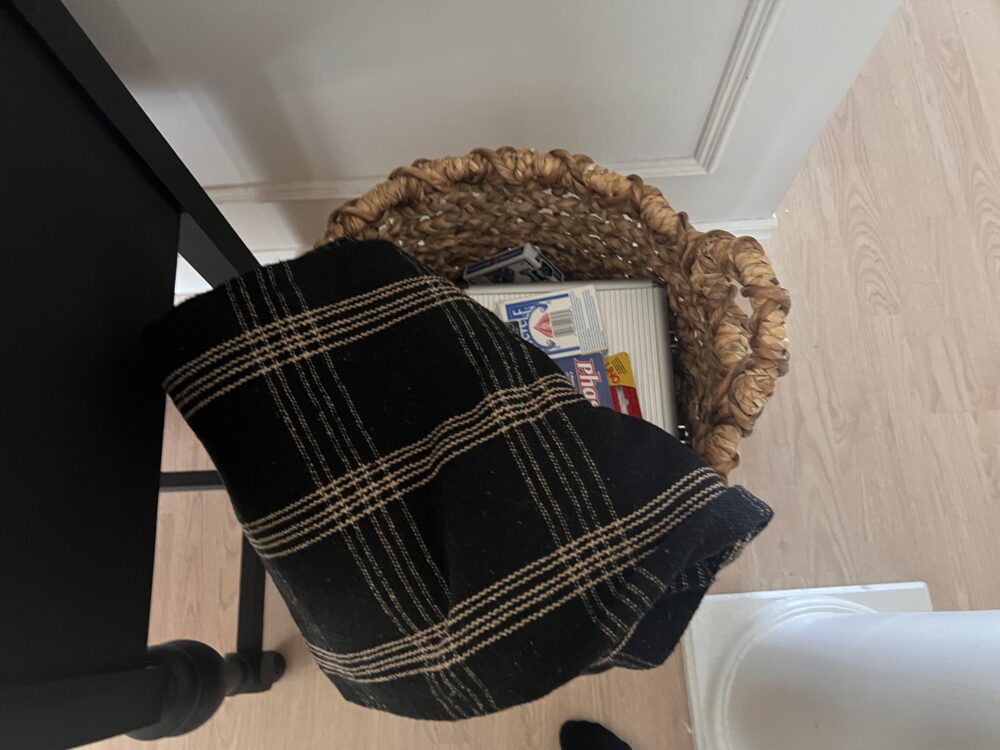
You’re constantly moving stuff around instead of putting it away. Some people call this sort of the doom pile, right? Where you just move it from one place to the next to the next, because there’s nowhere for it to actually go. It doesn’t have a home inside your home.
So when you pick something up, do you immediately know where it goes? If the answer is no, you likely have an organization problem.
3. Your stuff has homes…but they’re the wrong homes
This one’s kind of sneaky. Technically, you’ve organized and found spots for your things. But nobody actually looks for them there or puts them back in that spot.
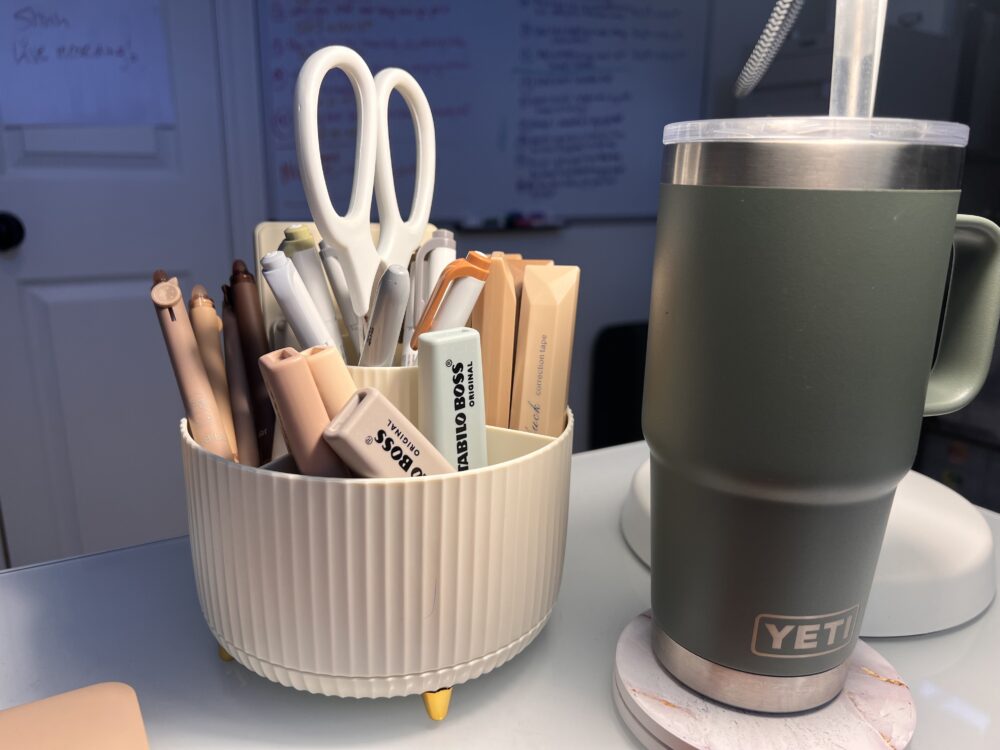
So for example, if you have scissors in your office. But if that’s the only place that you have scissors, and everyone is always looking for scissors in the kitchen, that means the scissors don’t have the right home inside your house.
A designated home that you’ve assigned, that you’ve “organized”, isn’t necessarily the right place for that thing. For example, maybe it’s, like the scissors example, too far from where you actually use that thing. Or its location doesn’t make sense to your family members.
You share your house with other people. Maybe where you’ve assigned a home for something, isn’t where logically other people in your home are looking for it. Maybe it’s not where YOU would naturally look for it. Maybe it seemed like a good place to put it, but it’s not where you naturally go to reach for it when you want to use it.
The system looked good. The organization looked good when you created it, but it doesn’t actually fit the way you live your real life inside your house. Where something fits isn’t necessarily where it belongs.
4. Putting things away is too hard
In this case, everything has a home inside your home, so those scissors we talked about have a home, etc. The home might be even fairly logical if you have…let’s continue the scissors example…put them somewhere in your kitchen, you know, because that’s where your people are looking for them. But putting them away requires too many steps where you’ve specifically put them.
For example, you have to open a cupboard, pull out a bin, take off a lid, move another container, to get to the scissors. And it’s kind of like playing Tetris when you want to put it all back together.
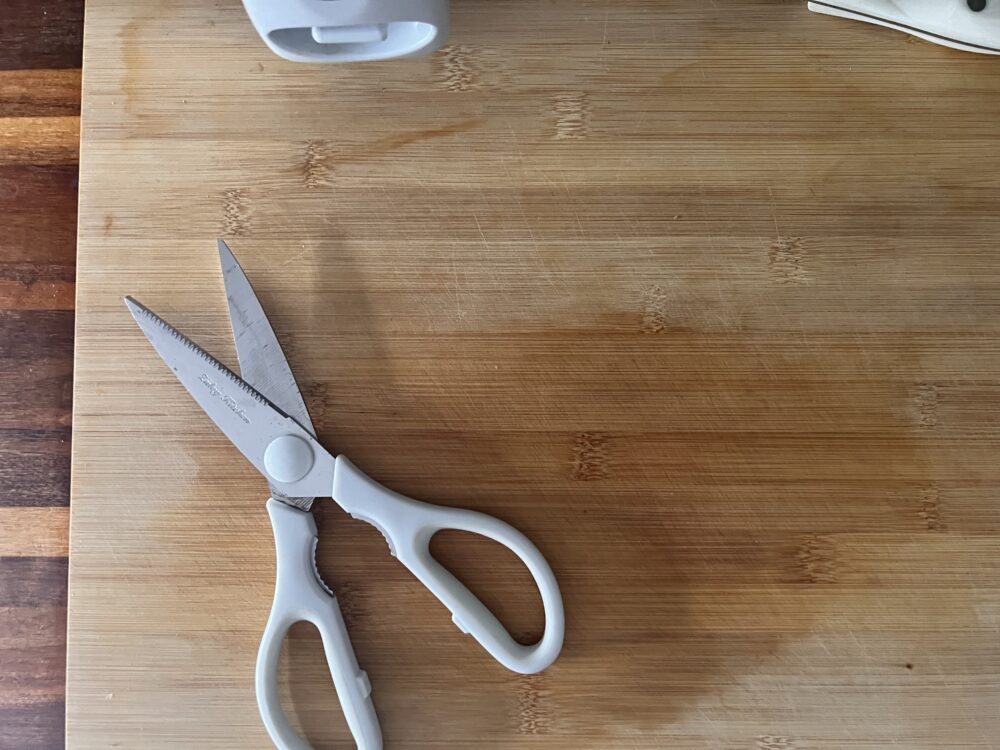
Meanwhile, putting them on the counter = one step and humans are naturally wired to do the easiest thing. So those scissors are going to end up on the counter, on the counter, on the counter, because you’ve made putting them away unnecessarily difficult. Especially when you or your family are tired or busy and running around doing all the other real life things that happen inside and outside your house.
Don’t immediately assume that it’s a lack of discipline that’s causing people not to put things away. Look for the friction that’s happening when reaching for that thing and putting that thing away.
5. You don’t have a rhythm for returning things
So in this case, maybe the amount of stuff you have is just fine. You have the perfect amount of stuff for your life, for your house, for the size of your container (the container being your house). Maybe your things have a logical home. Maybe it’s even the right home. It’s the right place for those things and everything is easy to use.
But people actually live there. Real life happens there. Shoes come off, mail comes in, dinner happens, blankets and pillows get used in the living room, projects happen, laundry happens, and of course you want those things to happen. Your house is actually kind of supposed to get messy. If people live there, it’s supposed to be used, it’s supposed to be lived in.
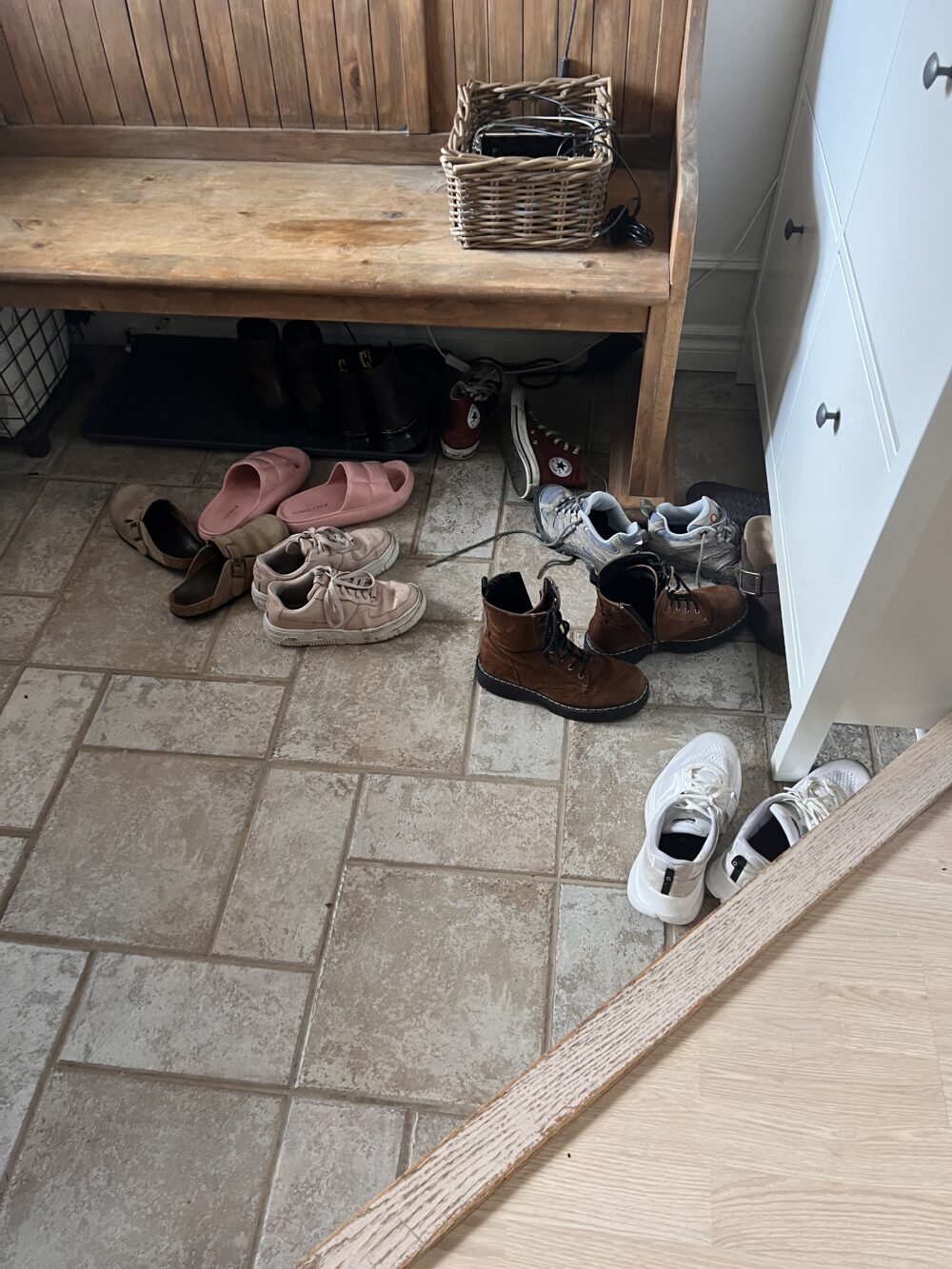
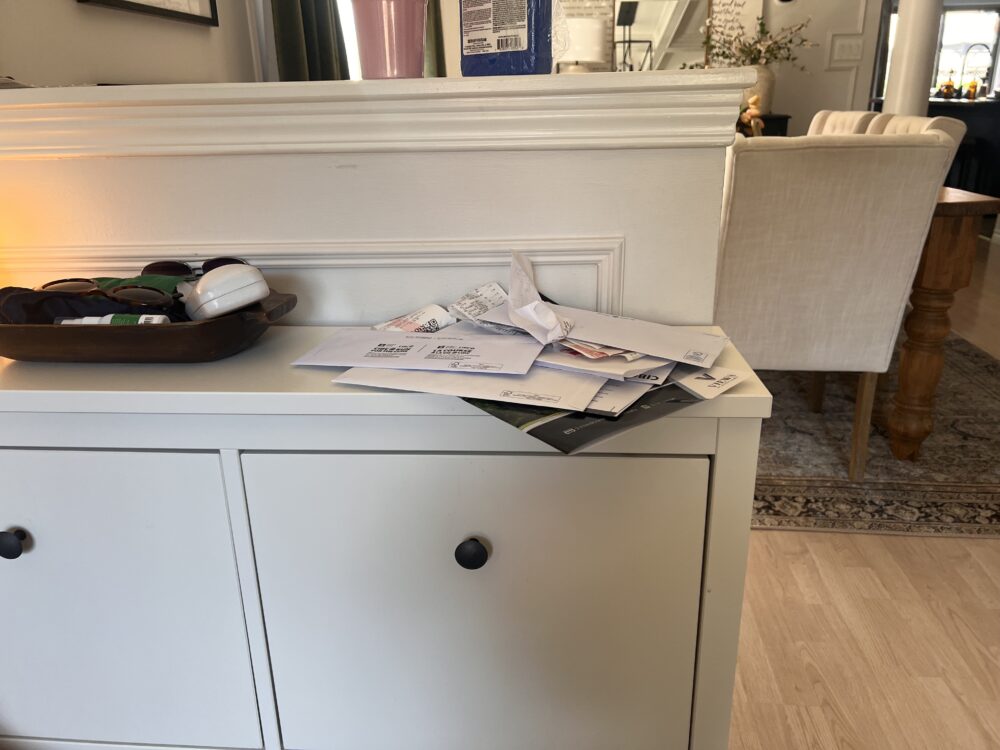
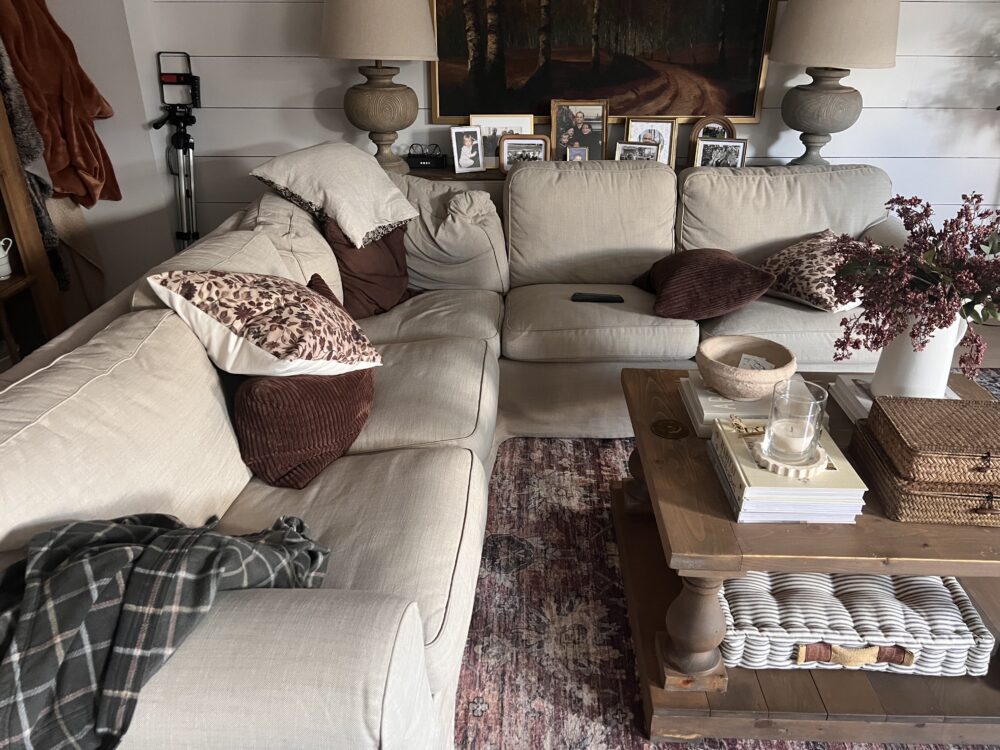
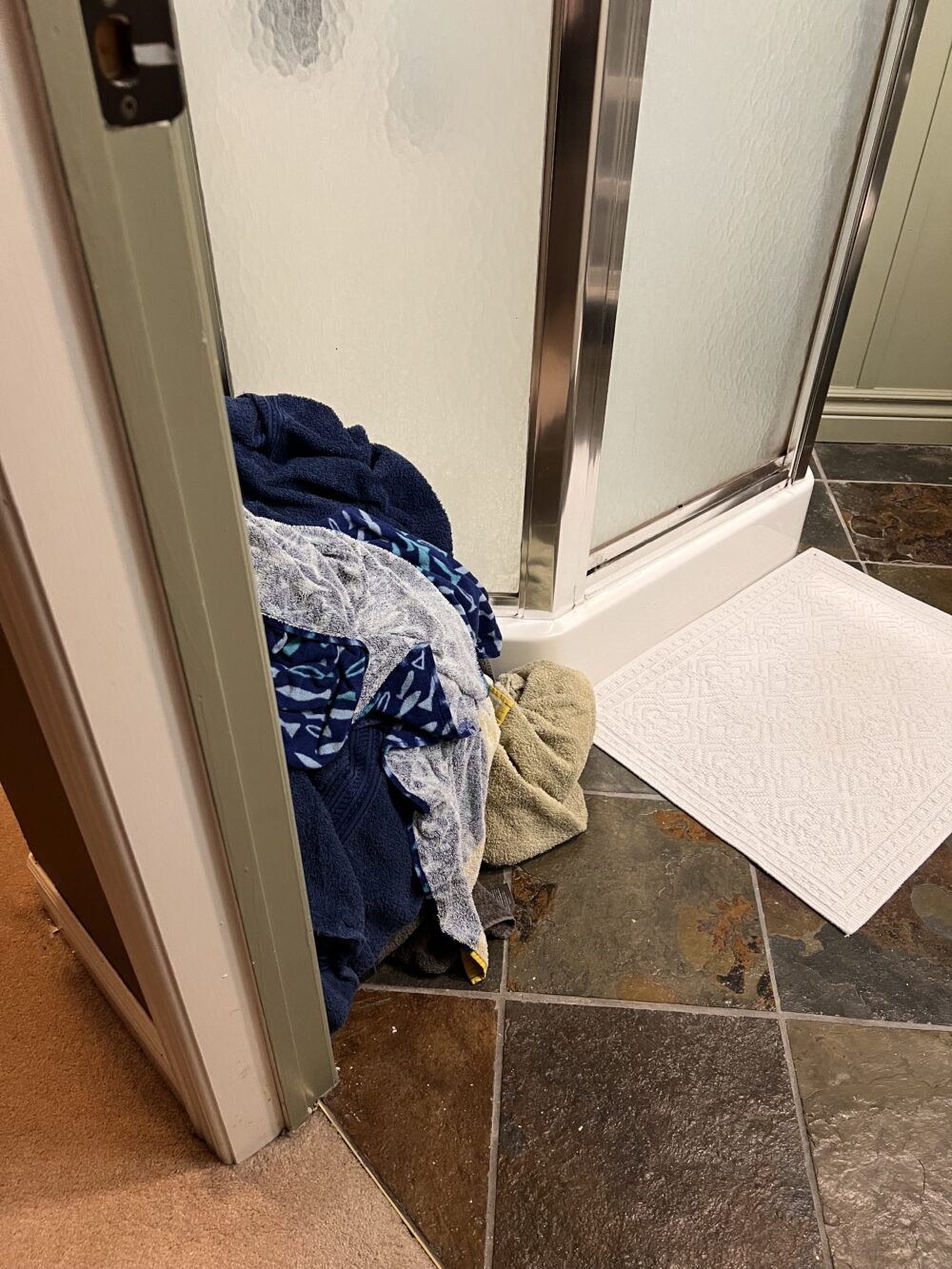
But ordinary, everyday messes need a rhythm to return them back to normal. Otherwise, Monday’s mess joins Tuesday’s mess, which joins Wednesday’s mess, which joins Thursday’s mess, which obviously by the weekend, everything’s kind of out of control. I like to think of this rhythm as returning your home to its calm, happy baseline.
6. Your systems don’t match the people who live there
A system can be perfectly logical to you and completely unusable to everybody else. Different people notice things differently, put things away differently, tolerate a different number of steps.
I’ve talked about this in the past in my books and in other places where I talk about Organizing Personalities. And some people are really great with, you know, opening the lid, putting something in, putting it down, all of that. Some people just need something to be really, really, really, really simple. Kids and adults may need different systems.
For example, you may be perfectly okay putting your shoes away in a cubby, in a closet, closing the door, all of that.
But maybe your kids aren’t there yet or maybe they are, maybe they’re older and their brains just don’t work like that and they need somewhere a little more obvious.
The person actually using the items really needs to be considered when you’re designing the organization in your house.
Your organization isn’t an imaginary fantasy household where picture perfect rules. It’s for real actual humans. You need to organize for the real humans that use that space and use the things in your house.
7. You keep cleaning up the mess instead of solving what’s caused it
So for example, the counter’s covered again. You clean it. Then it gets covered again and you clean it again. Tomorrow it’s covered again and you clean it again.
The question shouldn’t be how can I clean this up faster? Instead it should be why does this keep happening?
The important thing is figuring out what’s actually causing the mess before trying to fix everything at once. My Home RESET Method walks through five steps for dealing with clutter, creating organizing systems that work in real life, and adjusting them when something isn’t working.
Your mess is trying to tell you something
Maybe there’s too much stuff. Maybe there’s no home. Maybe the home doesn’t make sense and there’s too much friction in trying to put things away. Maybe there’s no maintenance or rhythm sort of habits to putting things away every day. And maybe your systems, your organization doesn’t work for your actual real people household.
Your mess is information. Repeated messes are giving you clues.
We don’t need to be annoyed at ourselves or the other members of our family or our household first. That doesn’t need to be the gut reaction. Honestly, even for me who teaches this, that’s my gut reaction too is, ugh, why can’t they just put things away. But we actually need to learn to get curious and find out why this keeps happening.
A repeated mess isn’t a random mess. It’s a clue as to how you can make that space better and function better.
A messy looking house doesn’t have one universal cause. That’s why generic advice doesn’t always work. Just declutter, just get organized, just have better habits. All of that can be good advice for the right problem.
A good solution applied to the wrong problem still won’t solve the problem though.
So it could be a good idea. It could be a great tip or trick or hack that you’ve seen, but it’s not working and it’s not the solution to your specific problem.
Before you decide what your house needs, stop, look, get curious, ask what the mess is telling you.
What Now?
And if you’re sitting there thinking, okay, Shannon, but how the heck do I know which one is my problem? That’s why I created the Messy Home Diagnostic quiz. It’s totally free and it helps you figure out whether your biggest issue is too much clutter, lack of organization, or lack of habits so you have a clear idea of where to start.
If you wanna take that diagnostic quiz to see which one is causing problems in your house, just use the button below.
The next time you look around and think, why is my house a mess again? Don’t clean it up right away. Get curious first. Your mess is information. Figure out what it’s telling you and then you can solve the right problem.

Want to see more content like this in your Google searches?
This button tells Google that Home Made Lovely is a source you like, so it can show you more of it.