In this post:
Why does your home get messy again after you organize it?
If your home gets messy again after you organize it, that doesn’t mean you’re bad at staying organized. Your system may be too difficult to maintain, in the wrong location, or simply not work for the people who actually use it. The key is to live with your organizing system, notice where it breaks down, and adjust it until it works with your real life.
You decluttered, you organized, everything had a place. Maybe you even bought all the cute little organizers and labeled everything.
And then people actually lived in the space.
A few days later. all kinds of stuff is back on the counter. Nobody put things where they’re supposed to go. That beautifully organized drawer is a disaster again.
And you think, why can’t we keep anything organized? And usually we assume it’s one of two things:
- I’m bad at staying organized or
- Why can’t my family put things away?
But there may be another explanation…the organizing system itself doesn’t work.
Today I wanna show you why a home can get messy again even after you’ve organized it and why that definitely doesn’t mean that you’ve failed.
Rather Watch the Video?
Want to Listen on the Go?
Organized Doesn’t Automatically Mean Functional
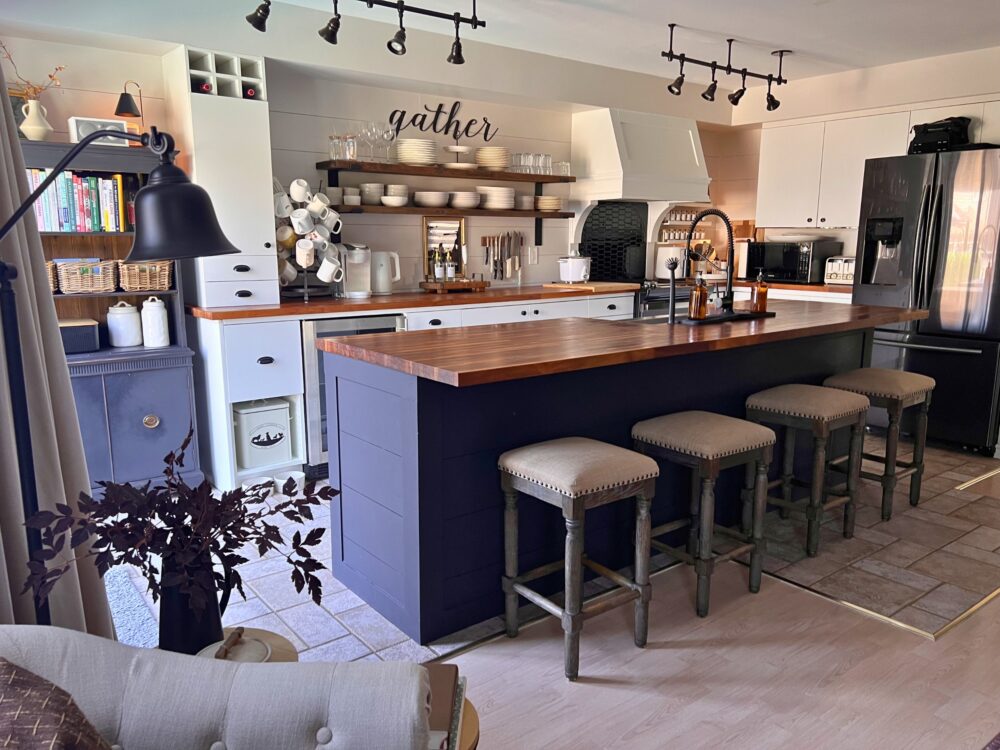
You can stand back and look at something and go “wow look at this – isn’t it beautiful?” Everything fits, everything is contained, everything has a label.
But none of that actually tells you whether it’s going to work on a Tuesday morning when
- everyone’s running late
- someone can’t find a shoe
- you’re trying to pack lunches
- somebody needs a permission slip
- the dog is barking and driving you absolutely nuts
Organized is how a space looks when you’ve actually finished “organizing”. Functional is how the space works when you start living in it again.
That’s the test.
Day one tells you whether everything fits. Real life tells you whether your system works.
You May Have Organized Around Storage Instead of Behavior
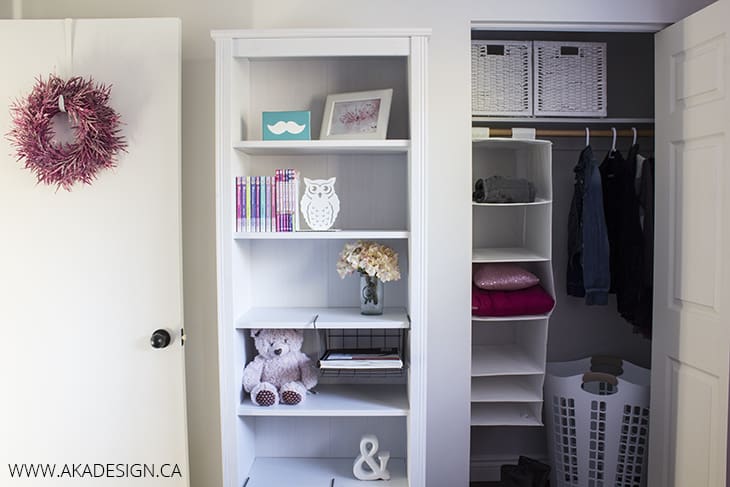
We tend to look at empty shelves, cabinets, closets, or other spaces and think, what can I fit there? What can I put there? What fits there? How can I maximize the space?
But those are not always the most useful questions.
Maybe the things that are stored there aren’t used there.
Maybe they’re used somewhere else across the other side of the house or even the other side of the room.
Maybe the person who needs them never thinks to look where you’ve put them.
So the system technically seems to make sense since there’s space there, but it doesn’t work in real life.
Where something fits isn’t necessarily where it belongs.
The System or Organization May Have Too Much Friction
Imagine something’s home is inside a container with a lid underneath another container way in the back of a closet.
Technically that thing has a home you’ve organized.
Realistically though, everyone just drops it on the nearest surface.
Or maybe the system or organization that you’ve set up requires that someone fold something a very specific way, sort it into six tiny categories, open multiple containers to get to it or put it away, move something else first, or walk to an entirely different room or an entirely different part of the house.
A system can be easy to set up, but hard to maintain. If putting something away is harder than leaving it out, leaving it out is gonna win 99% of the time. Not because everybody in your house is lazy, but because friction matters.
This System May Work For YOU, But Not For The People You Live With
This is a big one.
Maybe you know where everything goes. You created the categories, you understand the logic of where you put things, you know what every label means…but everyone else is like, what? because it makes no sense to them.
Household members may naturally use things differently in your house. They may look for things in different places. Kids definitely need easier access and different organization than the adults in your home. Someone else may need fewer categories than you sort things into.
In this case, the system you’ve set up basically requires everyone to adapt to your way of thinking, not the way that they naturally are.
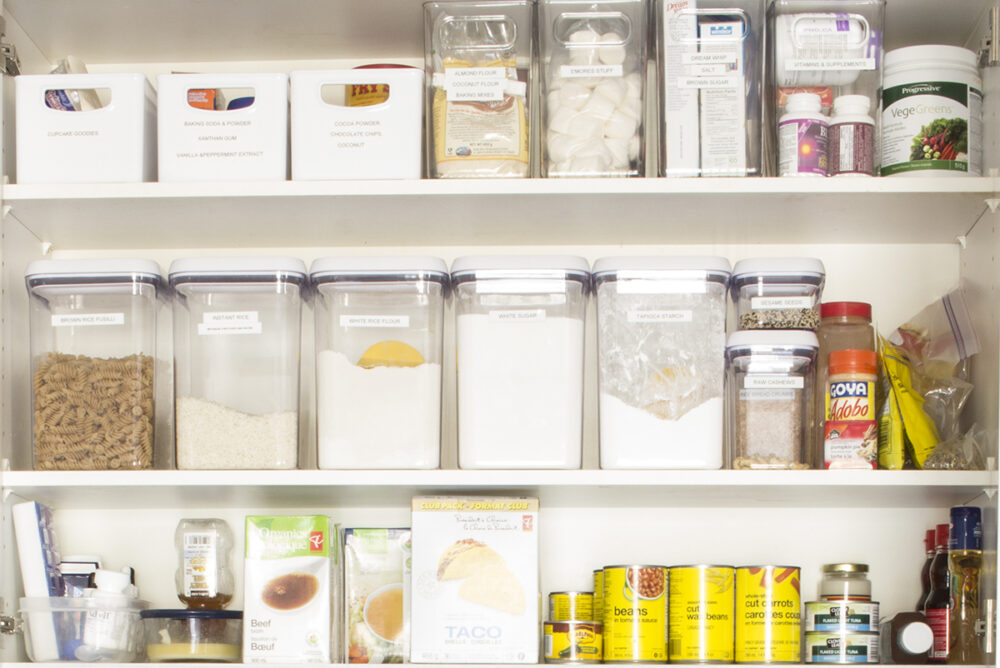
And this is obviously gonna create friction and mean that things aren’t getting put away because they just don’t understand or easily grasp how you’ve organized things.
A home has to work for the people who actually use it, who use those things, not just for the person who organized it.
So don’t think of it as my family ruins all my organizing, they don’t put things away.
Think of it more like what is their behavior trying to tell you about the system or the organization that you’ve put in place?
Your First Organizing Solution Doesn’t Have to Be Your Forever Solution
I think a lot of us organize something as if it’s the permanent solution, the permanent fix, the permanent home for that thing.
- This is where the mugs live now.
- This basket is for school papers.
- This is where the backpacks go.
Like we’ve set up some invisible rule that has to last forever and ever.
I think that’s a little bit because it feels like such a hard choice and a hard thing to do. Especially, when you’re trying to do it all at once…which you know better than to do if you’ve followed me for any length of time.😉 But we just think that that’s forever, that it has to be that way.
But when it doesn’t work, we either force ourselves and our family members to keep trying to make that system work for the life that we’re living, for the schedule that we have, for the way that we move about and use our space, or…we blame everybody else for the system falling apart. Why won’t my family just keep up with this? Or we abandon it completely and the house dissolves back into chaos.
But here’s another option, change it.
Your first organizing solution doesn’t have to be your forever solution.
You made an educated guess. Now you get to see how that actually functions when real humans use it in their everyday lives.
Which brings me to the next point…
You Need to Experience the Space Before You Can Decide if it Actually Works
After you organize something, live with it. Notice:
- Can everyone find everything?
- Do things naturally get put back where you’ve decided their home is?
- Does anything keep ending up somewhere else?
- Is something awkward to reach, hard to reach, difficult?
- Does the system require too many steps, kind of like the Jenga example or the Tetris example I talked about in another post?
- Are you constantly correcting it?
You’re not waiting to see whether you or your family can be disciplined enough to follow this organization system. You’re gathering information about whether the system works.
That is a very different mindset.
When the Mess Comes Back, Get Curious Before You Get Frustrated With Yourself or With Your Family
Something keeps landing on the counter over and over and over again? Instead of thinking why can’t anyone put this away? (which is still often my first reaction), try asking why does this keep ending up here?
- Maybe its designated home is too far away.
- Maybe putting it away requires too many steps.
- Maybe the category of where you’ve sorted this stuff doesn’t make sense.
- Maybe the storage where you’ve assigned it a home is too full.
- Maybe the item actually needs to live somewhere else.
- Or, yep, maybe the system is perfectly fine, but you need better habits around putting that thing away.
We’re getting curious. We’re not assuming what the answer is.
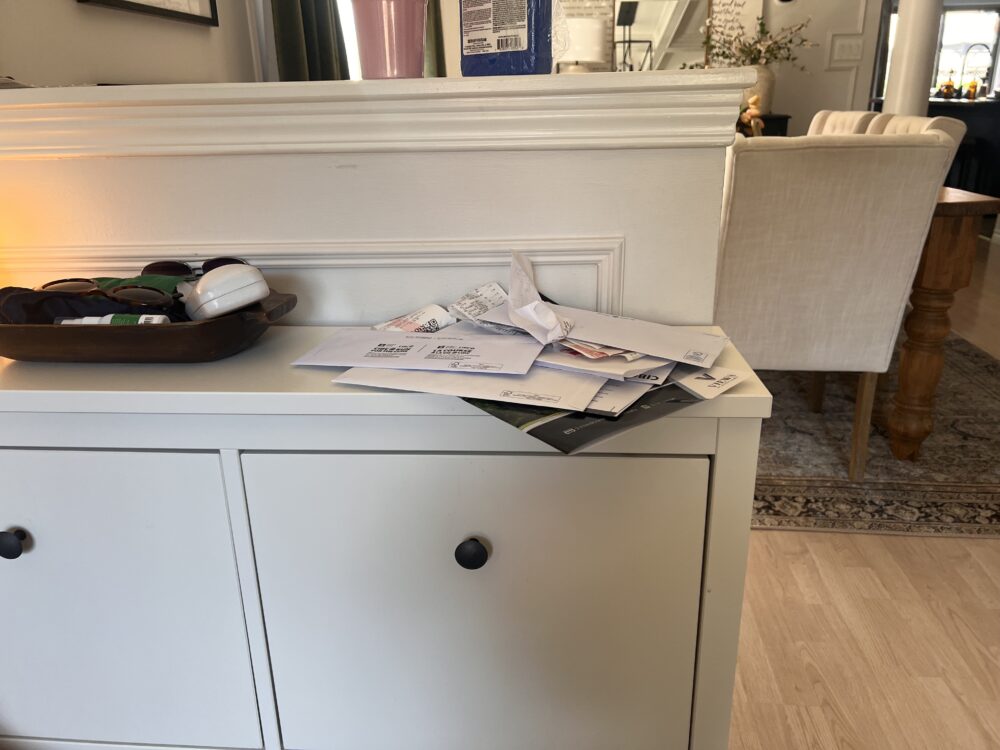
If your organizing system keeps falling apart, don’t immediately assume that your family needs more discipline or that you need more discipline.
The mess might be trying to show you what’s wrong with the system or the organization.
Important: This Doesn’t Mean That Every Mess Equals a Bad System
People live in houses, stuff gets used, things get left out. Nobody returns every single thing immediately. A messy counter after dinner doesn’t mean that your kitchen organization has failed.
We’re talking about patterns. The same item, the same pile, the same frustration, or the same system that keeps breaking down.
Those patterns, that information is worth paying attention to. You organized the space. Great. That’s awesome. That’s a huge step. But that’s not necessarily the end of your organizing. Now you get to live with it. Pay attention, see what happens, and adjust when you need to.
An organizing system isn’t finished when everything has been put away. It’s finished when you’ve lived with it long enough to know whether it actually works.
Real life is the test.
Your Next Step
If any of this sounds familiar and maybe you’ve organized and decluttered before but your house seems to keep sliding back into a mess…I don’t believe that one big overhaul or a big effort on a weekend is going to solve things.
And that’s why I created the Home Made Lovely RESET Club.
Inside the club, we work through one small, manageable area at a time, creating systems you can actually live with and then adjusting when real life shows you if something isn’t working.
The goal is a home that becomes easier to live in and stays that way.
Because I don’t want you to organize your house beautifully for one day. I want you to create a home that fits the way you actually live your life.
If you’ve organized an area and the mess keeps coming back, don’t automatically assume that you or your family have failed. Pay attention to what’s happening. Your first solution doesn’t have to be your forever solution. Live with it, learn from it, and adjust it until it actually works for the people who live there.

Want to see more content like this in your Google searches?
This button tells Google that Home Made Lovely is a source you like, so it can show you more of it.