In this post:
How do you get your home under control when you’re completely overwhelmed?
When your whole house feels overwhelming, don’t try to tackle the whole thing at once. Make the problem smaller by choosing one specific, physically contained area that will make everyday life a little easier when it’s finished. Complete that area before expanding to another one, then repeat. Small, completed projects add up to meaningful change without turning your whole house into one giant project.
Do you ever look around your house and see so many things that need your attention that you don’t even know where to start?
- Maybe every room feels messy.
- Maybe there are piles everywhere.
- Maybe there are closets that need decluttering and nothing seems organized.
You start thinking about everything that needs to happen and suddenly doing nothing feels way easier than choosing where to begin.
When you’re feeling overwhelmed, the usual advice is to just start somewhere.
But honestly, when you’re completely overwhelmed, somewhere feels awfully big.
When your whole house feels overwhelming, your first job isn’t to fix the whole house, it’s to make the problem smaller.
Today, we’re gonna talk about how to do that in a way that actually helps you get your home under control instead of starting another giant project you can’t possibly finish.
Rather watch the video?
Want to listen on the go?
“My Whole House is a Mess” Isn’t Actually One Problem
When you’re overwhelmed, your brain starts lumping everything together.
- Laundry on the chair
- Papers on the counter
- Packed closets
- Messy pantry
- Toys everywhere
- Bathroom drawers that don’t function properly
- The garage is piled full of stuff
- Your basement’s too messy
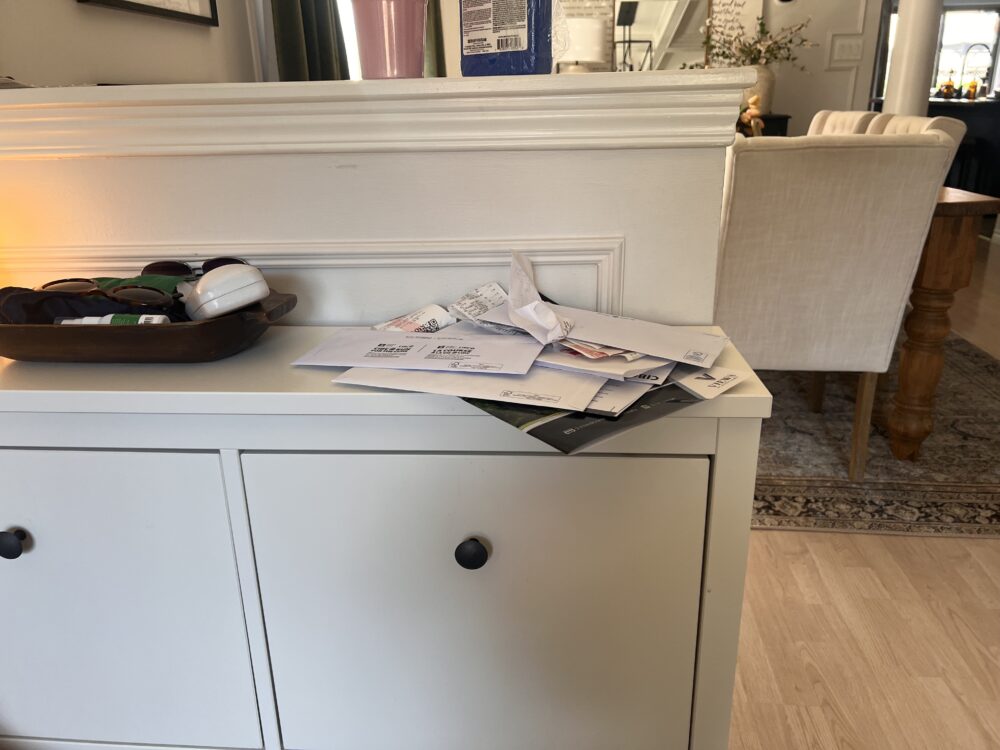
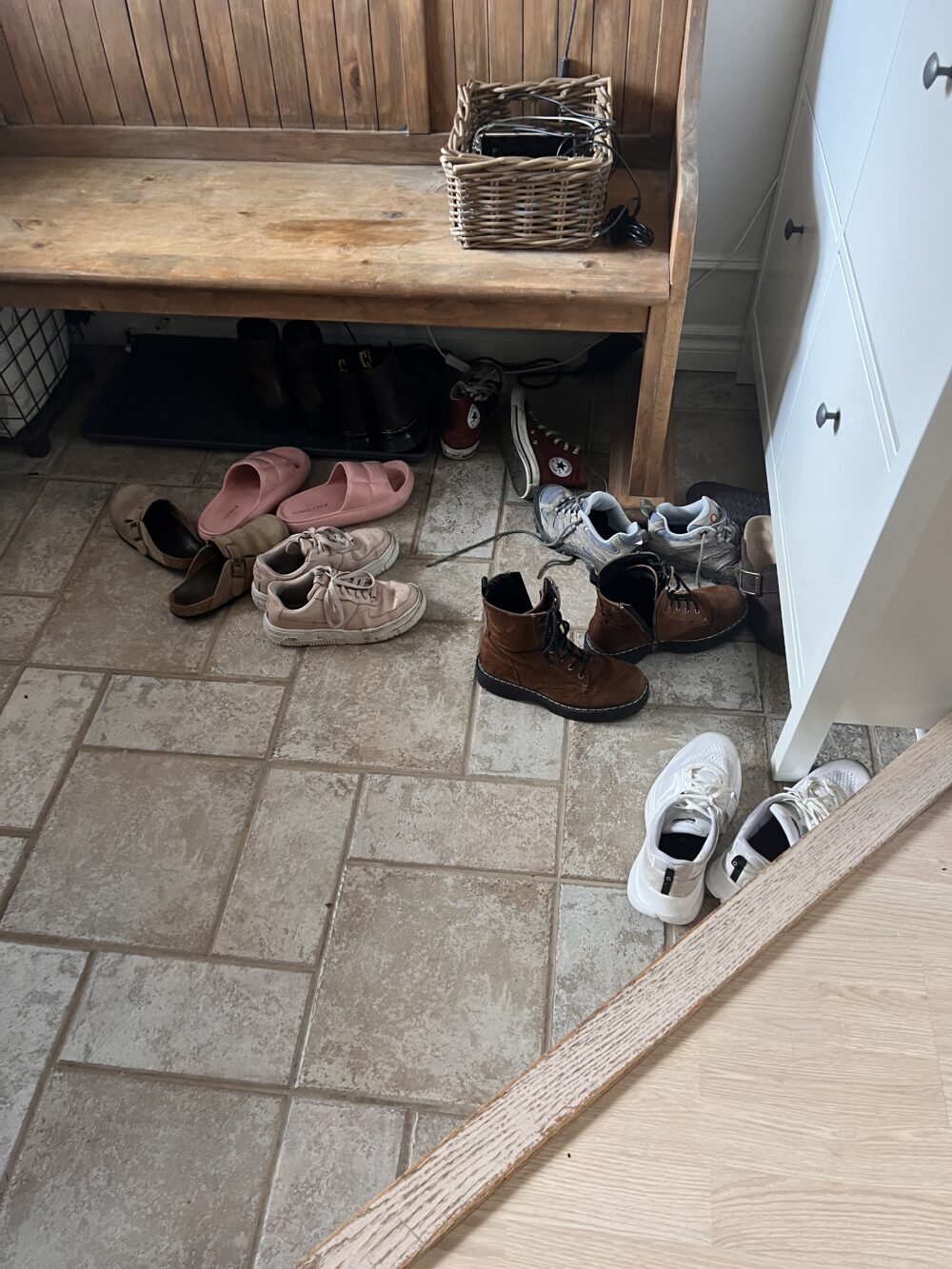
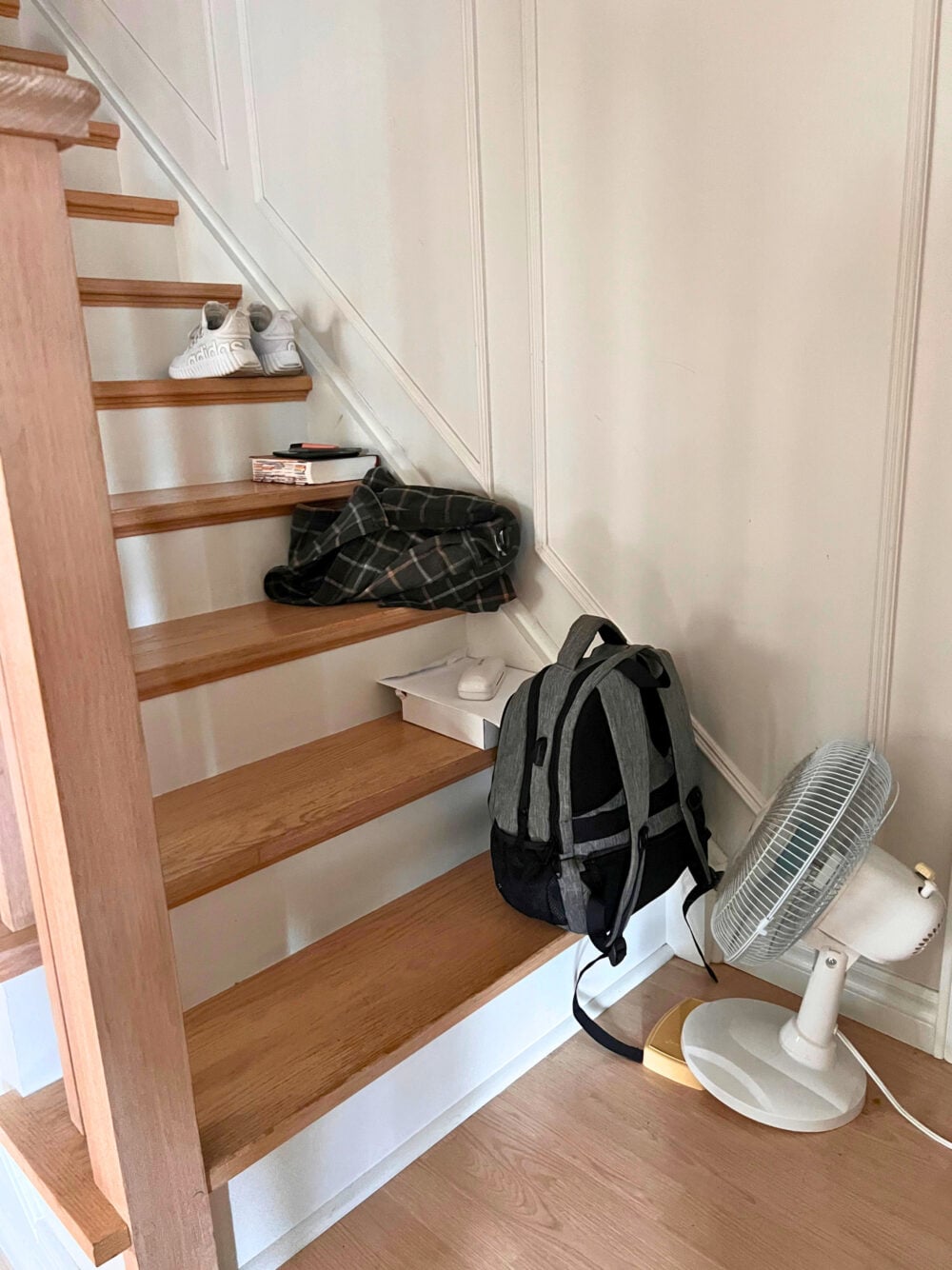
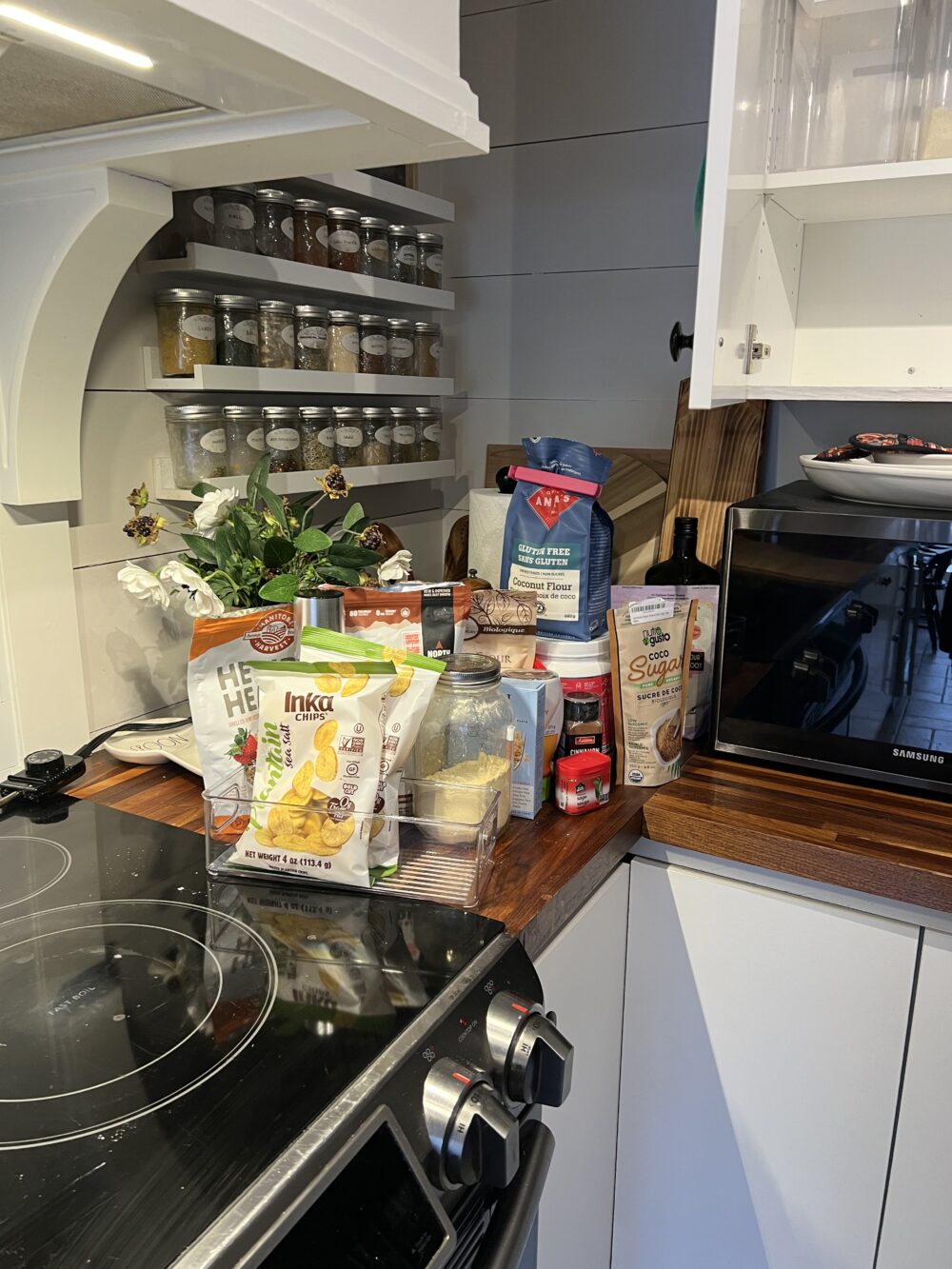
All of that becomes one big, “my house is a disaster”.
But your house isn’t one giant project. It’s dozens, maybe even hundreds, of smaller problems that happen to exist under the same roof.
That’s actually good news because you don’t have to solve all of them to start feeling better.
Stop asking, “Where should I start in my house?”
Because that’s still too big.
Instead of “where do I start with my house?” ask yourself “what’s one specific problem I could solve?”
- Maybe it’s that you can’t find anything in the bathroom drawer.
- The kitchen counter is covered with stuff.
- You can’t put your clothes away because the dresser is too full.
- Everyone dumps all their shoes at the front door just on the floor.
- The one pantry shelf is driving you absolutely bonkers.
Now you’ve gone from “my entire house” to “this one thing”, and your brain can definitely work with this one thing.
Make the Physical Area Smaller
If the kitchen is overwhelming,
don’t work on the whole kitchen.
If the pantry is overwhelming,
don’t work on the whole pantry.
Choose one shelf or one drawer and work on that.
If your bedroom is overwhelming,
don’t work on the whole bedroom.
Work on one nightstand surface or one drawer full of clothes.
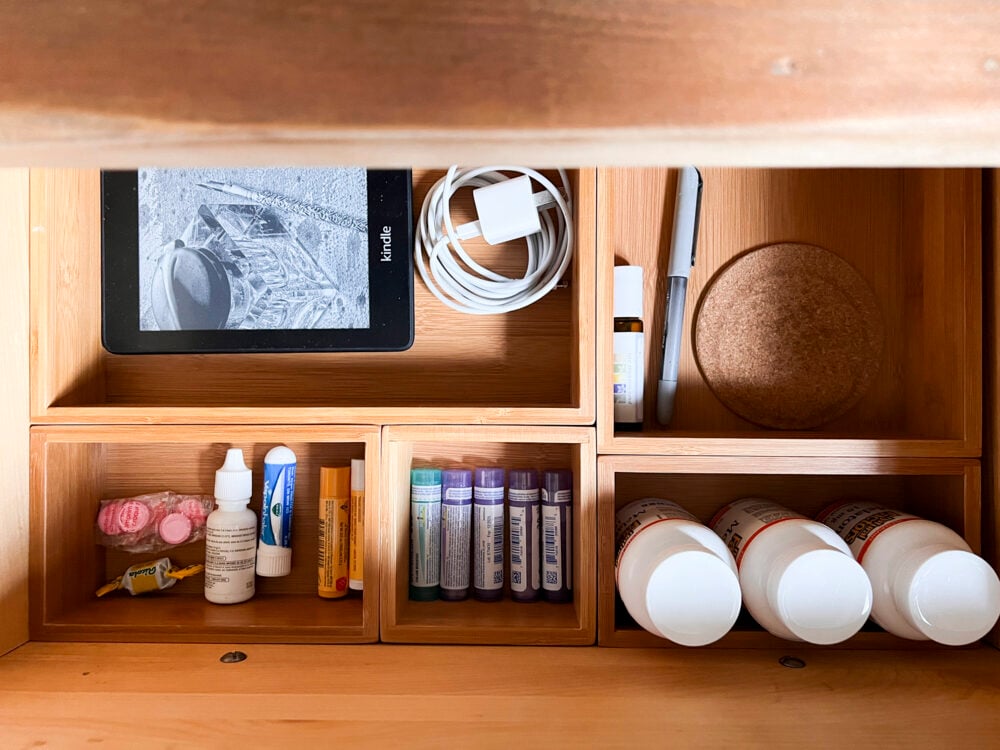
Make the problem small enough to solve.
Not small for the sake of saying you did a tiny thing.
Small enough that you can see the boundaries, think clearly, make decisions, and finish.
Choose Small + Meaningful
This is important because we don’t want to turn this into, you picked up one paperclip, look at you go, yay. 😆
We’re not shrinking the task purely to make it easy.
We’re trying to create a finished improvement that makes everyday life a little better.
So ask yourself, what’s a small problem that will make everyday life easier when it’s solved?
- Maybe clear enough of the counter to prep dinner easily.
- Or make the entryway easier to walk through without tripping over all those shoes.
- Make one drawer more usable.
- Create room to actually put away your everyday clothes.
- Or clear the spot where you drop your keys when you come in the front door.
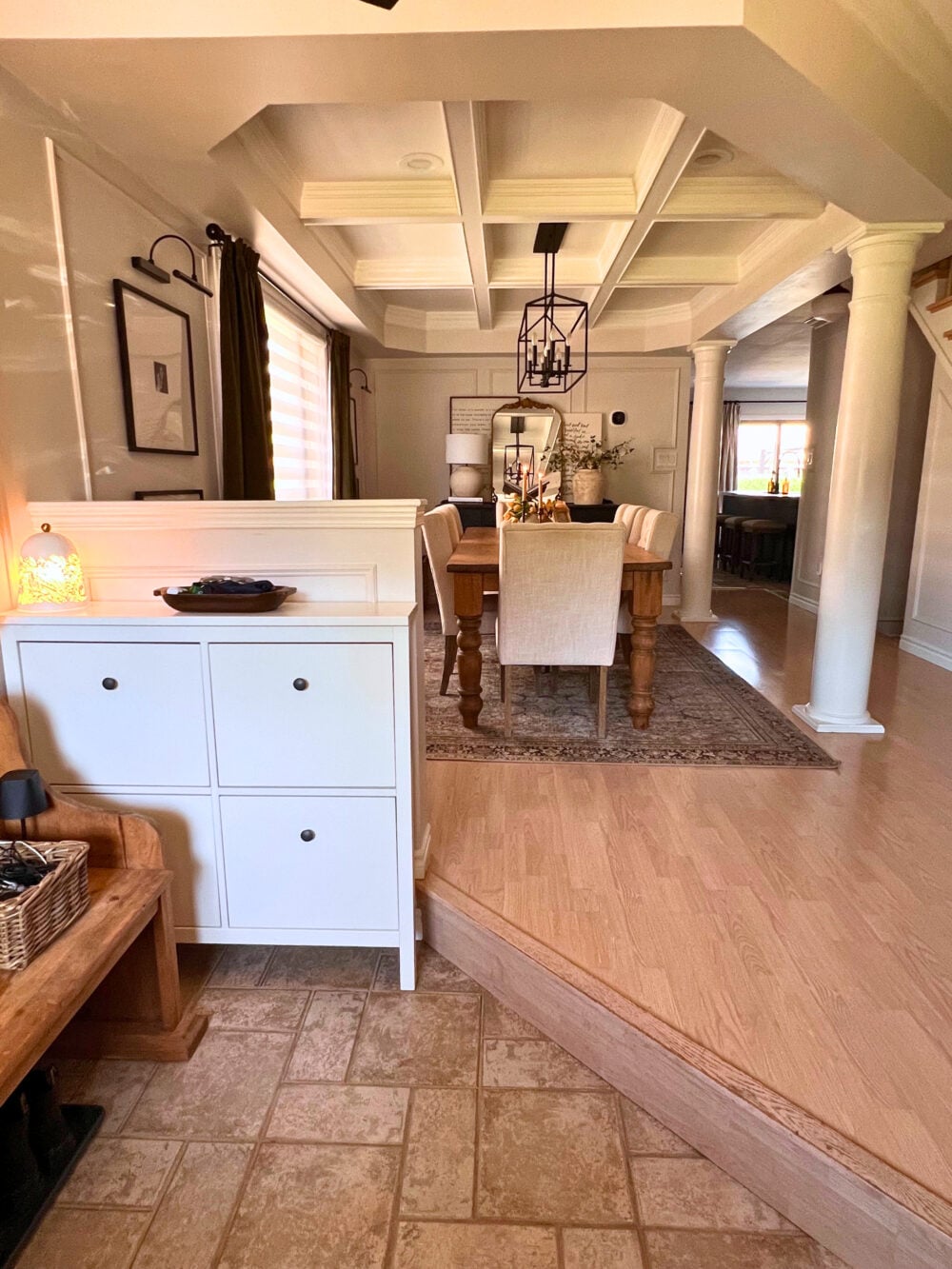
Small is not the goal. Completion is the goal.
We’re making the project small enough that completion becomes possible.
Don’t Ask “How Much Can I Get Done Today?”
That’s where we get ourselves into trouble.
For example, you have two free hours, so you think I can totally tackle the entire closet.
Forty-five minutes later, there are clothes all over the bed, bins all over the floor, a sentimental box is open, and you are somehow reading a card from 2007.
Your entire room is now worse than when you started.
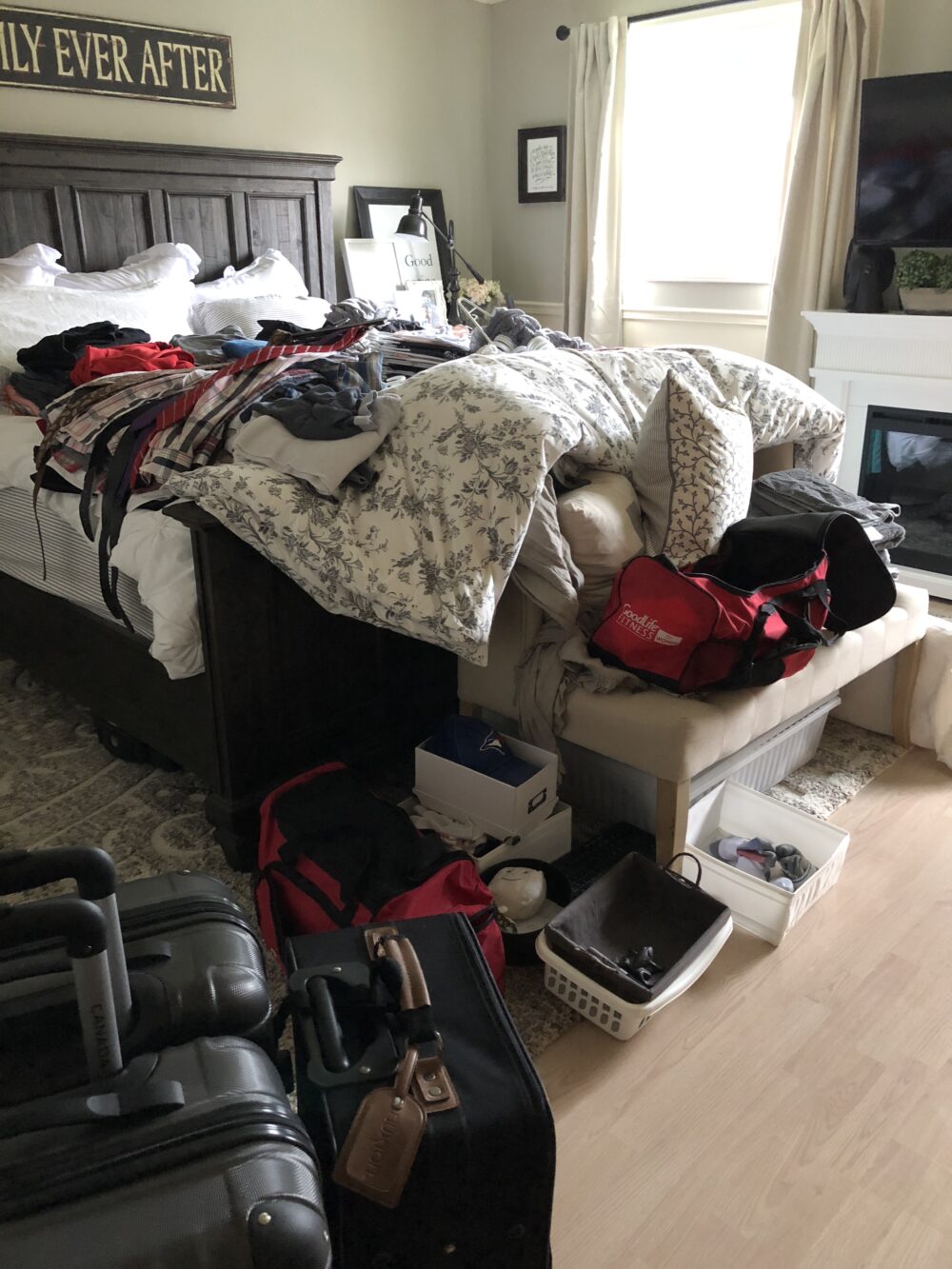
Instead of “how much can I get done today?”, ask “what’s small enough that I can actually finish it today?”
That’s a very different question because your goal isn’t to use every available minute. Your goal is to complete the decisions and the projects you start.
Something else to remember is to…
Contain the Project
This is one of the biggest things that I wanna teach you.
We have this tendency to start with one drawer and while we’re working on it, we find something that belongs in the closet. So we take it to the closet and then we notice the closet is messy.So naturally we start organizing the closet.
It’s kind of like if you give a mouse a cookie or if you give a pig a pancake.
No! Stop and take the thing there, take it to the closet, come back, finish the drawer.
Or you might find something that needs to go downstairs. Instead of taking it there now, put it in a little “belongs elsewhere” spot.
Keep working on the area you’re in, contain the project and finish before you expand to other spaces.
This keeps one small reset from turning into five unfinished projects.
Finishing Something Small Matters More Than Starting a Lot
This is the deeper reason I love this approach.
When you’re already overwhelmed, unfinished projects create more visual and mental noise.
Every unfinished area says, “you still need to work on me.”
So instead of touching seven areas or starting seven areas, finish one. Then you get:
- One less problem
- One easier part of your day
- One visible win and
- Proof that you can actually make progress
After that, you can do it again later in another space.
Small completed resets add up to meaningful change in your house.
You don’t get your home under control in one heroic weekend. You get it under control by finishing manageable problems one after the other.
You Don’t Have to Know the Whole Plan for Your Whole House Before You Start
You might still be thinking
- Which room first?
- What order do I do it in?
- What do I buy?
- Where should everything go?
- How long will this take?
- What if I make the wrong decision?
- What if I can’t finish? You don’t need every answer today.
You need the answer to what’s the next manageable problem. Then solve that. Then look at it again and then move on.
You don’t need enough energy to fix your whole house. You need enough energy for the next manageable step only.
If your whole house feels overwhelming, don’t start by asking “how am I going to get this whole house under control?” That’s the question that’s totally freezing you up. It did it to me, it does it to everybody else.
Make the problem small enough to solve instead. Choose:
- Something specific
- Physically contained
- Meaningful enough to make your life easier, and
- Small enough to finish
Then contain the project, finish the decisions and experience that win, and gain the confidence that you can do it. And then you repeat.
That’s how a whole house eventually changes. Not because you finally found a weekend where you had unlimited energy and absolutely nothing else on the schedule, but because you stopped treating the entire house like one giant project.
Your Next Step
If part of your overwhelm is that you genuinely don’t know what kind of problem you should tackle first, I’ve got something that can help.
My free messy home diagnostic quiz helps you figure out whether your biggest issue right now is too much clutter, a lack of organization, or a lack of habits that keep your home running and maintained.
Because knowing what problem you’re actually trying to solve makes choosing that next manageable step a whole lot easier.
You don’t need to get your whole house under control today. Pick one problem. Make it small enough to solve. Finish it. Let that make your life a little easier. And then do it again.
That’s how you constantly stop starting over and actually start changing your home.

Want to see more content like this in your Google searches?
This button tells Google that Home Made Lovely is a source you like, so it can show you more of it.